



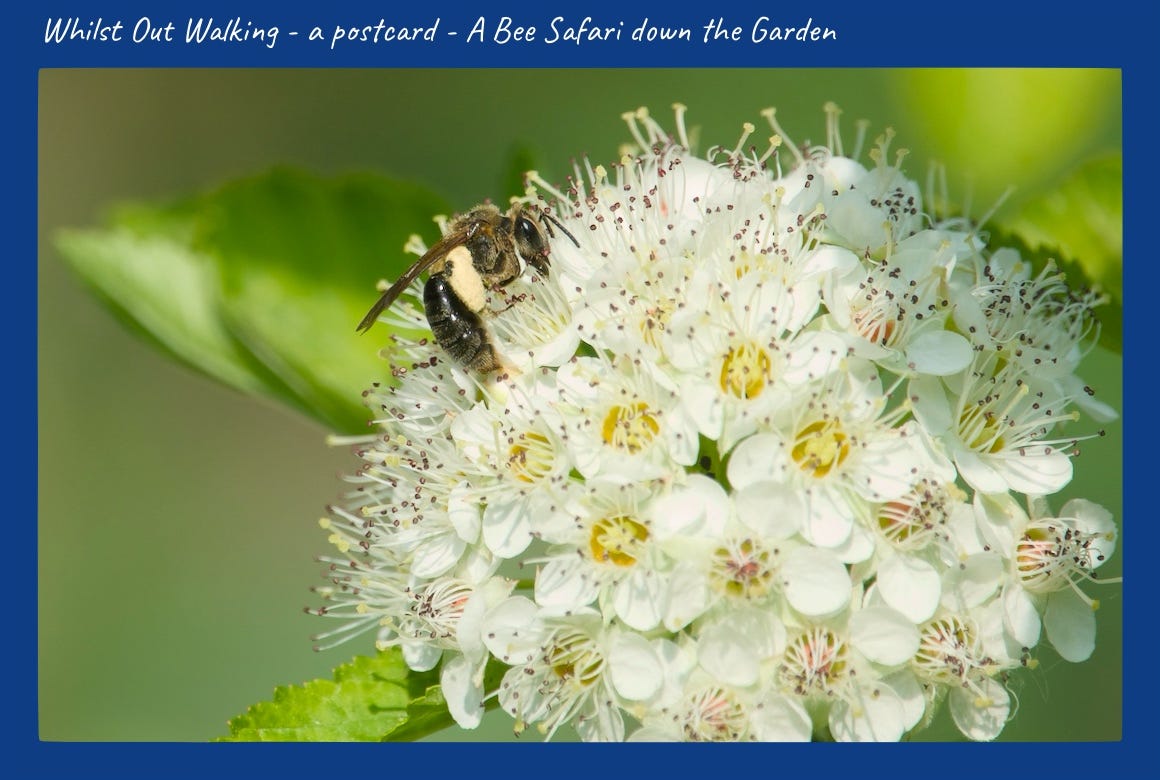
Today I am writing about my neighbourhood bees - mostly Bumble Bees. The bee in the postcard is a Hawthorn Miner Bee which, whilst I saw earlier this year and not on this safari, is unusual, and it was in the garden.
If you want to see the 19 Quebec BB species download an excellent illustration from this link - Quebec Bumble Bee Illustration. I won’t post it directly here as it’s not my illustration. I particularly like the common name of B. perplexus which is the Confusing Bumble Bee 😉
I went on a Bee Safari, just in my garden to try to document what species are easily observed here in suburbia as summer slows down. I’ll get to that in a moment, but first wanted to note that:
It is indeed true that there are fewer insects in general to be seen in recent years, and that is being noticed by lay naturalists as well as entomologists, which tells you something about the importance and scale of the decrease.
Not all bees visit all flowers. Far from it, if you are a bee that has evolved to make a living from, let us say, Golden Rod flowers there is no point being out and about until the past week or so as there were few, if any, of the flowers you are able to get nectar from.
Bumble Bees all belong to the genus Bombus. Typically they are stout and hairy, average about 1.5 to 2.5 cm in length. Usually black with broad yellow or orange bands, two large compound eyes and three simple eyes, on top of the head. There are also two sensitive odor-detecting antennae. Workers are equipped with a specialized pollen-collecting structure on the fourth segment of both of the hind legs, known as a pollen basket.
In my short walk around the garden I encountered a surprising range of bees and other insects. More than I will highlight, as I did not get good photographs of them all. What I do want to draw attention to, is that a large part of the reason I encountered this variety (note the comment above about decreasing insect numbers) was undoubtedly because my/our garden is deliberately planted and managed to provide not only a wide range of native flowering plants, shrubs, trees but also because we have tried to provide space for the insects to make a home. To burrow into decaying wood, under the soil, in sheltered spots where eggs can be laid and eventually hatch into healthy adults. If gardens are too full of non-native plants, of grass lawns, of sites to make a nest and to overwinter then these splendid insects will not find a place to live and numbers will continue to fall. Gardening is more than lawns and roses.
A couple of years ago we thought to increase our knowledge of Bumble Bees - how hard could it be? Very, it soon transpired. Interesting, fascinating, but separating one species from another is not always that simple. If you would like to learn more, then this well illustrated book is recommended. The link is to my local independent bookstore, but you can buy elsewhere.
So I wandered around and saw:
1. European Honey Bees
Getting these out of the way first. We all love honey and these are the bees that make it, but they are not native and if there are too many in an area they can outcompete the natives for access to the available nectar. A few hives is good, too many is quite the opposite. Back in England 30 years ago I kept bees in hives at the bottom of the garden, and really enjoyed the experience to say nothing of having the honey on my toast … but that was then. These are the easily identified European Honey Bees:


2. Common Eastern Bumble Bee


These are found in the east of the continent - as you would guess - and there are many locally. Very important pollinators of a wide range of plants. If you see any BB there is a high probability it is one of these. Note the prominent pollen sac on the bee to the left above.
3. Brown-belted Bumble Bee
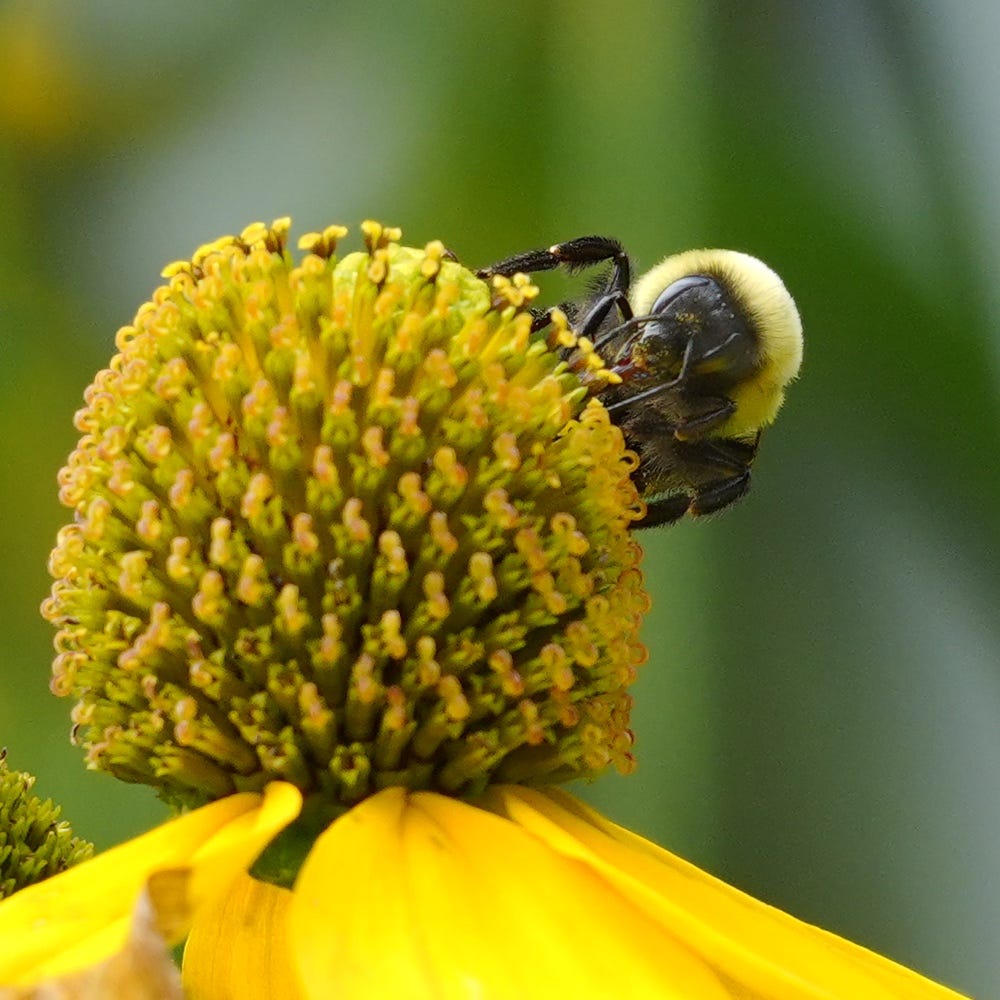
Nests are small , well defended, colonies of fewer than 50 workers, may be on the ground surface or more often underground. A eusocial bee, in which the inhabitants of the colony all work together to rear young with tasks divided amongst reproductive and non-reproductive castes.
4. Tricolored Bumble Bee
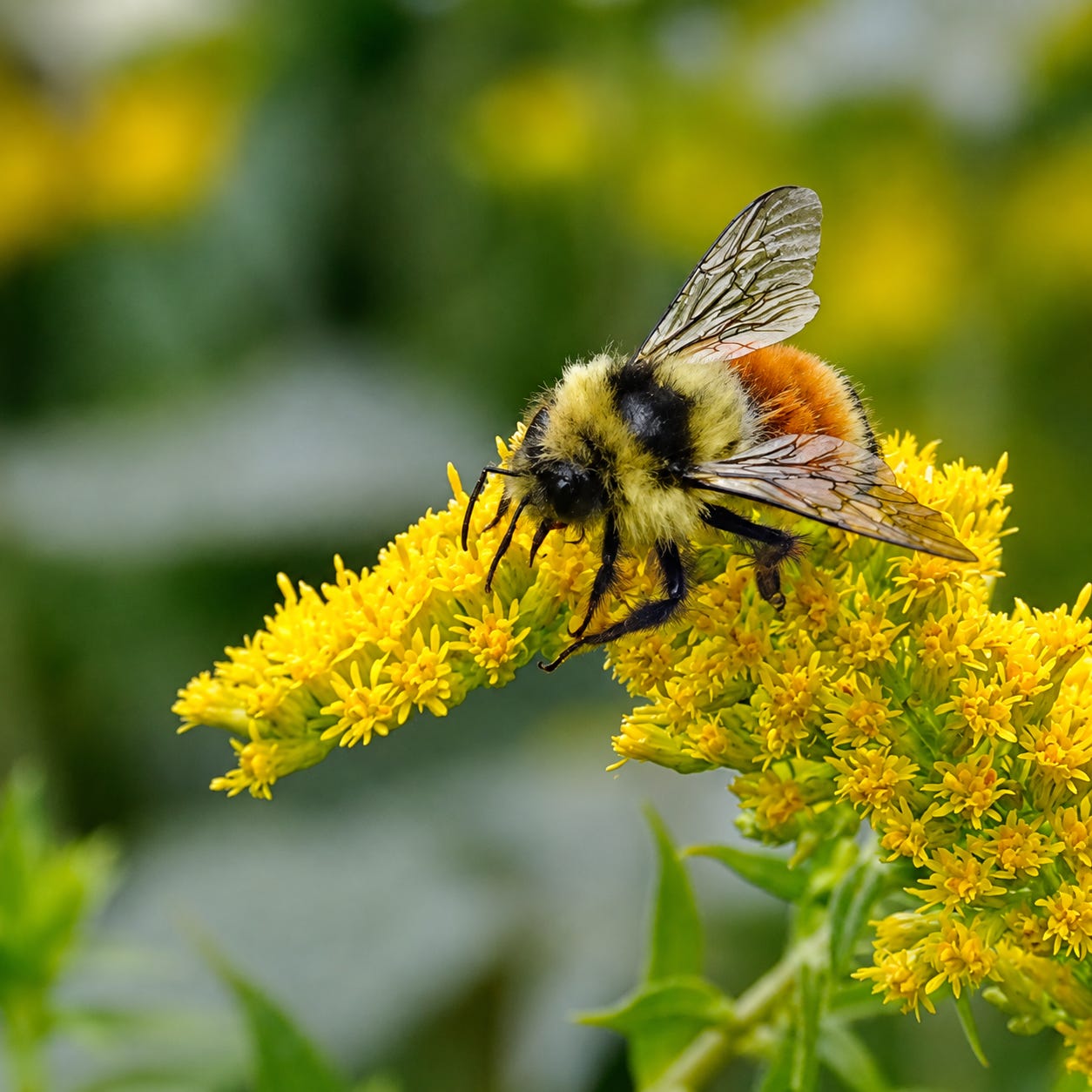
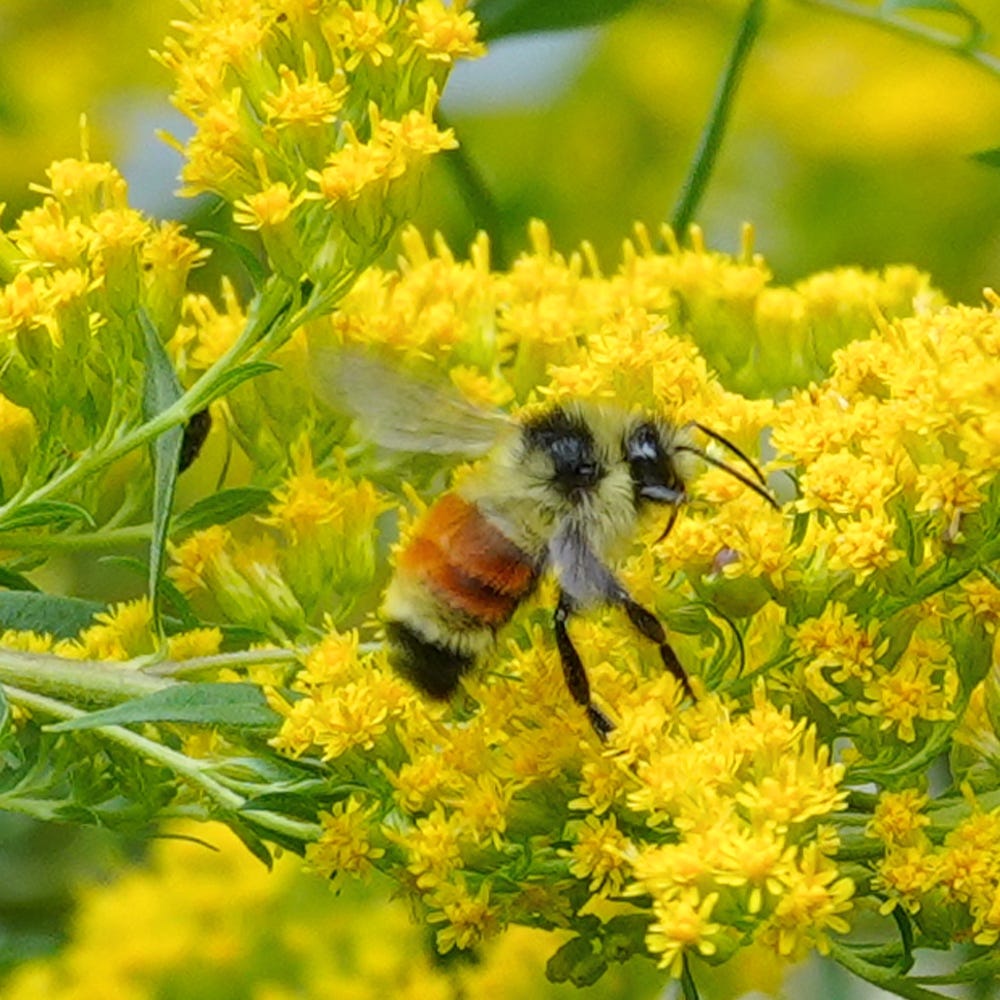
Queens emerge early, and in-ground colonies last well into September. Worker numbers reach a peak in late July, with new queens and drones present from late July to September. A generalist forager. Favorite plants include goldenrod, milkweed, raspberries, and blueberries. Commonly found in meadows, gardens, orchards, and forest edges throughout the northeastern United States and across Canada.
5. Lemon Cuckoo Bumble Bee
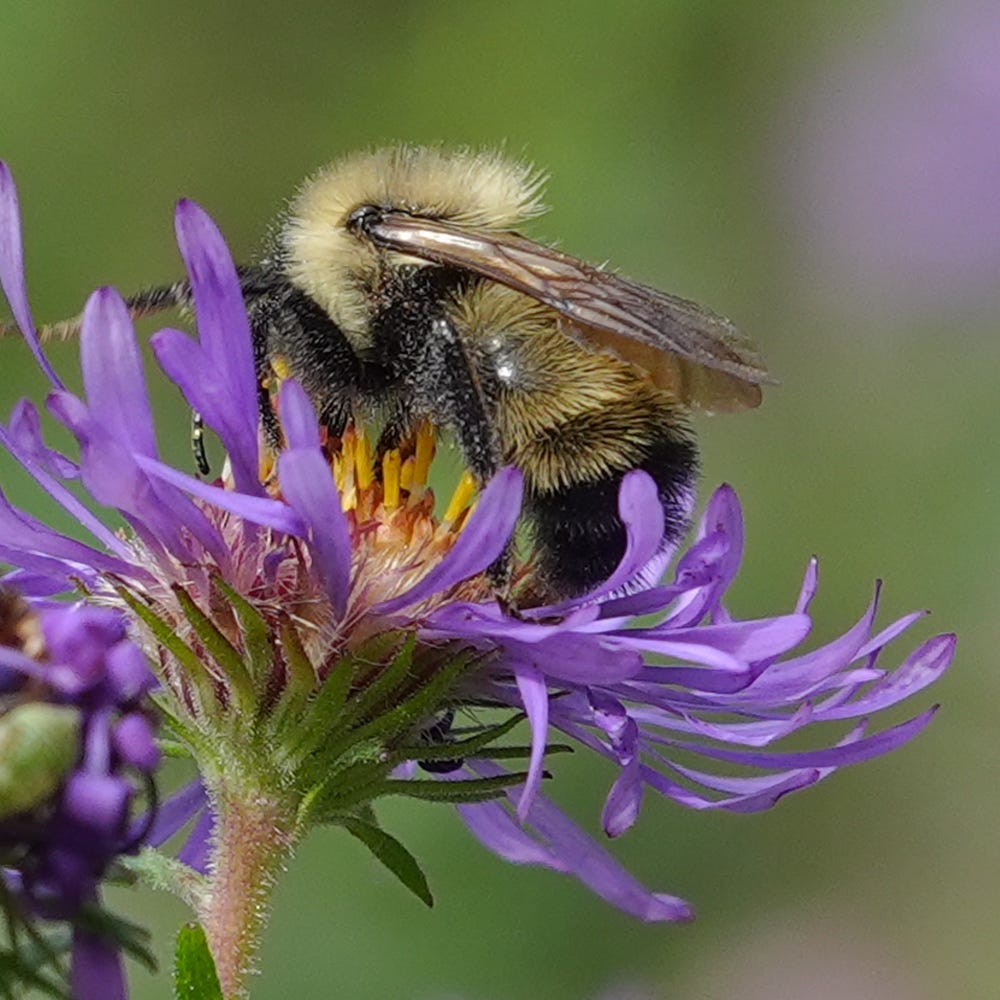
Unusually for a BB, these are parasitic in the nests of other BB species, such as the Common Eastern Bumblebee. The invading female enters the host nests, kills the resident queen, and lays her eggs. The host workers then raise the parasite’s young because they know no better. Native to eastern North America
This species lacks a pollen basket, a characteristic that affects its behavior and interactions within the colony. Individuals rely on the host colony for food and trick the worker bees into feeding it by imitating the pheromones and begging behavior of the colony’s own larvae. Thereby obtaining food without expending energy on pollen collection.
6. Leafcutter Bee (probably)
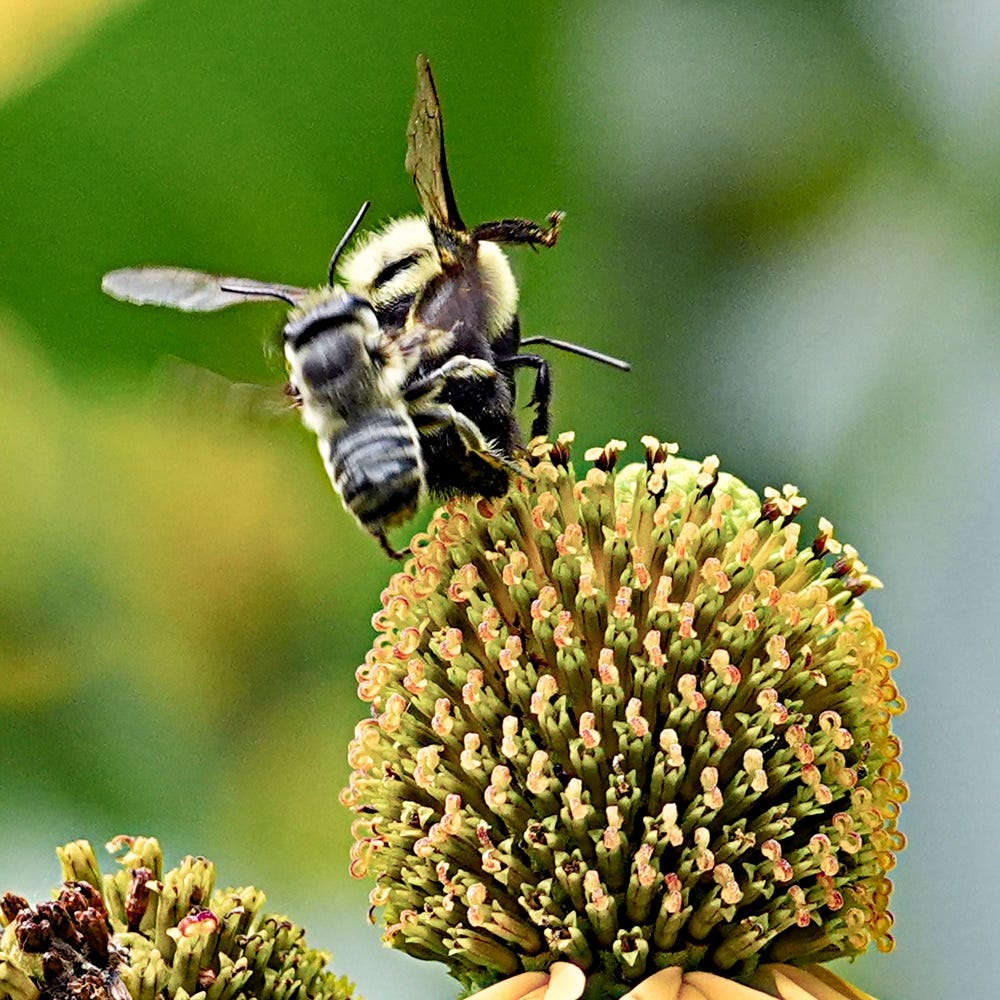
One of a large group of solitary bees, that also includes the resin bees and mortar bees. While other genera within the family Megachilidae chew leaves or petals into fragments to build their nests, certain species neatly cut pieces of leaves or petals, hence their common name. This is one of the largest genera of bees, with more than 1500 species. Important pollinators.
I was actually photographing a large Brown-belted Bumble Bee when, as I pressed the shutter this solitary bee crash-landed onto the BB’s rear.
7. Two-spotted Bumble Bee
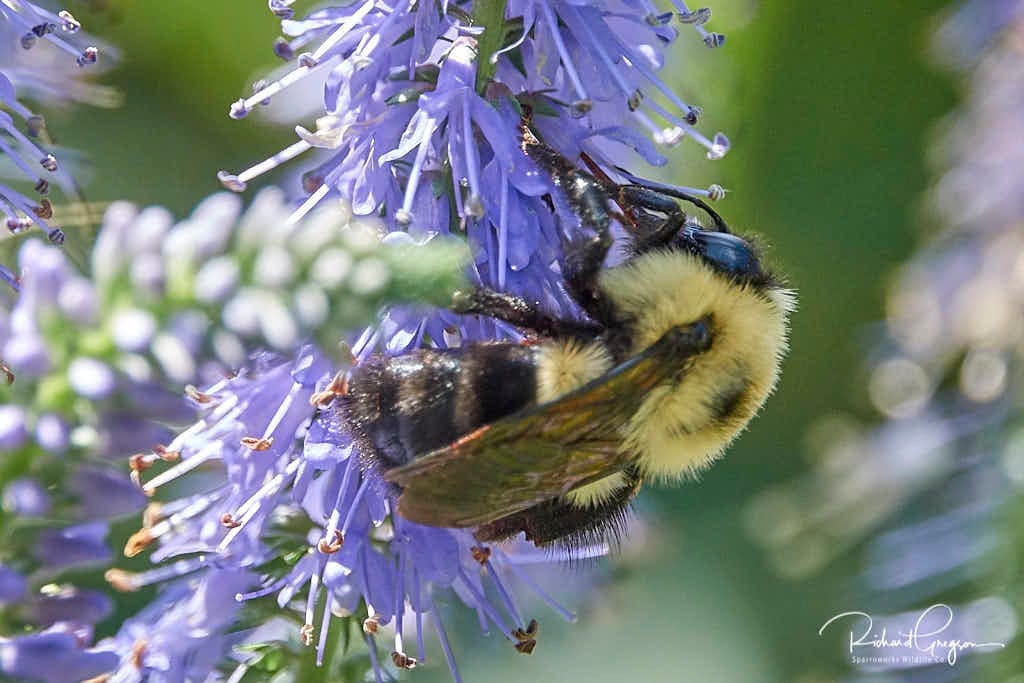
Queens forage on flowers by hanging upside down on the stamens, clutching the filament with their forelegs, and scraping off pollen using their middle and hind legs. Workers enter the flowers by pushing their head and part of their thorax in and extending the maxillae and tongue to drink nectar.
And … a Bald-faced Hornet
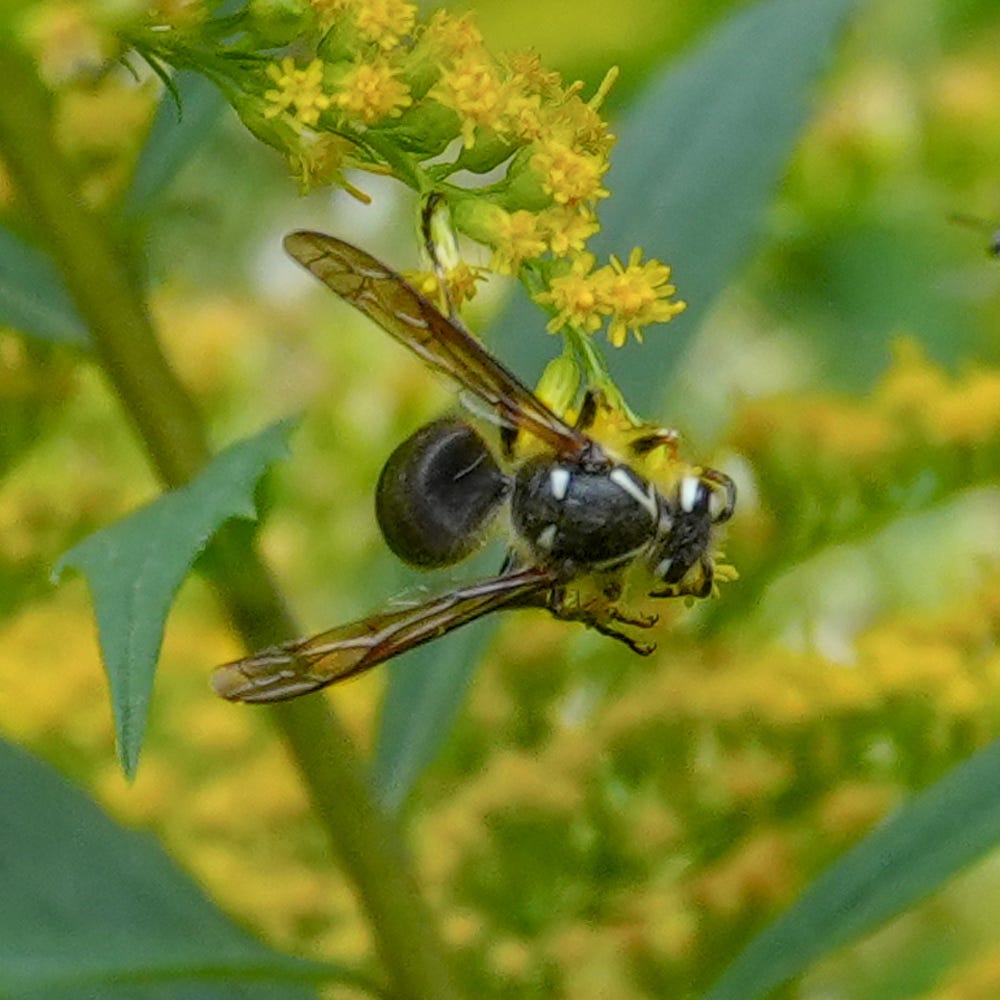
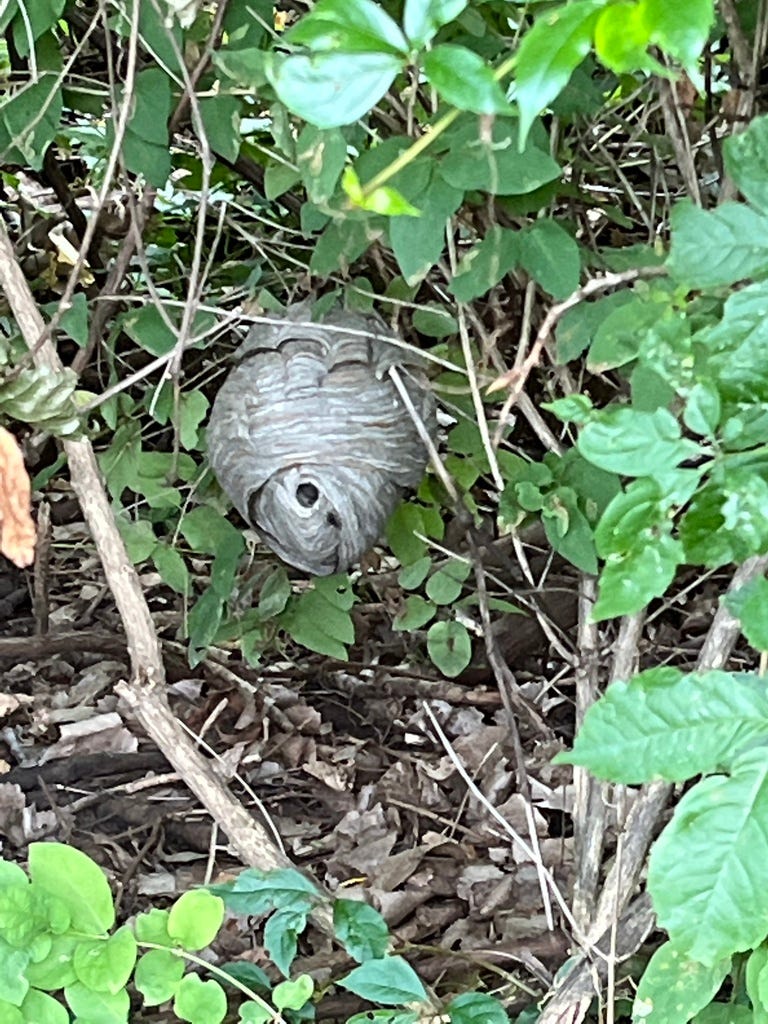
Not a bee, but a relative. Bald-faced Hornets build large, paper-like nests and exhibit fierce territorial behaviour. They aren’t true hornets but a type of yellowjacket with distinct features and powerful stings. This was happily mingling with the other pollinators at work that day. The queen starts building the nest in spring. Workers expand the nest throughout summer until by late summer, it may house 400–700 individuals. The nest is abandoned in winter and never reused. Here is one I found a while ago in the grounds of a local school:
Also … not a bee : Transverse-banded Hover/Flower Fly
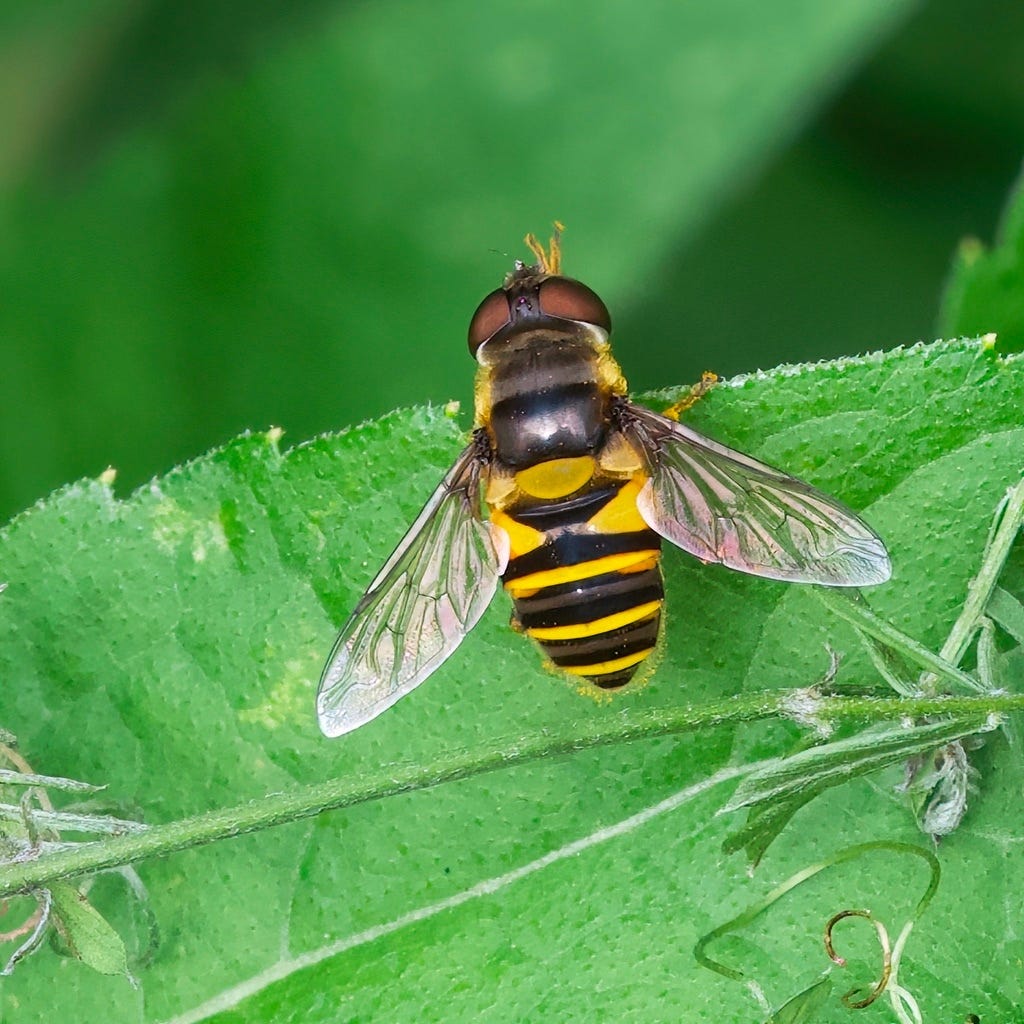
Quite common. It is neither a bee nor a wasp, despite its yellow and black banded body, but a true fly. The species mimic stinging Hymenoptera, with black and yellow abdominal banding that provides some protection from predators. Their larvae are (aphid) predators, while adults visit flowers for nectar and contribute to pollination. There is some more information about this group of insects by following this link …


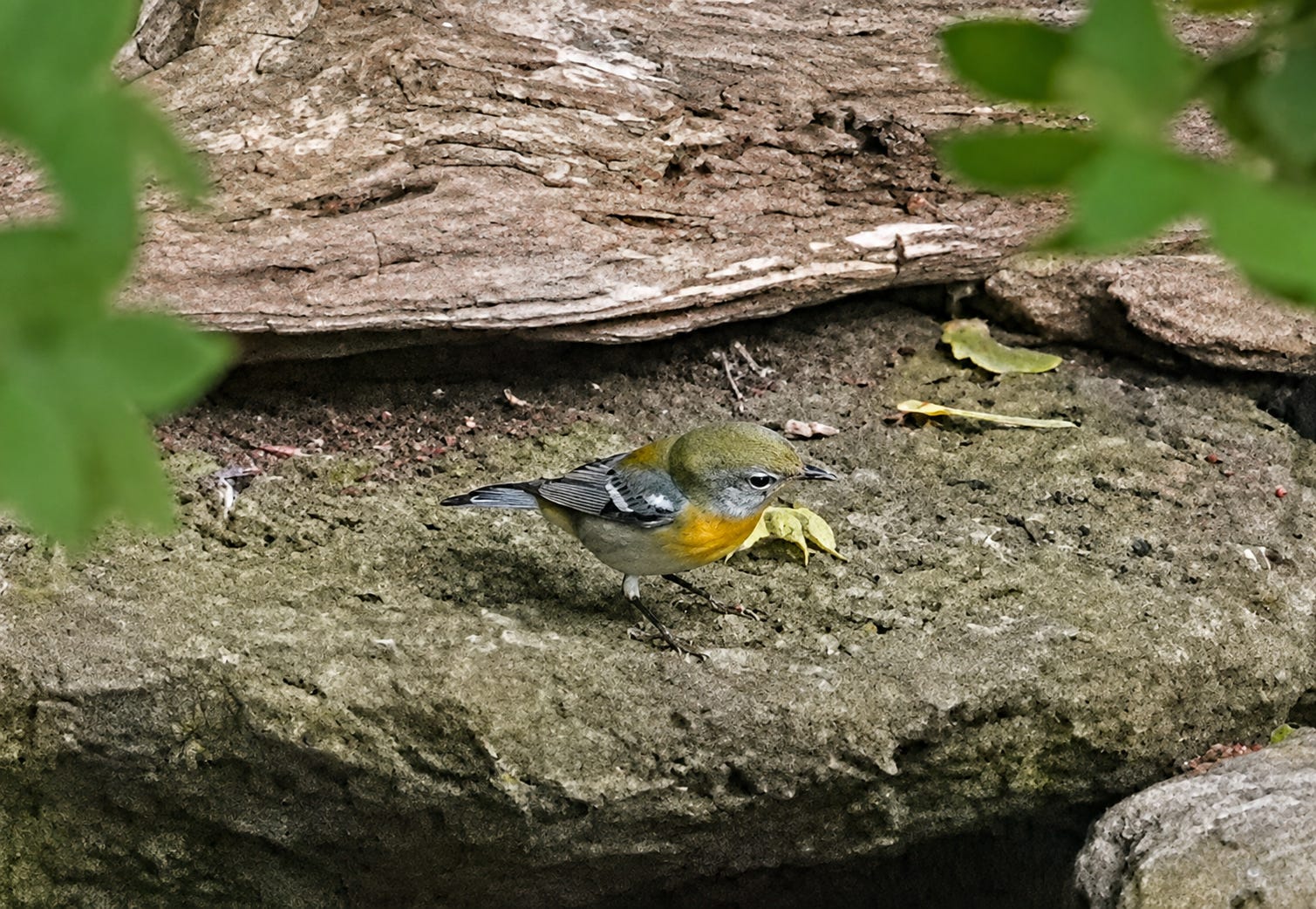
Must have a bird each week, if possible - here’s a Northern Parula that passed through yesterday.
A civil engineer’s take on beaver dams -
with cute video of baby beavers
This is a really interesting video made by a civil engineer who actually builds dams and notices the very superior engineering details that Beavers knew long before we did.

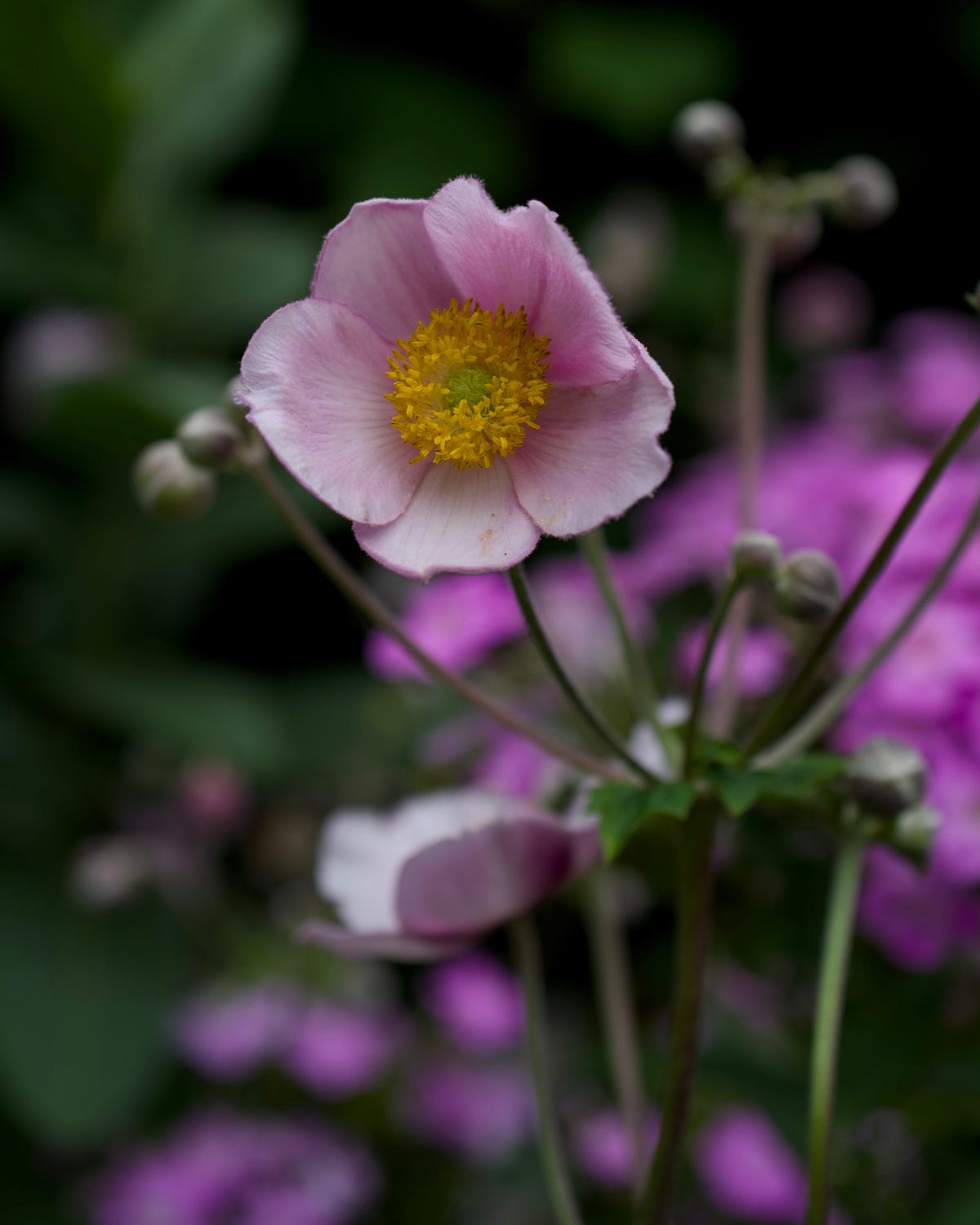
A favourite, non native flower. Japanese Anemone.
Your tri-coloured bumblebee is particularly beautiful.
It's amusing that you have a species that is called the Confusing Bumblebee, many people find them all confusing. Over here, the workers of the Buff-tailed and White Tailed bumblebees are very difficult to tell apart (as you probably remember).
Good fun, as usual.