Early December ... with wildlife and magic
Sunday 7 December
Lonesome Traveller
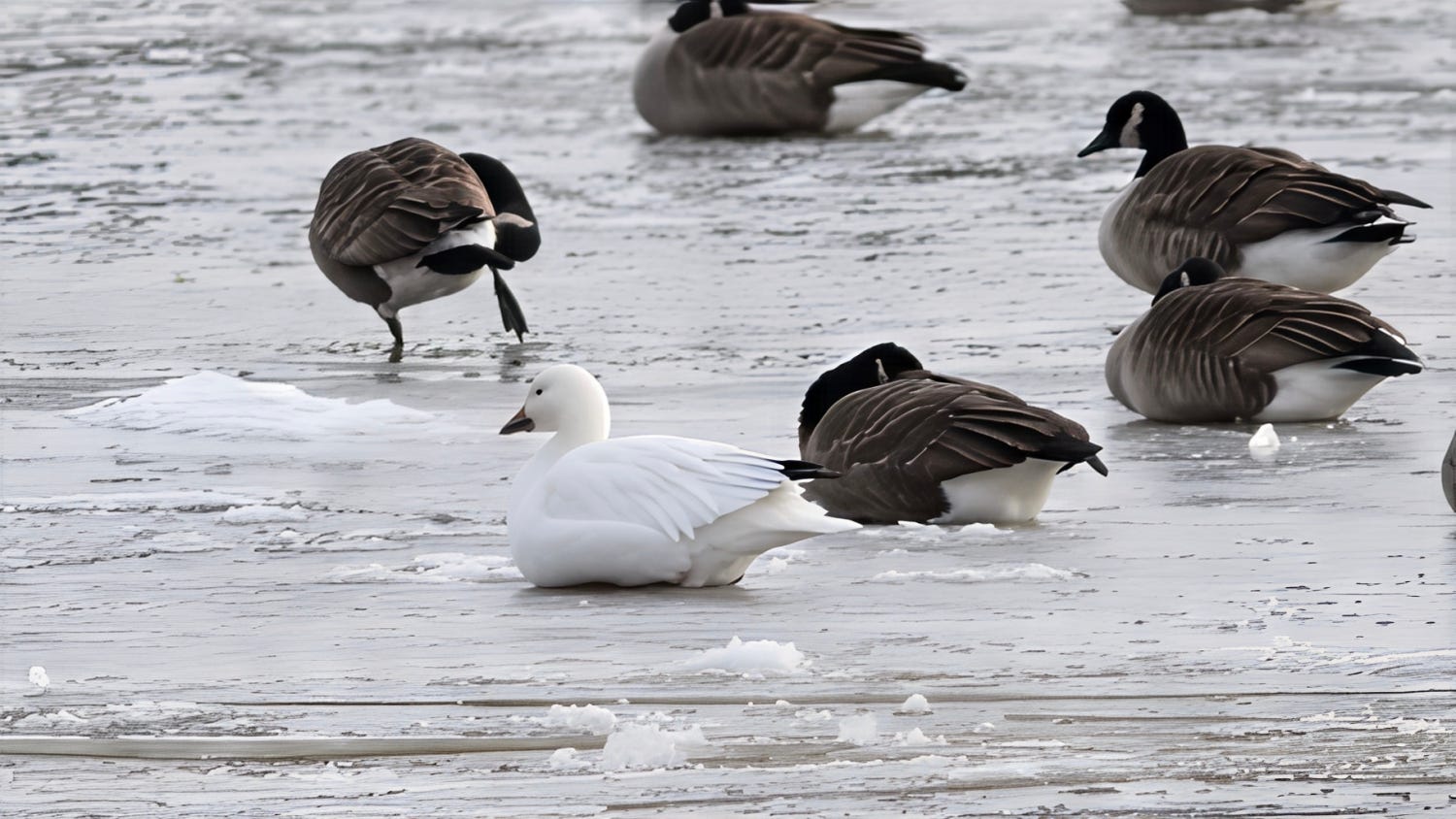
In mid-week we realised that we had, a bit earlier than usual, reached the time of year when the ice on the river begins to freeze over and gatherings of Geese and some remnant Ducks come together before heading southwards. Sitting amongst a couple of hundred Canada Geese on the ice was this lone Snow Goose.

Green Birding
I have long been an advocate for “Green Birding” - by which I mean going to look at birds that you can find without the use of an internal combustion engine. This week I read the article linked to below, and it is something that, I earnestly hope, many birders will take to heart.

… through no fault of its own the Five-striped Sparrow is bad for the planet. In our hot pursuit of this rarity, birdwatchers drive — we drive a lot. If a songbird could express a carbon footprint, the Five-striped Sparrow would be a tiny coal-fired power plant. Birdwatching’s dirty little secret is that in our enjoyment of nature we birders warm the planet. Even as we go electric on the road, petroleum nevertheless fuels our adventures. To be sure, we are not alone in this regard; lots of people drive to work, to the doctor, to drink microbrews, to play outdoors. Most of us board flights for vacations and to visit faraway family. We’re prosperous — we burn stuff.
I wrote a book about this a decade or more ago … only available as an ebook now, though there may be second hand print copies around somewhere.Use the button below to download.
… at the very least, if you are able, try to walk more than you drive during a bird count, or at least walk more than a mile or so … In the end, when it comes to carbon and consumption, there’s little new here among our obligations as citizens, whether we join mass movements or act alone. Apart from that, I know of no reliable path through this moral thicket — other than to walk. I walk in nature even as hope for wildlife and wild places seems elusive. I walk in nature because equanimity everywhere else can be elusive. And I walk in nature so that I might love myself, love the world, and do what I can to make it a better place.
(* Sorry about the price of the ebook - it was set by the publisher. I’d be happy, after a decade, for it to be free.)

More about the Tufted Titmouse
As I have written a couple of times, about the very welcome Tufted Titmouse that has settled down in our garden and is seen most days, usually at our feeders. These are not especially common birds up here, not at all. I think our last local sighting was over five years ago and that was only for a few minutes … so it’s surprising to have this new lodger on the premises. Anyway, this sent me off looking for information about their natural range and I came across an article from Birds Canada - linked to below. Our guy is just one of only 1200 members of the species currently present in Canada. OK, that’s an estimate, but it does make this specific bird extra special.
The Tufted Titmouse reaches the northern limit of its distribution in southern Ontario, Quebec, and New Brunswick. There are approximately 1,200 individuals in Canada, representing just 0.01% of the global population.
https://naturecounts.ca/nc/socb-epoc/species.jsp?sp=tuftit
The Canadian population of Tufted Titmouse is effectively monitored by the Breeding Bird Survey (BBS) and the Christmas Bird Count (CBC), which both provide good geographic coverage. Both programs report very large increases of 4000% or more since 1970, with the BBS indicating the most rapid growth between the early 1990s and early 2010s and the CBC showing an ongoing acceleration of growth. This aligns well with the breeding bird atlases for Ontario, Quebec, and the Maritimes, which have all documented a northward expansion of the population since the 1980s or 1990s.
An article I read a few days ago, asked:
Is Environmentalism Out Of Ideas?
The link below - worth reading for some ponderable ideas - suggests that the big national environmental organisations could achieve greater success by working more at a local level … the “can’t see the wood for the trees” principle is sometimes a problem at the national level. Quote :
(Environmental) organizations need to more fully delegate the job of persuasion. I’d like to see national organizations dedicate a larger fraction of their funding to local groups, whether those are existing local chapters or like-minded independent organizations. With expanded financial and technical support, members of these groups can more effectively use their place-specific knowhow, and credibility, to recruit new allies. They can do this by, for example, pointing out the tangible and intangible benefits of a healthy local environment, from climate resilience to emotional well-being; by working with local officials on proactive laws and policies; by helping their neighbors steward and restore their place. And when a bedrock national law is at risk … they can remind their supporters to pick up the phone.

Out and About This Week
MBO Video
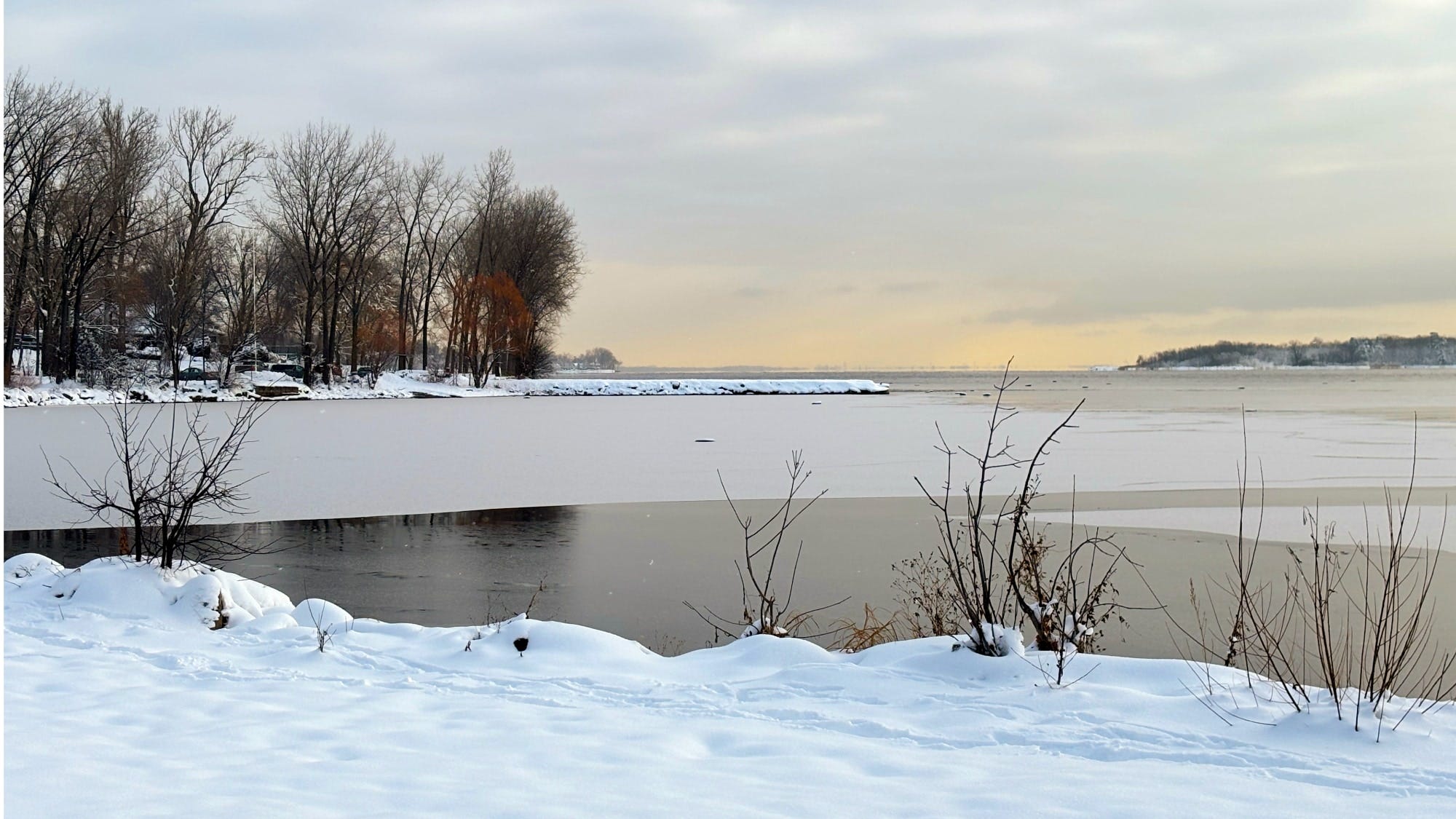
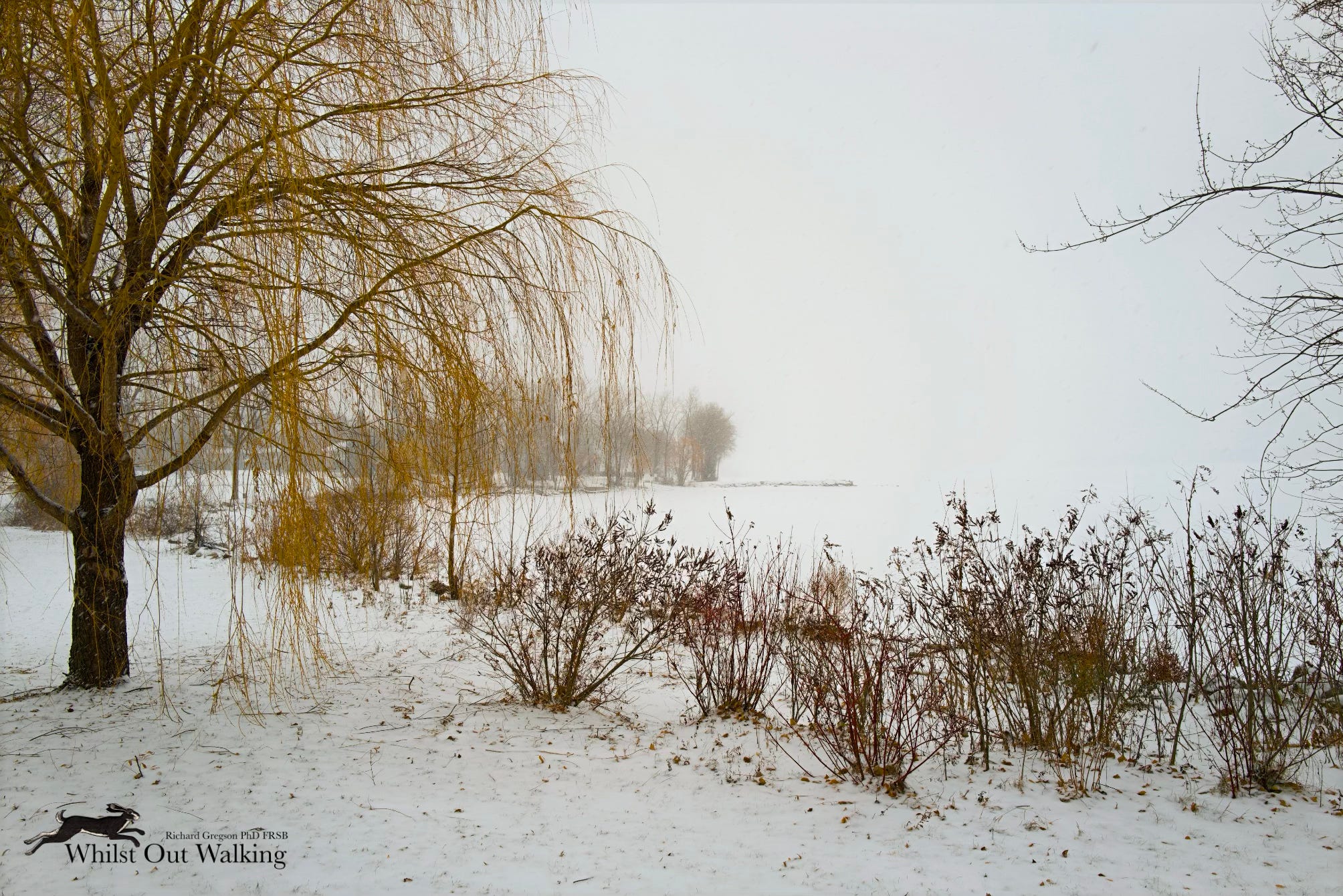
I have several times made reference here to the nearby MBO (Montreal/McGill Bird Observatory) which we support, and where we volunteer during the winter months that are now well under way. During this past week temperatures fell to -15C, or to -25C when windchill is factored in, so yes, winter is here. This brief video illustrates some of the research done there during the spring, summer and fall months.
https://www.facebook.com/reel/5659117554108255
(I’m afraid the link is to a video on Facebook, I have not found a link suitable for those who do not have FB accounts. Sorry)


These are Beautiful. Real Magic.
… and quite remarkable. How did anyone make these? From the Glass Flowers Gallery of the Harvard Botanical Museum.

There is a particular uneasiness one feels when confronted with true magic. Not the slight-of-hand, rabbit out of a hat, Vegas strip kid’s birthday party kind of magic—the kind that amuses and delights, leaving you chuckling and checking your ears for coins. No, I’m talking about real magic—the kind that splices the fabric of reality, that fractures your sense of truth and uproots your ability to perceive it. The kind that sows distrust between your head and your heart, that beckons you to abandon your footing, to suspend all disbelief. The kind of magic that makes you believe.
Dead Tree Brings New Life
Don’t fell that dead tree, leave the trunk standing - it still has important services to offer

Going down a sidetrack (this one is optional)
Not at all wildlife related but you might enjoy a few minutes with this …


On Wednesdays I offer some simple notes about how to recognize plants and wildlife that you can meet by walking close to your home … some basic ID landmarks. We have done insects and at the moment we are looking at flowering plants (here’s a link to the latest edition) and soon we will be entering the world of birds. Previous posts are all available via the menu link at the top of the page.

… and one of the insect editions:

Every season brings something special, however there are some moments in winter (on the trail or local path) that just bring up a unique type of feeling. The cold air, coupled with the stillness and silence create absolute magic.