
Early Birders and Titmouses
Sunday 30 November

Many weeks, particularly at the cooler ends of each year, I find myself wondering if I am going to have anything interesting enough to share for the Sunday edition … and then something pops up and away we go. Windchill today is around -8C … not enough to keep us indoors, but enough to ensure we have a destination before setting out.
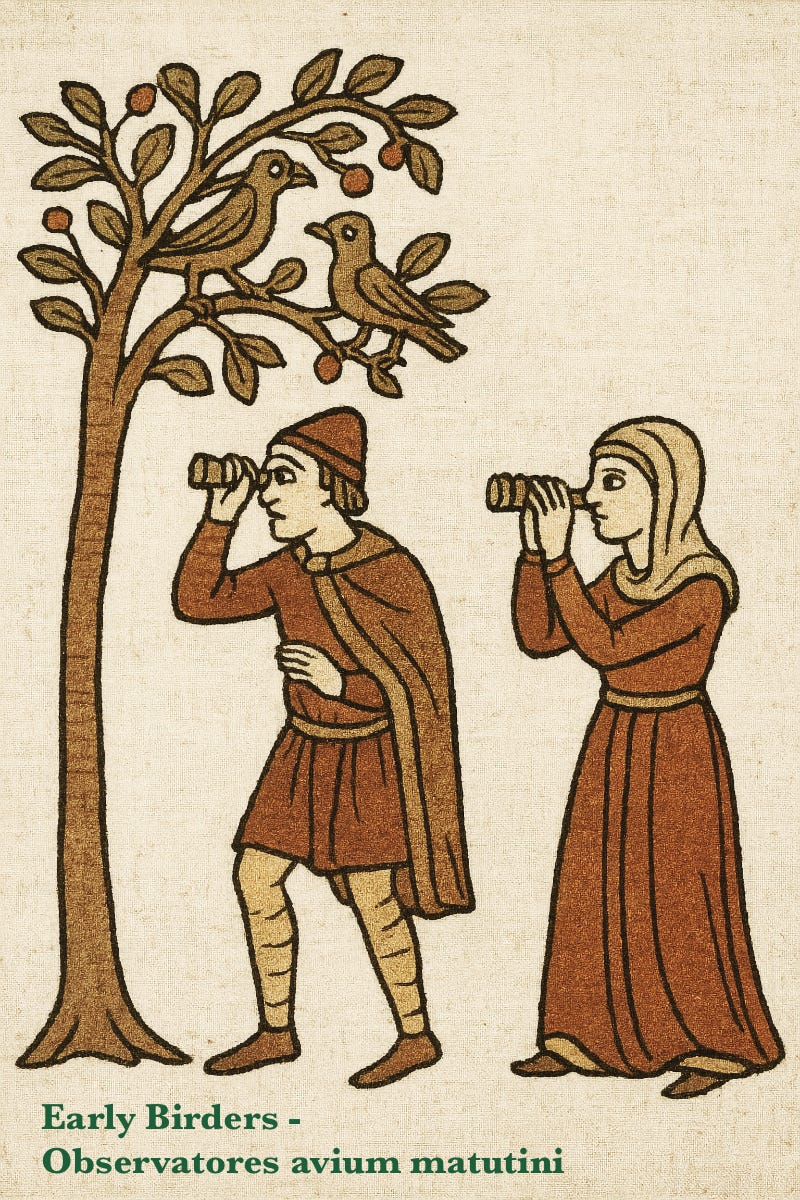
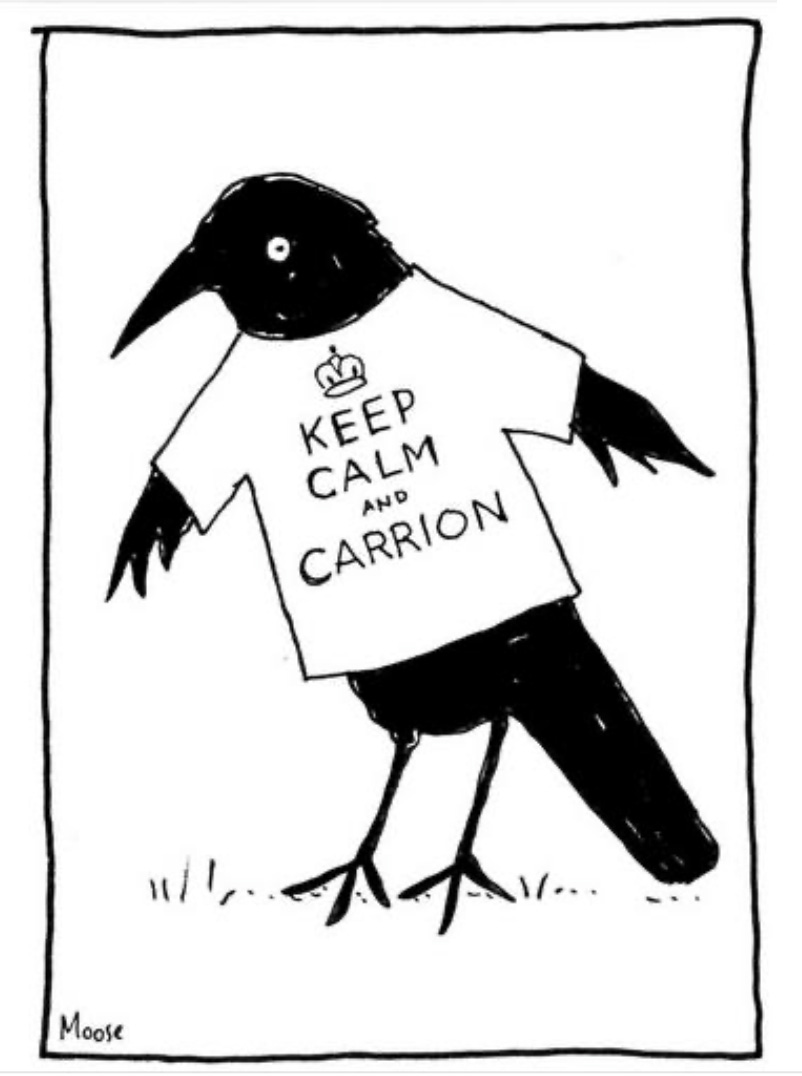
This image below made me smile anyway. Matutini refers to “morning prayers” which, I suppose, isn’t so far from what we do as we raise our binoculars.
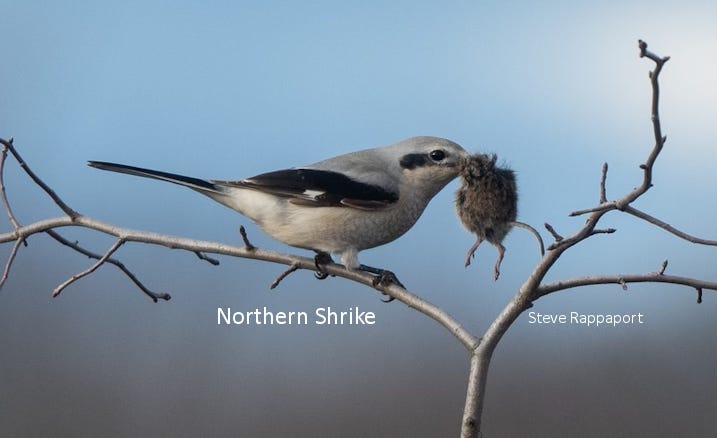
And so … temperatures are falling and the forecast are for cooler than usual during December. There have been meetings to attend, local politics to put right and a few others limitations on the getting out walking as often this week. Nevertheless, we did manage to go birding at the banding station on Thursday morning - cool and muddy. While there we walk a census trail noting the birds we find along the way. At one point I was happily looking at a group of nine Mourning Doves - aka Dopes - on the ground, all totally unfazed by my presence while my favorite person (J) was enjoying views of a Northern Shrike swallowing a mouse in the opposite direction. So, no photograph of my own, just the one further down which I found and which exemplifies J’s description.
Isn’t that just the way the world turns sometimes 😉
Northern Shrikes (Lanius borealis) are usually seen once or twice in winter where we go walking, but they are not common. Despite being songbirds they are active predators. They have a smart slate‑gray back, white underparts, and a strongly marked black mask stretching from the eye to the neck. Really, in many ways they more resemble a small hawk than a typical songbird with a hawk-like sharp, hooked bill for seizing insects, small mammals, and even other birds. Prey is often impaled on thorns or barbed wire for later consumption or just for ease of handling - hence the common name of “butcher bird.” Shrikes don’t have talons like hawks do and so impaling prey on branches enables them to use these sharp objects to tear their prey apart. Is this yet another example of a bird using tools?
They breed in northern forests and on the tundra, but migrate southward in winter, looking for open fields and scrublands where prey remains abundant. Their calls are a harsh, metallic whistles. While seeking the photo below, I learned that “Shrikes first paralyze mice by pinching their spinal cords with their beak. Then, they break the neck by shaking the mouse aggressively — they are able to generate up to 6G of acceleration through this shaking.”
Apparently, they are extremely territorial. In their northern breeding territory that is to be expected, but they are seemingly almost as keen on keeping intruders away in the winter once they have found somewhere with a good food supply … or even a good, high vantage point on a branch that they consider the be “theirs”.
I compensated for missing the Shrike by seeing a Red-bellied Woodpecker - also not common here, and also very nice.
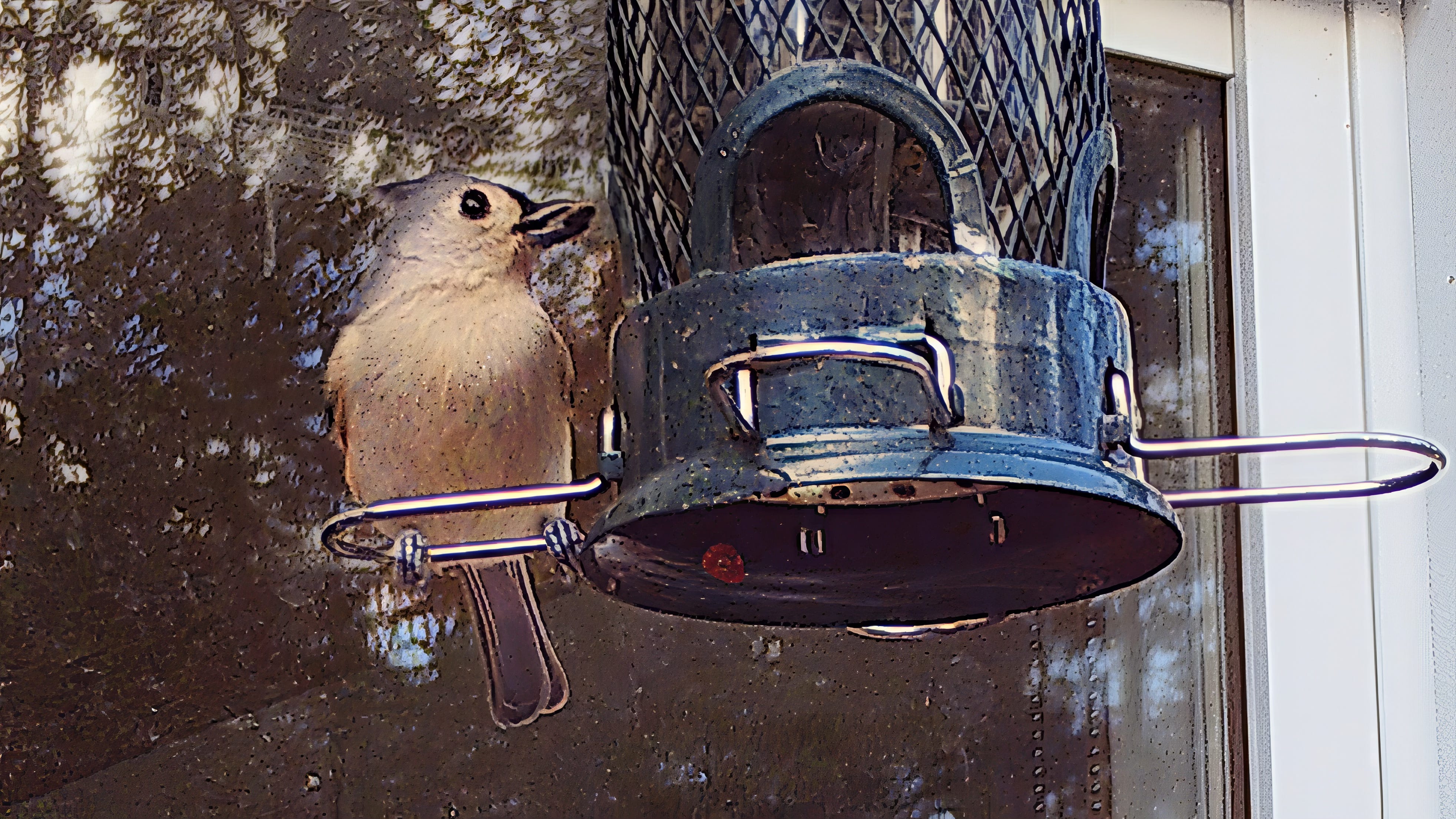
The Tufted Titmouse that caused excitement in the garden a week ago seems to have settled in and has been seen daily, albeit making lightening raids on the feeders to grab a seed or a peanut and head off again almost without pausing. Consequently, I don’t have any more “good” photos than the ones I posted before but I obtained (75% discount clearance sale!) and set up a trail camera in the hope of getting something - see below, quite an embarrassingly horrible picture, but proof the bird was here. This is a bird way out at the northern tip of its species’ range. If it is settling in here, as so far seems to be the case, then we need to make sure it can find food and shelter for the real Montreal winter snows to arrive. Fingers crossed.
Titmouse … words are interesting.
I refer readers to https://www.etymonline.com/word/titmouse where we learn that the plural is not “titmice” but in fact “titmouses” for very sound etymological reasons. It might sound strange to a modern ear, but it is also correct.
A surprising expansion in the range of the wood turtle in Quebec has been published. Recent surveys in the Outaouais region of western Quebec have found the species in several new river corridors, suggesting that these vulnerable turtles occupy a broader habitat than previously thought. In theory, this discovery should help provincial planners protect additional stretches of river and wetland, bolstering conservation efforts for a species that’s considered at‑risk in Quebec.

But I do have some photos for you …
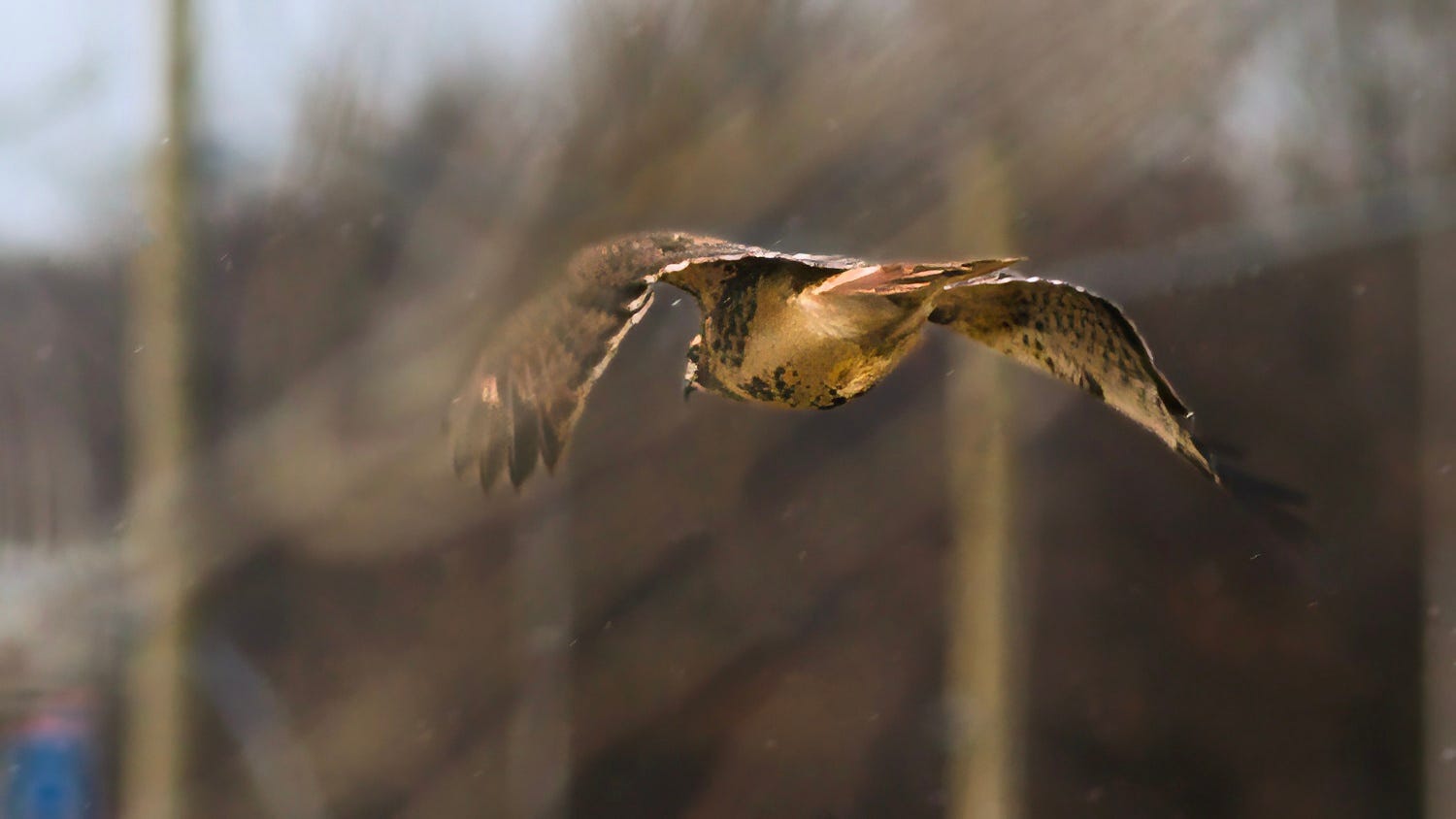
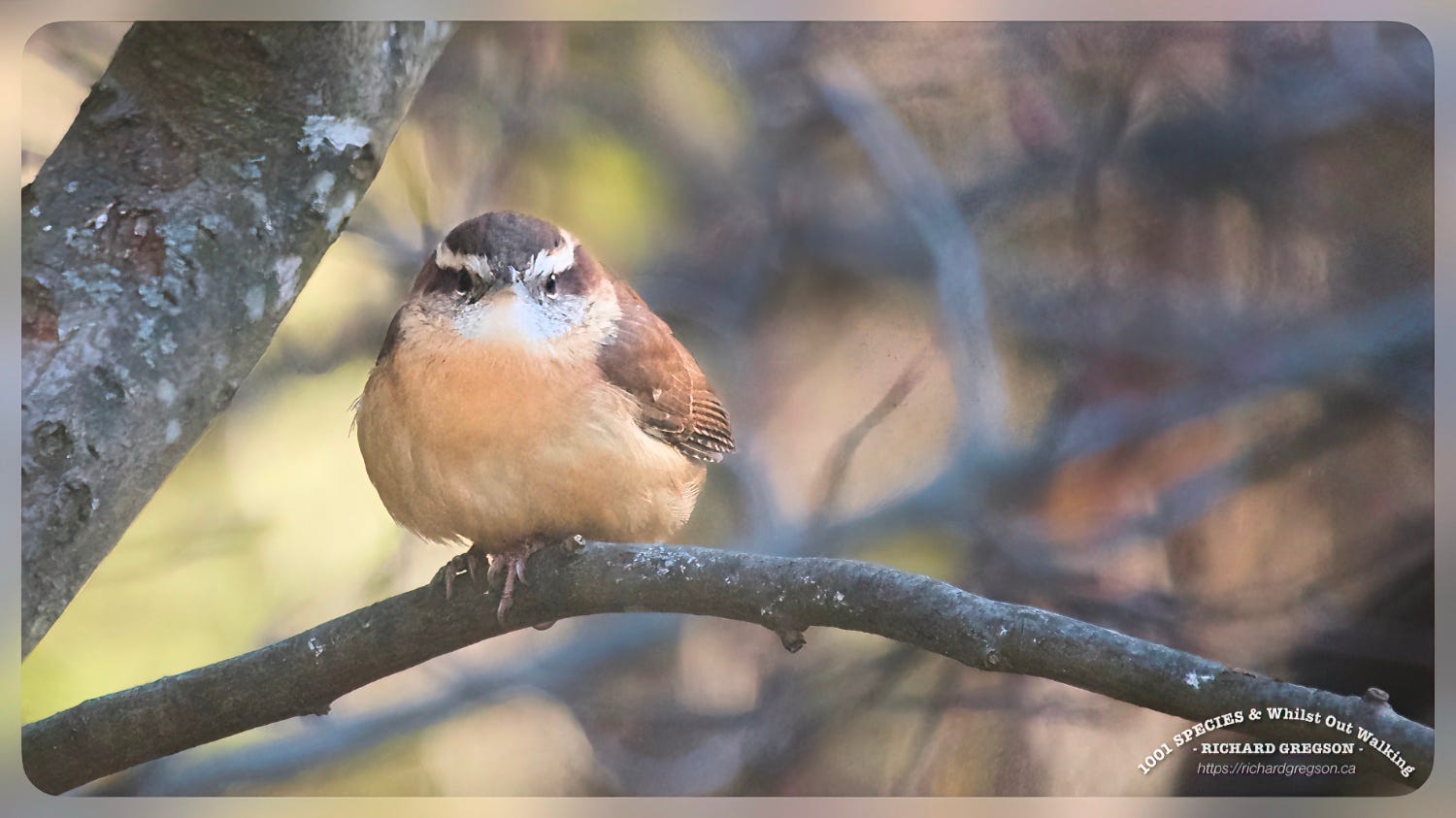
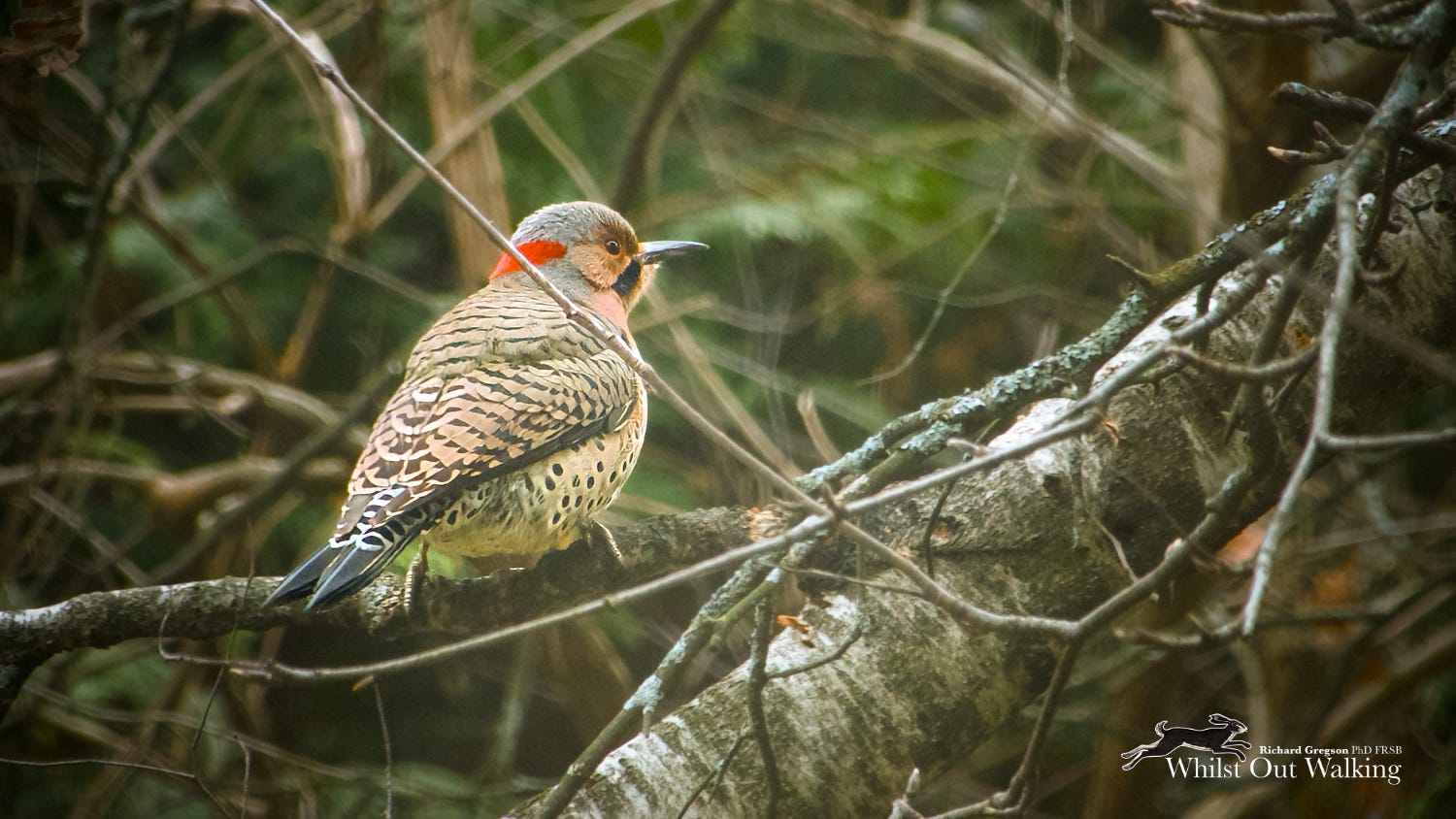
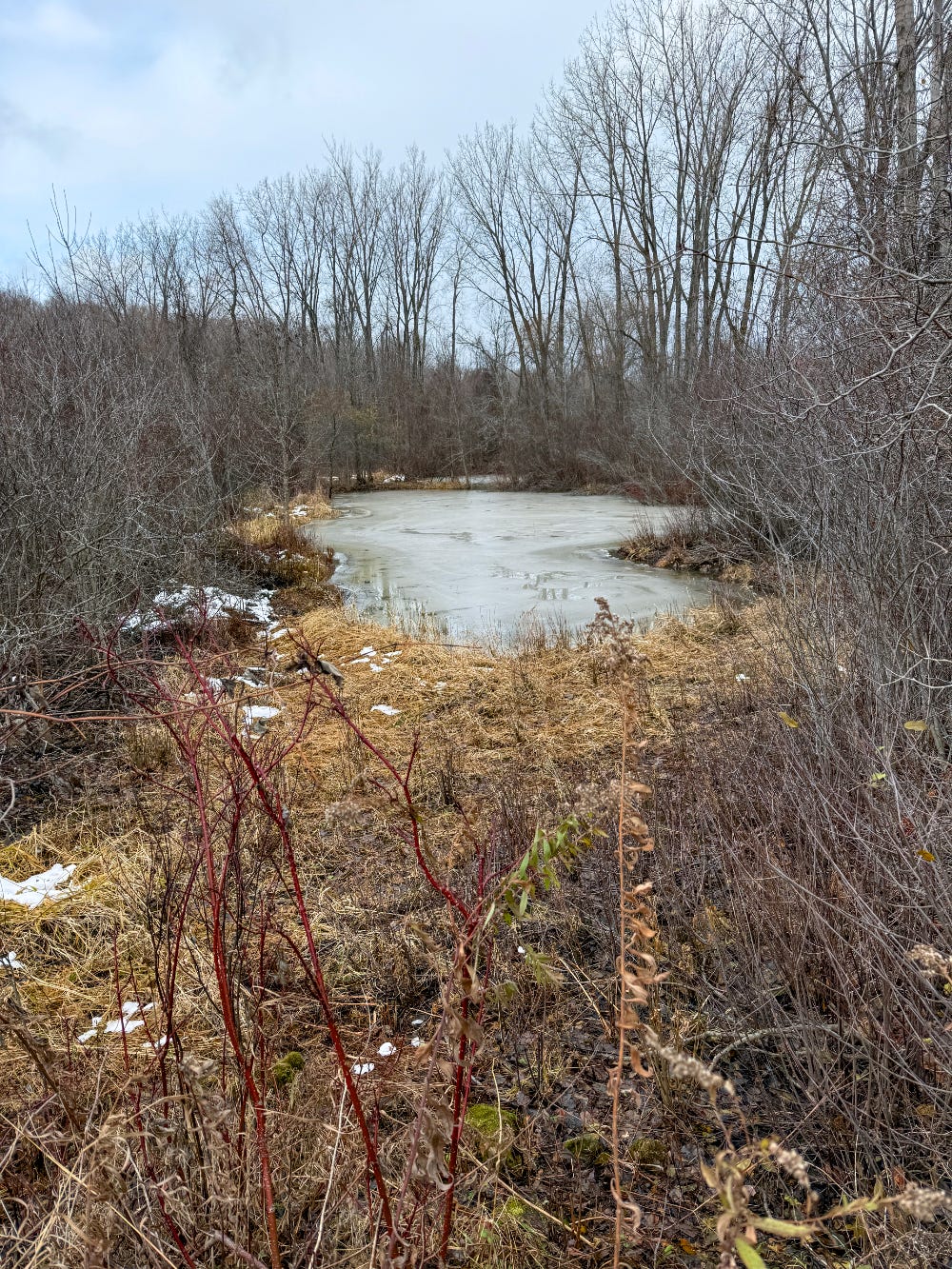
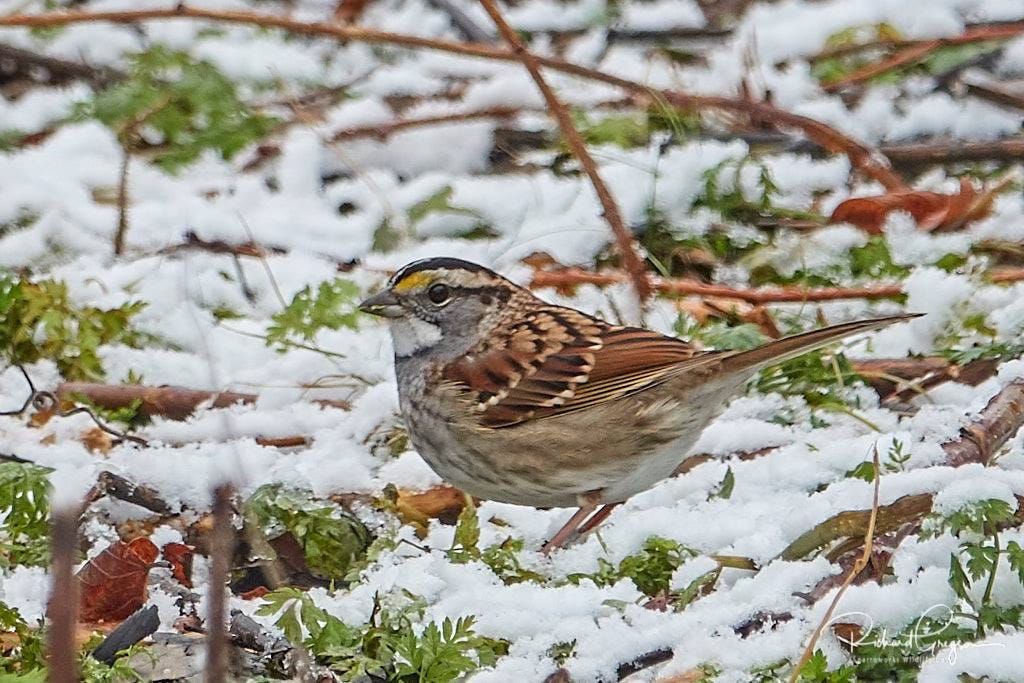

What do we have here?
As I have noted before, a main purpose of these newsletters - other than that I enjoy writing them - is to encourage readers to seek nature close to home and not to assume that there is nothing worth bothering with simply because it is close to home. Gardens, parks and roadside verges can be very rich habitats.
I turned up some notes from two or three years ago when we took part in the Nature Conservancy Canada “Bioblitz” during which we recorded all the species we were able to see in a five day period in our garden and the nearby roads and parks. The total in those five days came to 217. We were limited on that occasion by the requirement to submit a photo of every species via iNaturalist and so birds were not well represented; we saw a good few more than we could report. It turned out in the end that our 217 was the sixth highest total from the whole of Canada and as at least the top two places were taken by observers working in nature reserves we felt we had done tolerably well. All the more so for a small suburban community.
Spurred on by that triumph, if it can be called a triumph, I have been going through our personal records of confirmed species seen anywhere, any time within the boundaries of our town.
It comes to a respectable number - almost exactly 400 species in all. There are undoubtedly more, but these are ones that we have seen and confirmed. A total of at least 400 … far, far more than the chap who told me “I have lived there all my life, but all I see are blackbirds and sparrows”.
Plants 144, Birds 135, Insects 81, Arachnids 13, Fungi 11, Mammals 10, Molluscs 2, Amphibians 2, Reptiles 2.
“Digitally Collecting” Wildlife
There is nothing magical or particularly hard about keeping accurate records of species seen in a particular habitat - your patch as such locations are known. It’s not compulsory to keep lists … unless like me you are wired from birth to list everything. Taxonomy - that’s the science of naming and describing species and fitting them into the “tree of life” as it were, is an arcane field of enquiry and most practitioners will be the first to tell you that they they only really “know” about their own specialist and often quite tiny field of interest. Being a biologist (Fellow of the Royal Society of Biology etc) certainly helps me to know what I don’t know but I do know how to find the information I need and that is usually half the battle in putting a name to anything that interests you. No need to have letters after your name - you live where you live, so you are the local expert. You can become a citizen scientist.
In other words, if birds or flowers or spiders or whatever are something you find interesting then you can learn about them too and recording what and where you found your species of particular interest is actually immensely important to building the information needed to protect them. All the more so in these days of climate change and habitat loss. All the specialist biologists in the world cannot gather the breadth of data that is needed - but citizen scientists like you can and do contribute significantly. There are internet tools available to report your observations and I urge everyone to use them. A few have surprisingly accurate artificial intelligence facilities built in that assist you in putting a name to what you see. They are not always infallible, but they will usually narrow the field down enough for you to work out the rest for yourself and they are becoming more accurate every day.
Check out some of these. This is a good season to become familiar with them as there are simply fewer species to consider in winter and you are less likely to be overwhelmed.
iNaturalist will keep a record of all the species of all the groups of plants and animals that you encounter and has the AI ability to help with those names. The downside is that you have to submit a photograph for the AI engine to work on so while plants are easy to take a snap of, things that move fast such as insects and birds can be more problematic. A nice feature is that once you have reported, let us say a Song Sparrow, other users who are often experts in the field will confirm your identification or gently suggest an alternative so you learn as you proceed.
eBird is the worldwide mega-database for bird records. It doesn’t assist in identification but the quality of data within it is superb and as a user you can use its database to discover what is being seen in your area and where recent observations have been made. So if you are desperate to add a sighting of Spotted Sandpiper to your personal life list this is the place to find out where to go to see one. Birds are relatively easy anyway simply because there is so much easily accessible information on the internet and in pocket field guides. So many birders too who are all lovely people and keen to help a novice.
Merlin Bird ID is a FREE app available for smartphones. It doesn’t keep records for you but it helps you identify birds with ease. You’ll get personalized results of birds to expect based on the time of year and your location or your choice of regions around the world, including a digital field guide with more than 80,000 photos and sounds, plus maps, and ID tips! Merlin is the most fully featured and global bird app available, and the only one enabling both sound and photo identification powered by AI. It is not though infallible - pretty good but think about what it’s telling you.
https://apps.apple.com/us/app/merlin-bird-id-by-cornell-lab/id773457673
iBird PRO is a smartphone bird app (phones are wonderful, no heavy books to carry around with you and always available). It has a lot of information about the different species. This costs $15 but is well worth it. The link is for the Apple version but it’s available for Android as well.
https://apps.apple.com/us/app/ibird-pro-guide-to-birds/id308018823
But there are plenty more - certainly there are tools to help you identify butterflies and moths, spiders and fungi.

Found this at the last minute before publishing … some good points on which to ponder :

Consider the Shrimp …

Always love reading your work Richard, and you have definitely encouraged me to stay absorbed in the nature that’s close at hand.
A wave from a little further west, new subscriber, found you from a link on Gary Prescott's blog (the birding biker).
I'm in Outaouais, and had never heard of the wood turtle! Have only seen painteds and snappers locally, but have read up so I am prepared if I do stumble upon one.
I'm primarily a patch birder (and dabble in id-ing other natural finds with inat), and have kept a 'green' list inspired by Gary for around a decade now. Originally from England myself, and even after ~16 years in Canada I am not used to having hummingbirds and Bald Eagles on my garden list.
Anyway, hello, and I look forward to reading more. And likely going back through previous entries when the weather stops me heading out myself.