
No More Beewashing
20 October

Many commercial enterprises seek to enhance their green credentials via promoting honeybees as somehow emblematic of their “work” to enhance nature. “Look, we do bees, we are green, buy our products”. Unfortunately, much as we would like it to be so, this is misguided and potentially harmful for the vast majority of bee species because honeybees outcompete them for available resources of nectar and pollen and can also act as disease vectors.
This video is by Dr. Dave Goulson, a professor at the University if Sussex, specializing in the ecology and conservation of bumblebees. I am afraid that he is not the most dynamic speaker 😉 but he knows his subject really well and isa worth spending a few minutes listening to.
I was a beekeeper (small time) in years past … but now I know better, and still like honey.
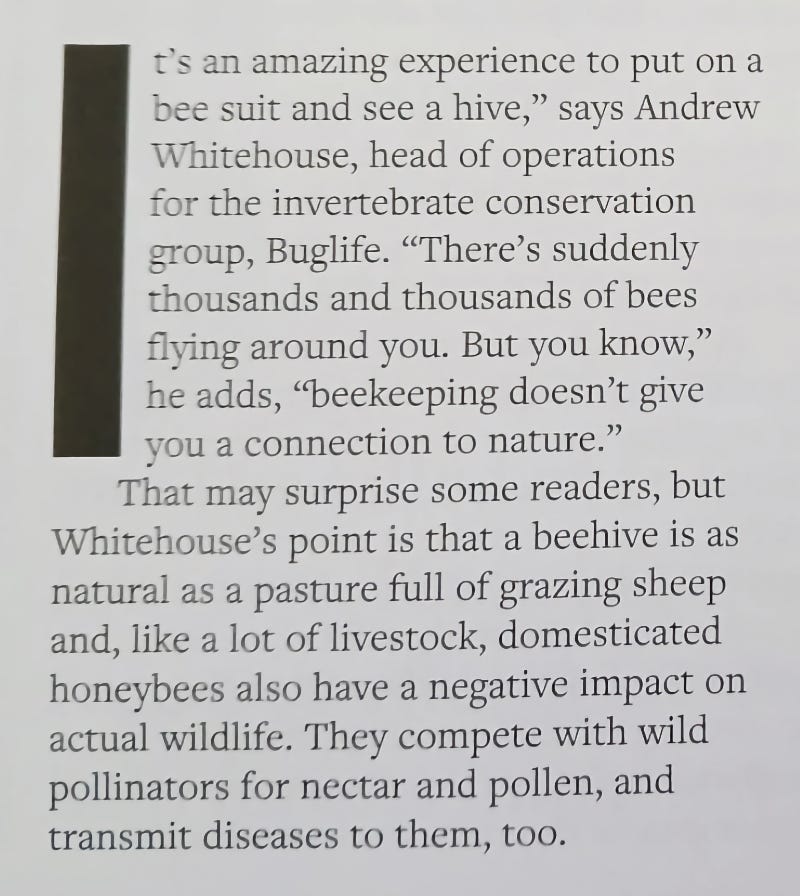
And, on a different note - some small conservation actions we can all do, each of us can do, that make a difference. This paragraph is from the article linked below.
… let us protest our leaders’ disregard for nonhuman life with a thousand tiny, quiet acts of resistance, of conservation: let us leave the moss growing on our garden walls, let us pull up the astroturf, forget our plans to extend the driveway, lay down a bed of soil and plant grasses and flowers instead, let us leave fallen sticks to sprout with fungi and lichen, let us leave the leaves to rot into the earth, let us stop using pesticides and poison, let us plant window-boxes and know that even one thin strip of soil contains a thousand little lives that we have granted a home to. Let us become wardens of one patch of land, even one tiny patch, even one plant pot, and let us protect it, let us keep those little lives alive.

Right on! As I quoted in one of my Substack posts (https://open.substack.com/pub/backyardstewardship/p/apex-pollinators?r=1firyf&utm_campaign=post&utm_medium=web&showWelcomeOnShare=false), the executive director of the Xerces Society said, “Keeping honey bees to ‘save the bees’ is like raising chickens to save birds.”
Totally agree, it's the myriad of wild bees that need to be conserved, not honeybees.