Seeds and Sparrows
18 October - Some birdy delights of mid autumn
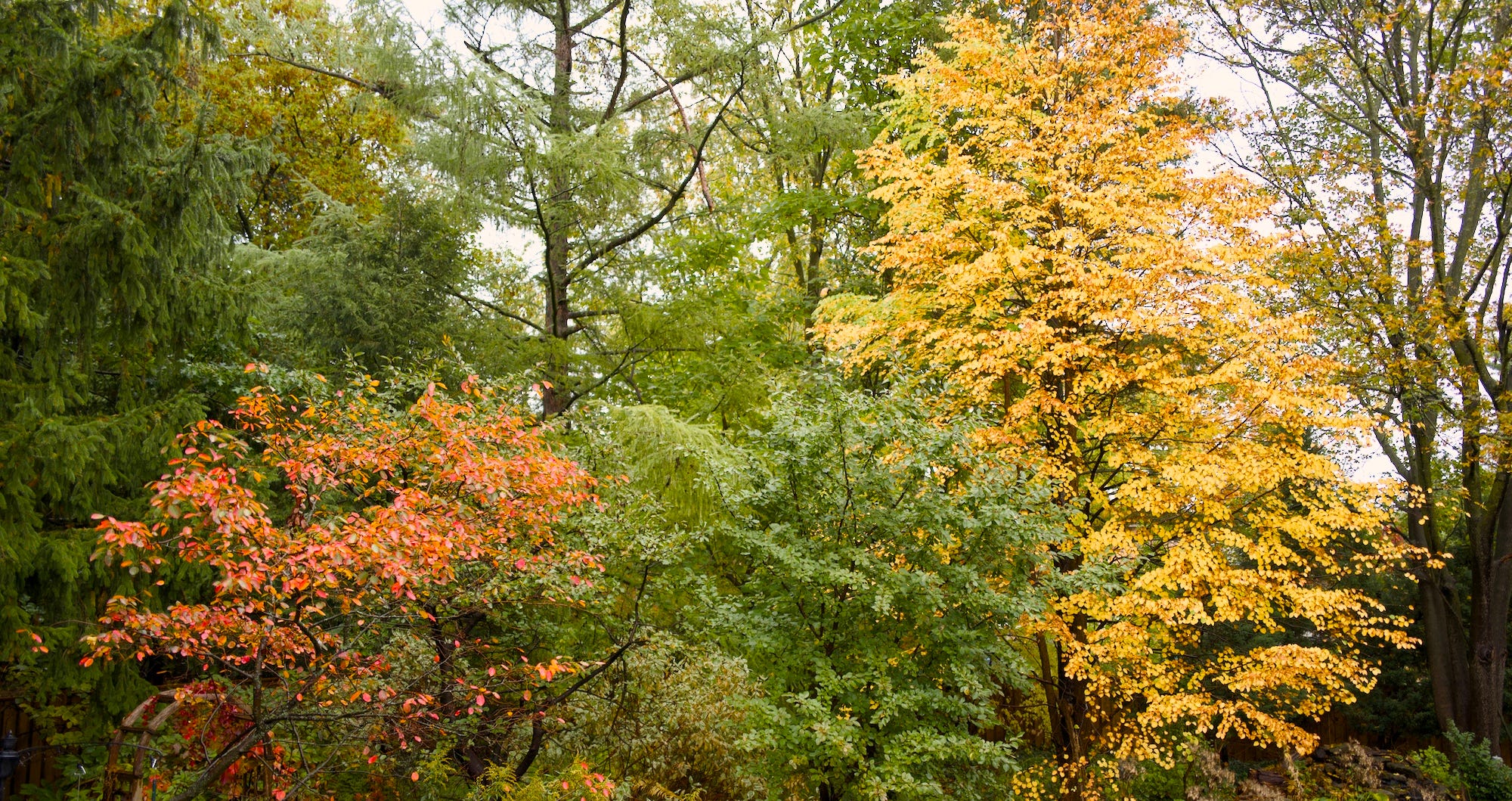
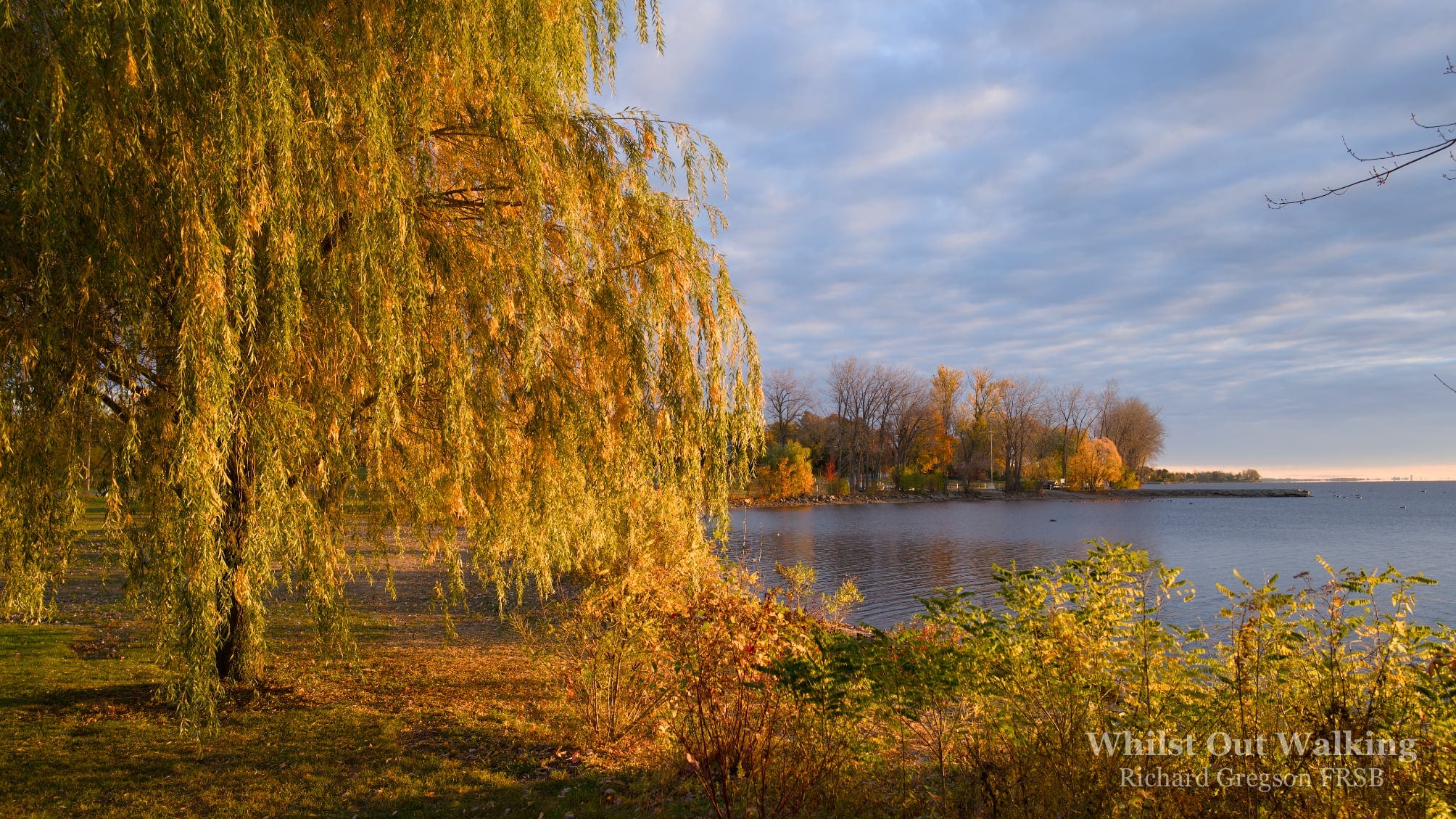
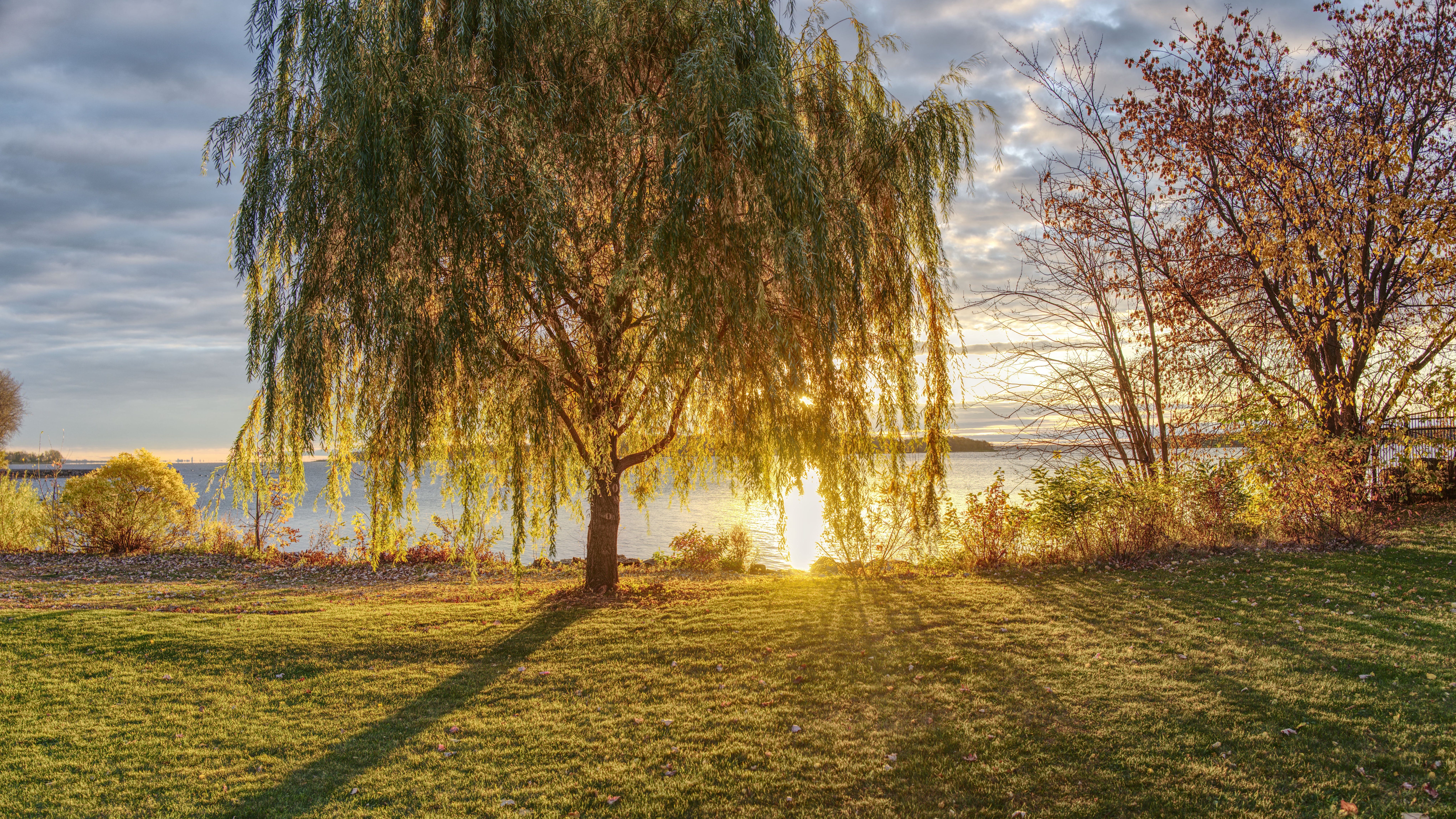
We are at that splendid time of the year when the autumnal/fall colors for which this corner of the world is famous, become dominant. The winter that will follow with at least three months of deep snow, is the price we pay. I don’t want to make anyone jealous, but here are some local photos that you will enjoy.
Seeds and Sparrows
I have more than once written about the importance of leaving your garden, the native plants at least, scruffy at this time of year. Most people put in a lot of work just now cutting and trimming the tall, stiff stems of plants that are past flowering - I wish they would not. Save your energy and leave the work until days start to warm up in the spring - late April around here. Two reasons for this. One is that all those plants have seed heads on them that resident cold-weather birds will feed on in the cold months. The other is that many of those stems are pithy or hollow and inside any of them may be insects that are expecting to overwinter - some species of solitary bees for example. There is an informative graphic in this article: https://xerces.org/sites/default/files/publications/22-005_01_web-screen.pdf
Also: https://xerces.org/pollinator-conservation/nesting-resources
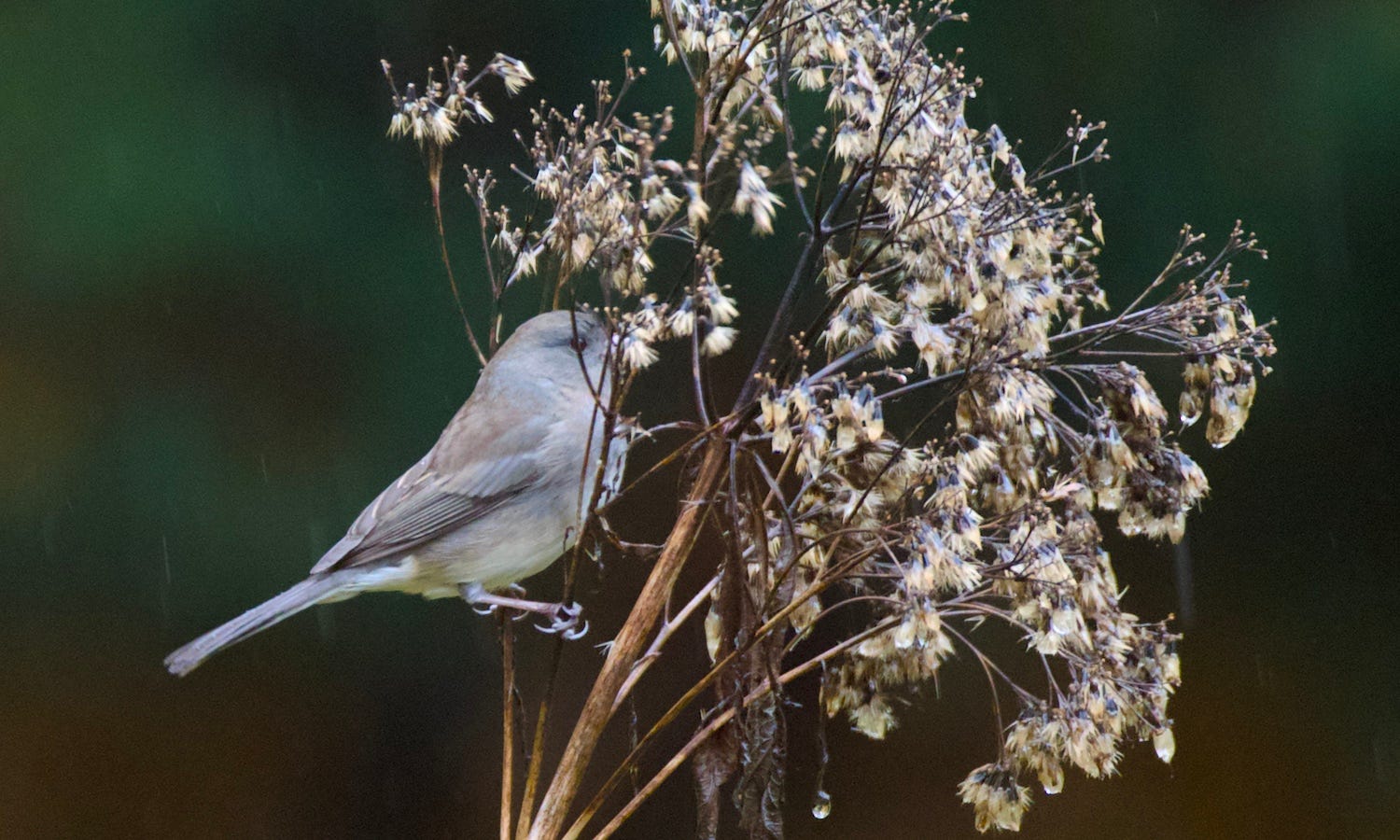
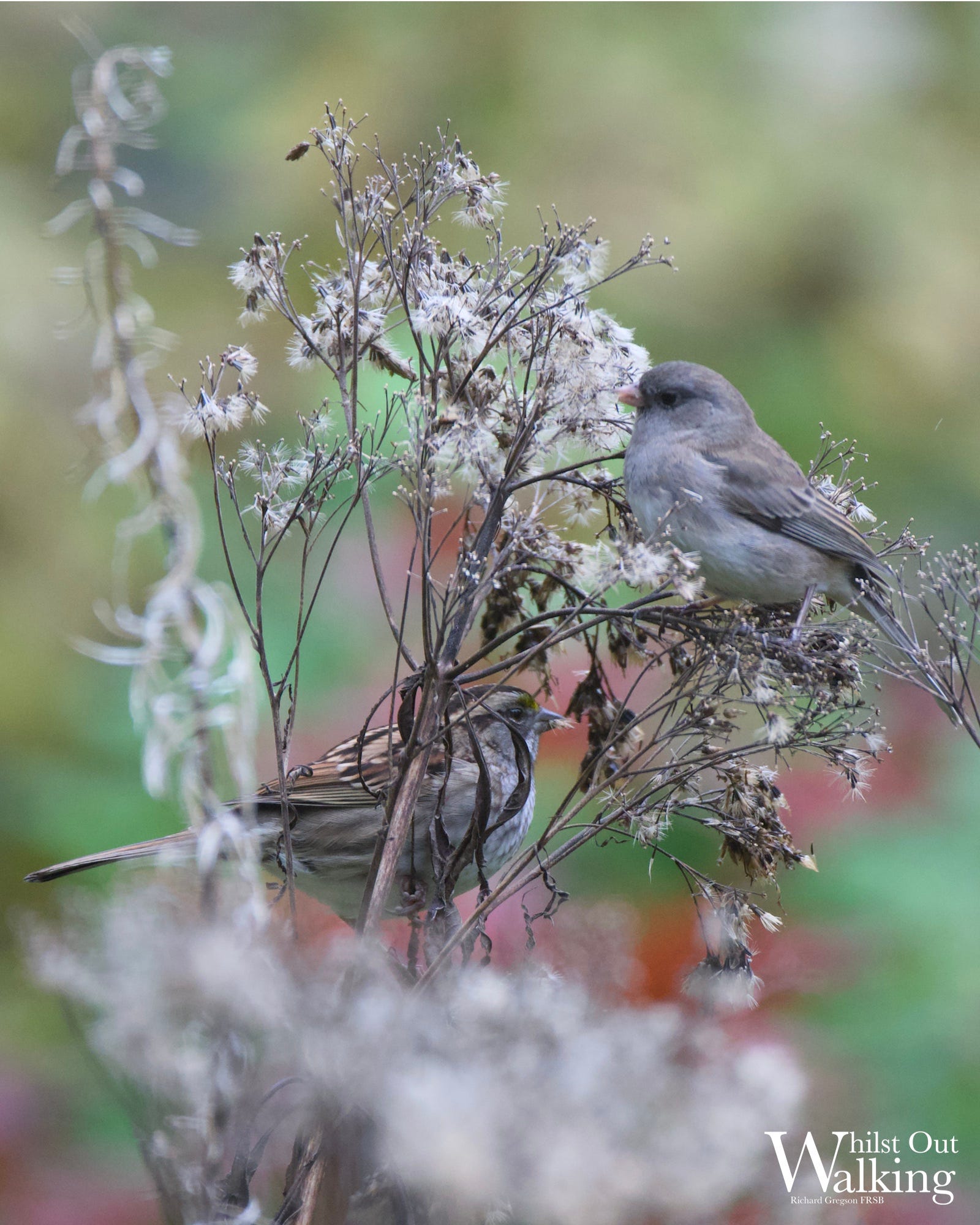
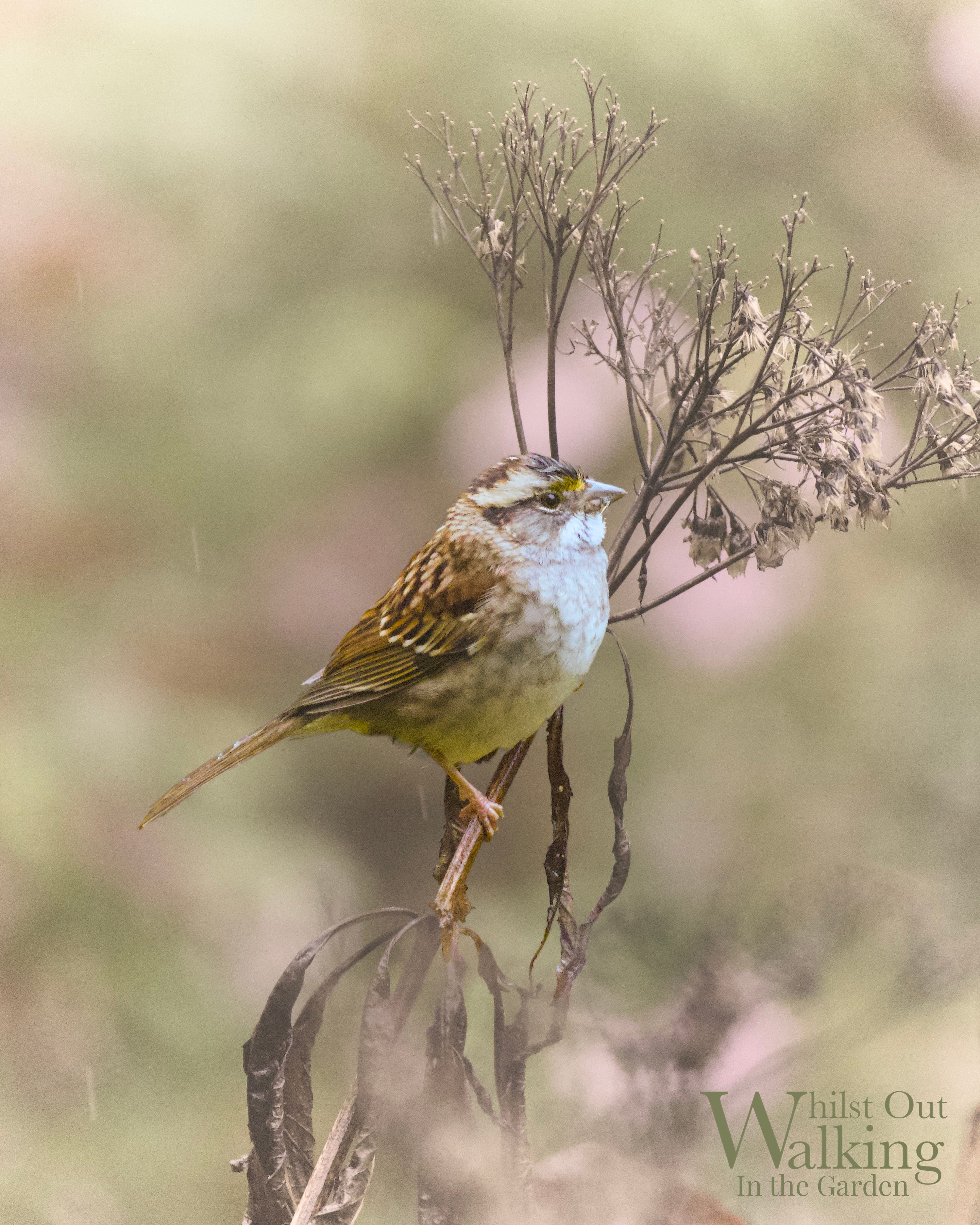
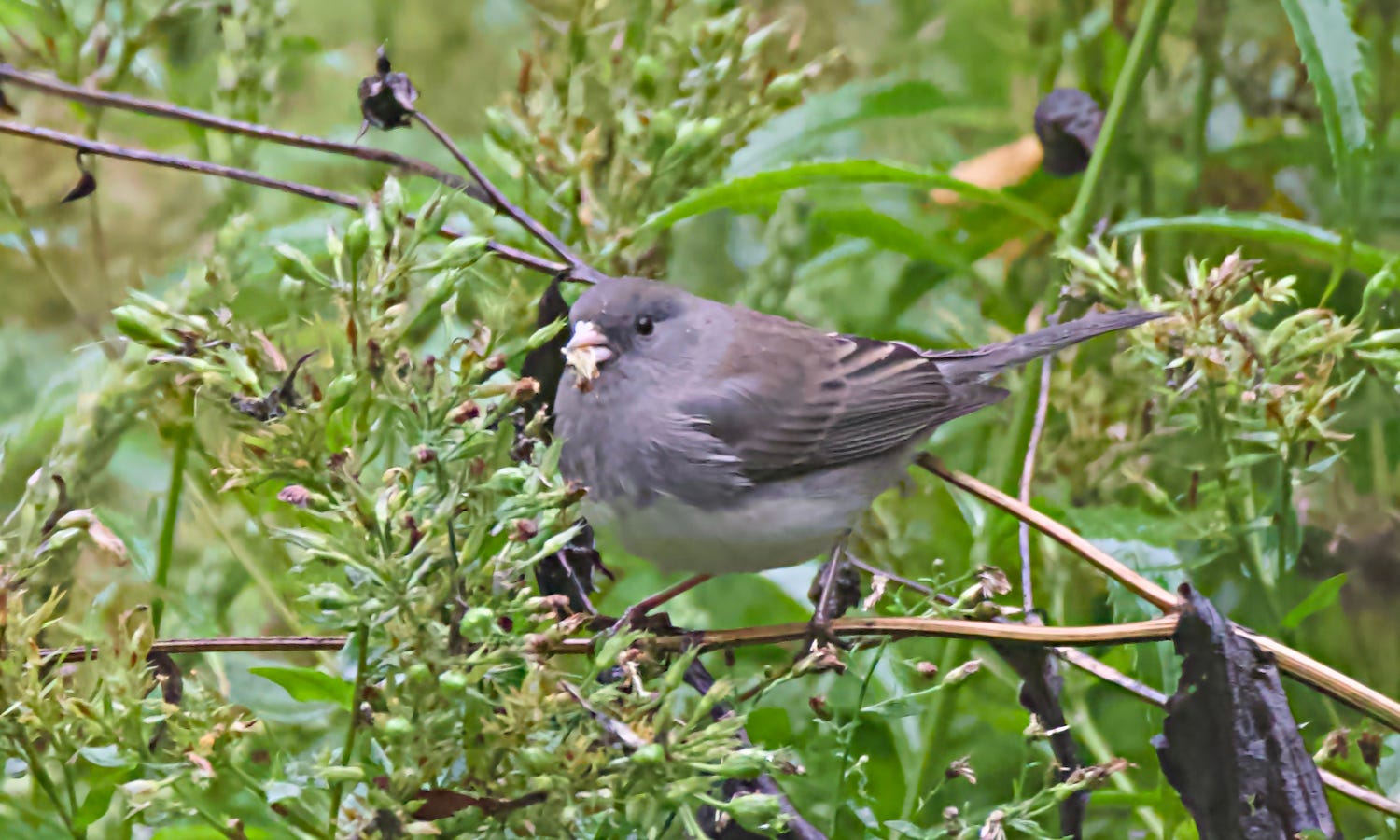
Just now the interaction of birds and seed heads is delightful. Let me share these pictures of two Sparrow species that were taken in recent days.
If you have doubts about my suggestion that you leave tidying until spring, I can tell you that, as an older guy with some back pain, the job is much, much easier after the snows have gone. In the spring don’t cut right down to ground level but leave the stiff and dried stems just a foot or a bit more in length - any insects are more likely to be in the lower parts of the stems and as new green foliage grows around them they will soon disappear from sight. See the links I posted above.

This first article is about a couple who converted their garden over some years to a native plant reserve.

Quote: … you might be surprised by just how gratifying it is. For all the very real good you can do by installing solar panels or switching to an electric vehicle, it can be hard to see the impact your good choices have had. But when you rewild your lawn, “you get to see the results, and that empowers you”, Tallamy says. “You see the biodiversity come back to your yard, and even though you’re not saving the whole planet, you are saving the piece of the planet that you ‘own’ in a very functional way.”

On a sadder note, all the more so because I spent the first 50 years of my life in Britain and so remember when there were many more birds and butterflies in the world … there isn’t anything surprising and new in this article but it’s well to remind ourselves of what is being lost all over the world.
Farmland bird populations have decreased by 63% since 1970 and 12% since 2020. Defra attributes the long-term decline to changes in farming since the 1950s, including the loss of mixed farming (crops and livestock), increased pesticide and fertiliser use, and the removal of hedgerows. Gregory said if the trend continued, the songs of farm birds such as skylarks and yellowhammers would become only “memories” of what the countryside used to be like.
Competition in the World of Bees
The reasons for honeybees’ aggressive behaviour is likely to relate to the way in which they organise their social groups, said Buckle, adding: “Some castes of bees can be guard bees, so they have that capacity within them to show threat and aggression, to guard their hives and to look after the brood.” The only pollinator able to hold its own against honeybees was the ivy bee, which was first recorded in the UK in 2001 and feeds mainly on the nectar of ivy flowers. It was seen displacing and chasing honeybees … higher temperatures led to an increased number of competitive interactions, probably because nectar was drying up and plants were going into heat stress. Given that mean summer temperatures are predicted to rise by up to 4C by 2080, such competition is likely to become more frequent.
Do you enjoy getting occasional postcards? I have a parallel Substack - with many fewer subscribers than here on WOW, that might interest you. Essentially, subscribing to the postcards gets you occasional, no fixed schedule, virtual postcards with an interesting picture of something, somewhere and only just enough text to fill the back - this ensures that I get the point. and don’t waffle. It’s free of course. Buster the-cat-that-was manages the technology and does the deliveries for me.
“Don’t point that camera at me, I’m shy”
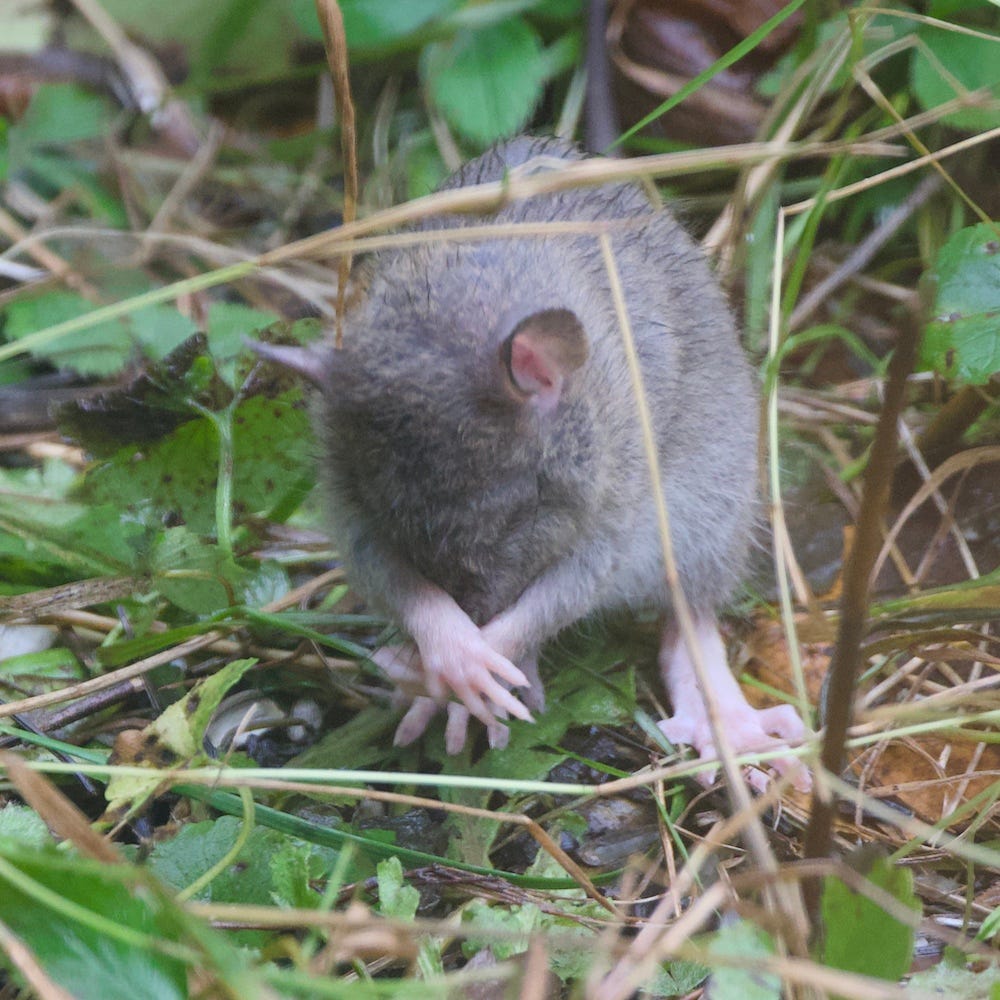
Your mouse at the end really gave me a chuckle.
I could not agree more leave the garden to the spring, don’t cut it back, don’t compost the the leaves, let nature live through the winter.