

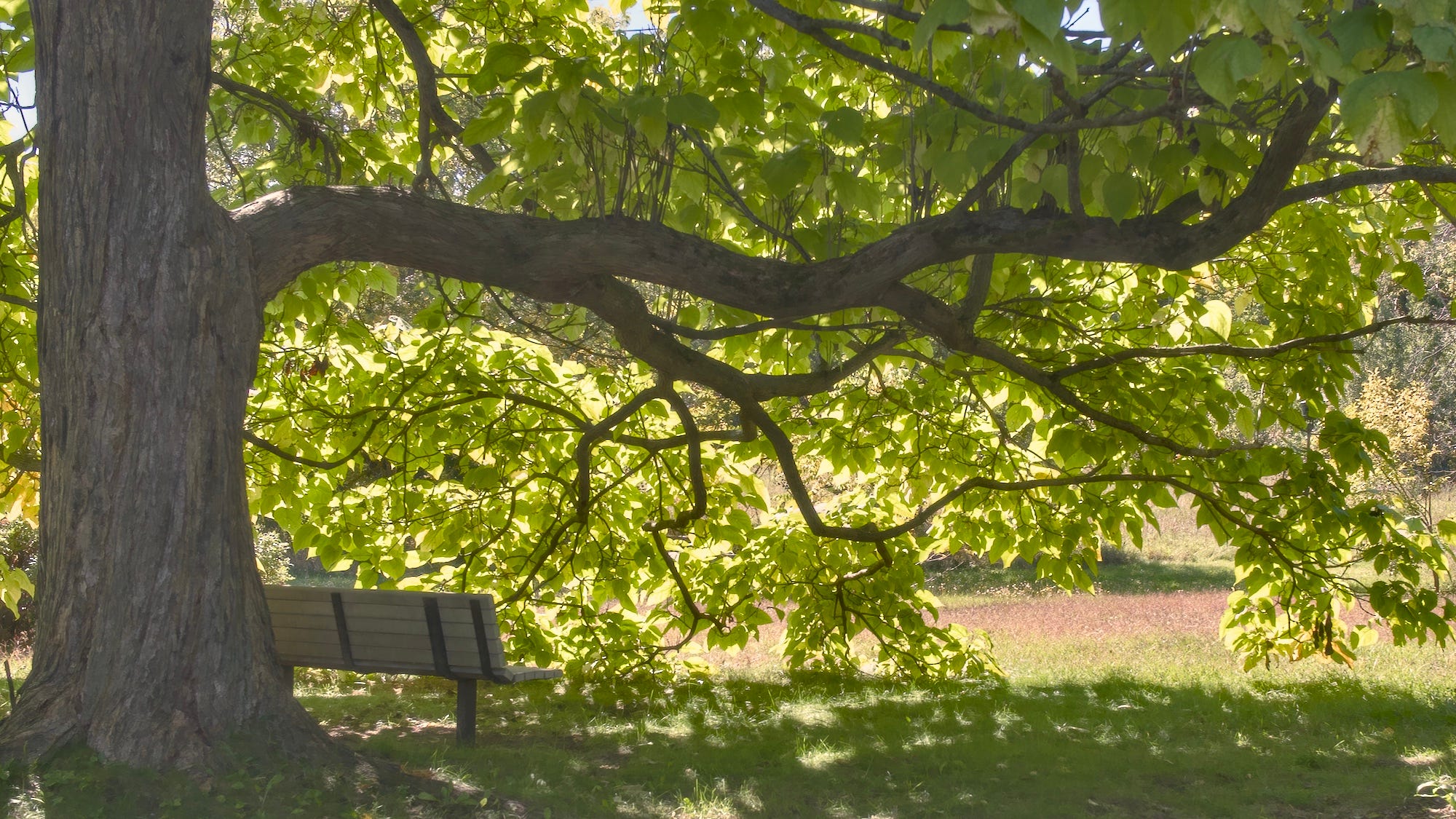
The nights are getting colder now that we have finally entered October and the plants in the mead are starting to look tired and droopy. The first tree leaves are turning to yellow, led by our birches and Amelanchier. Plenty of activity still to be enjoyed and photographed as the seasons change and migrating birds pass through as they depart southwards to vacate territory for northern bird species arrive here to spend the winter with us.
More Aster Insects
Last week I introduced a selection of insects busying them selves on our extensive drifts and wood asters and New England asters. Here are some more to add to the collection. For late season insects the various aster species are a godsend when it comes to finding nectar.


Black Squirrels
In Montreal we have a good selection of the different colour morphs of Grey Squirrels. Greys of course are predominant, but a few creams, a number of blacks and recently we have seen the ‘rufous’ versions. This article about the distribution of city Black Squirrels is interesting.
https://www.cbc.ca/news/canada/montreal/black-squirrels-montreal-9.7358879
https://besjournals.onlinelibrary.wiley.com/doi/10.1111/1365-2656.70295
Unlike patterns in many cities where melanism peaks in urban cores, melanism in Montreal was generally negatively correlated with urbanization, but the strength and direction of urban–rural clines varied sharply across the city’s complex island landscape. Abrupt shifts in morph frequency corresponded with major waterways, including the Saint-Lawrence River and its tributaries, suggesting that rivers might act as partial barriers to dispersal which partition the landscape into distinct phenotypic regions.
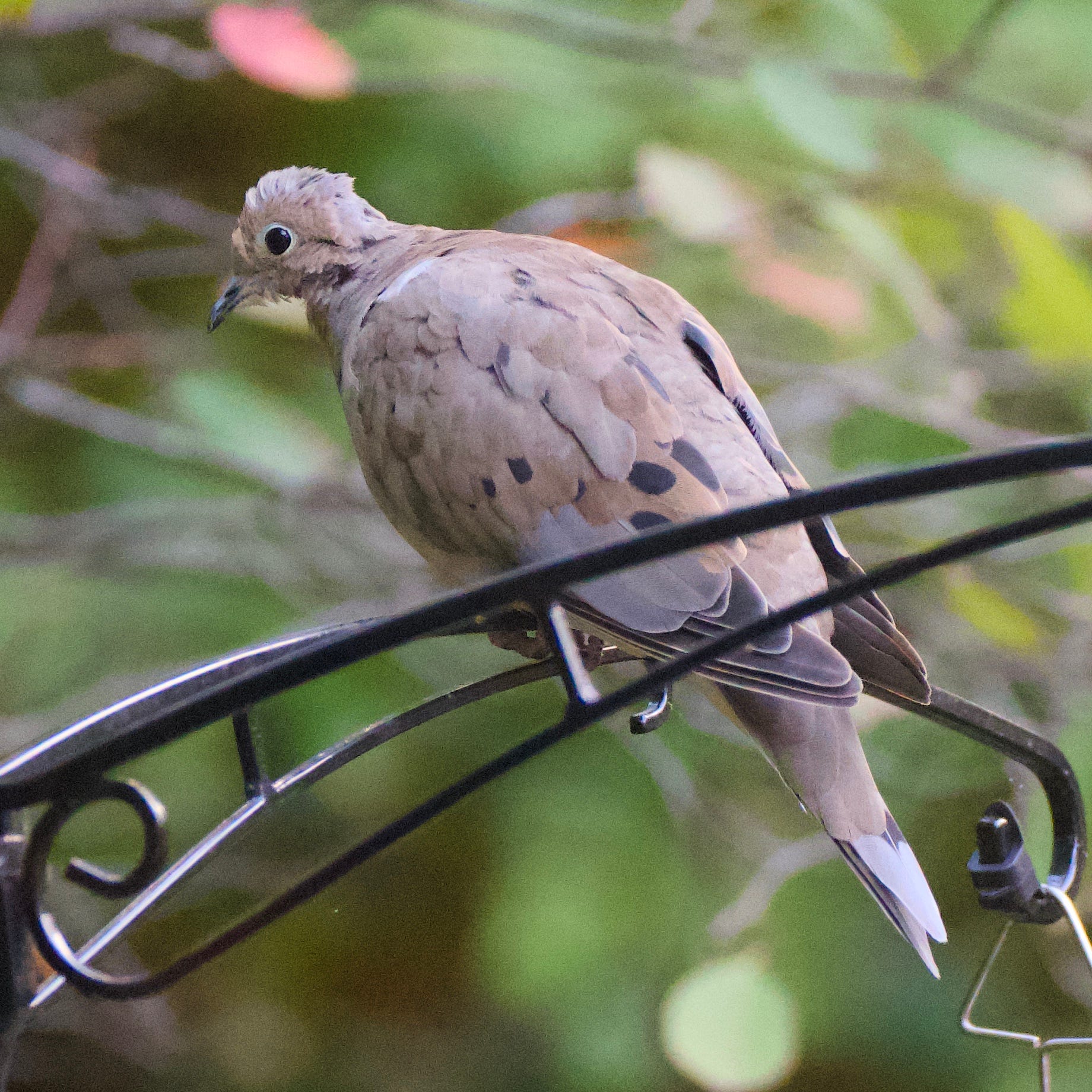
Tatty Dove
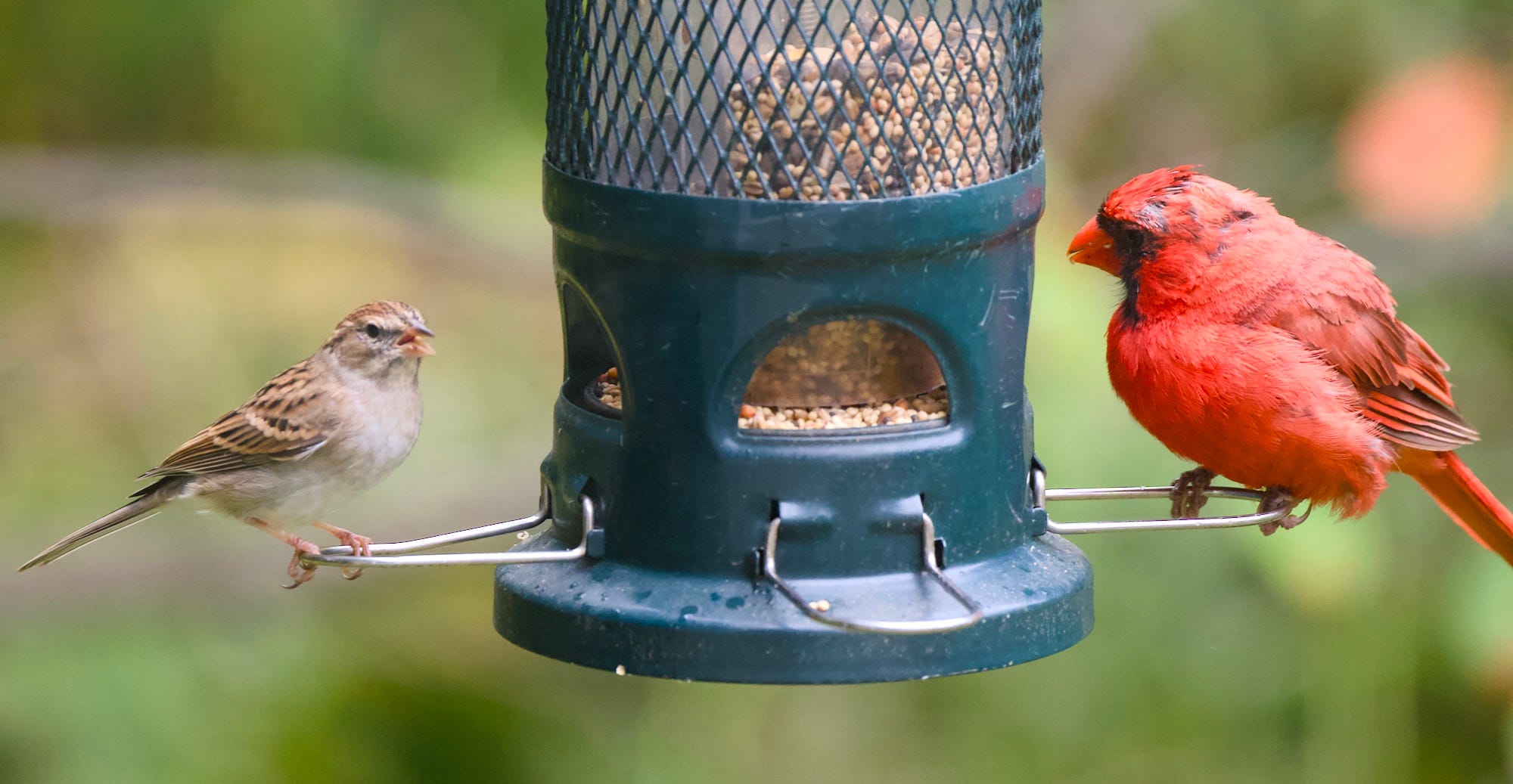
This is “Daphne the Dishevelled Dove.” Like her neighbour Charlie Cardinal, who appeared here recently, she is in the middle of her molt period and exhibiting a very tatty head. The process enables birds to either migrate or face winter with a set of nice, strong, new feathers, and to keep their feathers water resistant and better insulating. In some birds the head molt can seemingly happen all at once. Bald headed birds can often look as if they are ill, but that is rarely so.
First Juncos of the season - the months move along
There were three together - briefly seen but a sign of cold weather ahead.


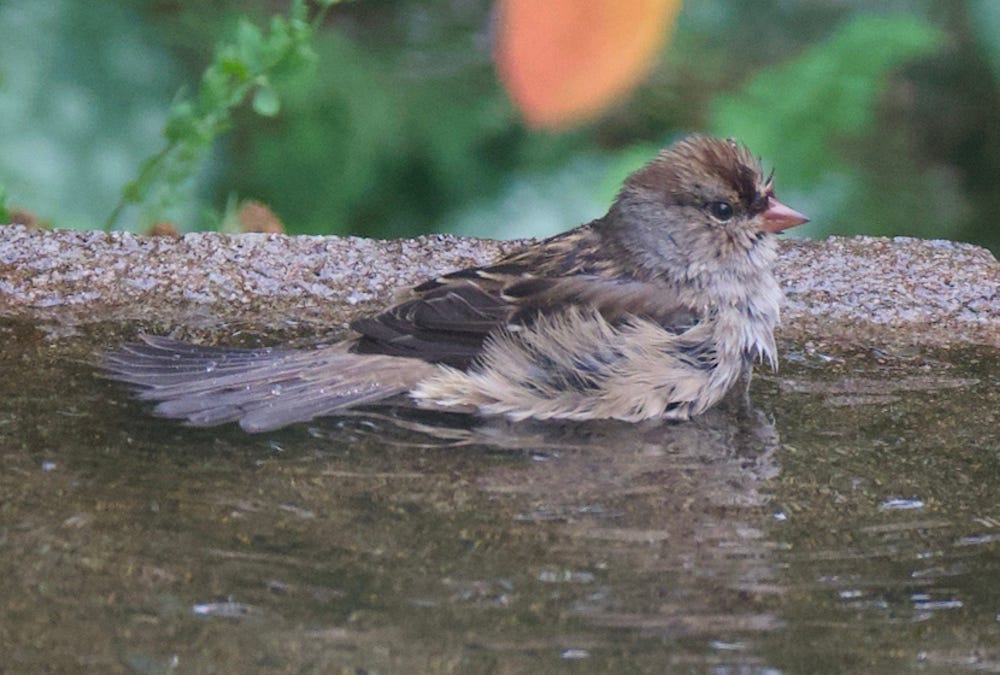
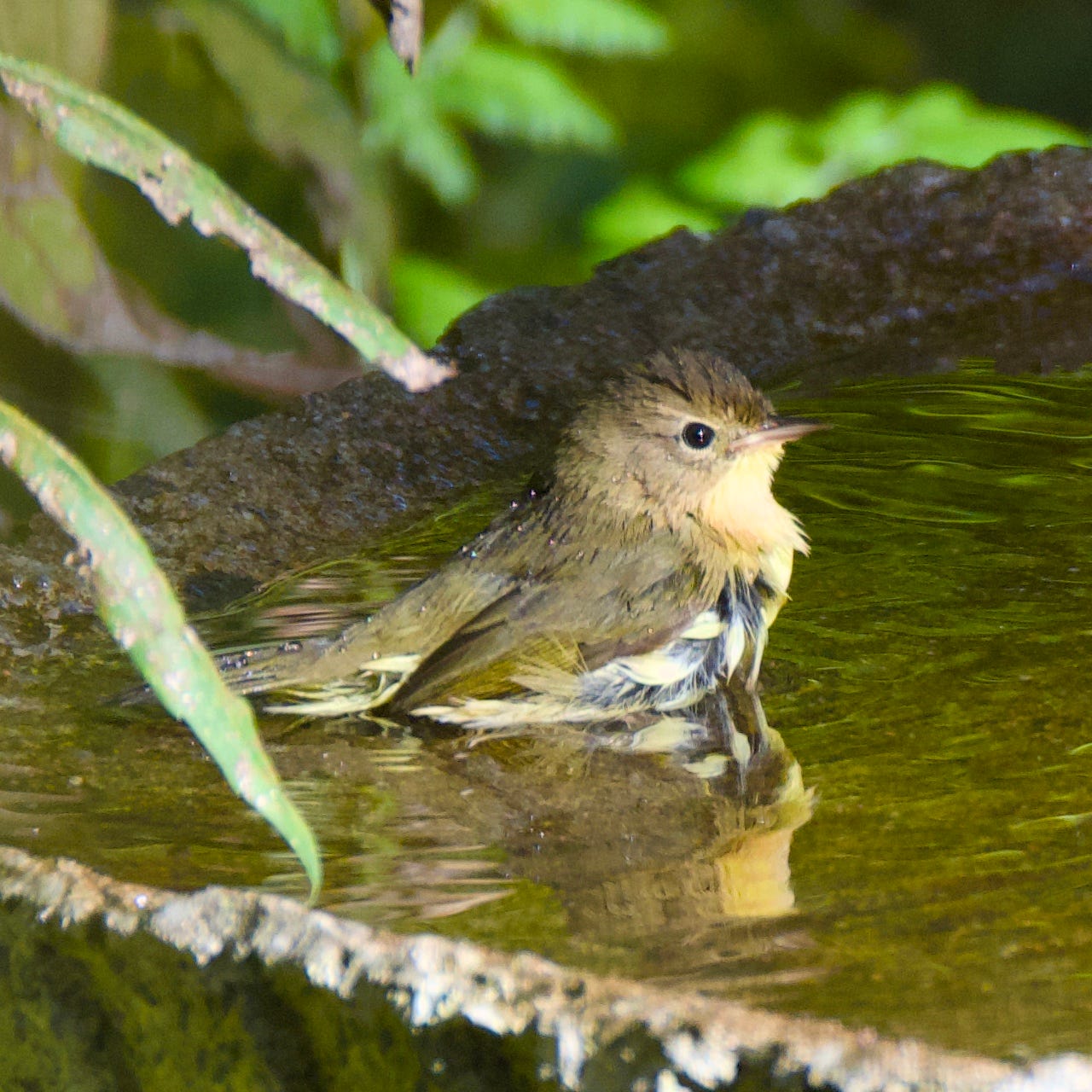
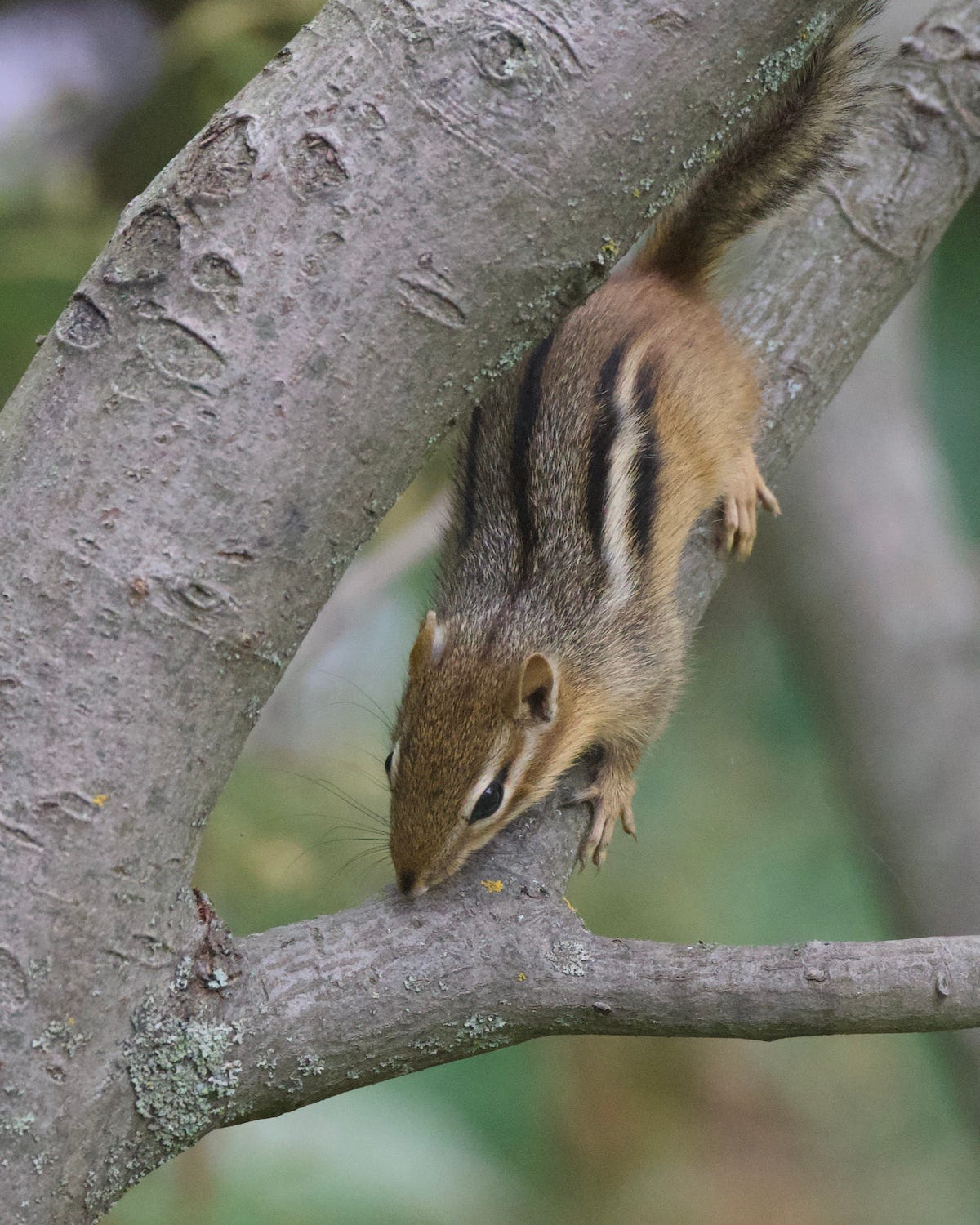
A gathering of garden friends …


Margaret Atwood
Not an author whose works I especially enjoy, but a strong supporter of wildlife and especially birds. Being successful she has money to spare and have donated $1M towards scientific bird studies. Read more here:
She points to how young people, especially children, appear hardwired to engage deeply with nature. “The passion is built in. They’re very interested in anything that moves, anything outside, and unless some grown-up teaches them to be afraid of such things, that interest will continue,” she says. “We are part of the natural world. It’s your choice of how to be in it.”
Point to ponder - feel free to ignore
This morning I read a substack (link below) that made me think.
Quote: Photography, writing, the whole endeavor of relaying adventures in the wild, has shifted since its inception from an effort towards building an income from enjoyable pursuits to one of higher fulfillment through creative avenues and mindful engagement with the world. But that shift demands a very different approach ... the struggle of creativity is an inseparable part of the process. In fact, the struggle, or toil, may be more important than the end result ... but this fact also gives rise to the question of how we approach any creative effort. How much technology do we involve? And what do we sacrifice of ourselves by embracing digital spaces that exist outside of the physical world?
I suppose the answer lies in what you are using your medium of choice for. If artistic creativity is the goal (as this writer appears to be saying) then that is fine and I understand his point. I joke about taking photographs “for my art” but realistically photography is not intentionally artistic for me. Occasionally some people tell me that they do see certain of my images as artistic - whatever that means - but photography is simply the means by which I record and share what I see in the world around me. Words might capture my personal reactions to the changing colours we enjoyed yesterday when we were walking in the arboretum as autumn gets under way, or the plumage of a Waxwing taking fruits from my rowan tree. But they don’t show you what I saw. I don’t have the skills with pen and brush to even try to capture these sights, and anyway those sorts of media are always going to be interpretive, never precise and accurate. Not documentary. The old saying that a picture is worth a thousand words is not meaningless. Photography is my way of recording and sharing and showing - it’s a powerful visual tool that may occasionally and accidentally produce “art”, but is not deliberately intended to.
