

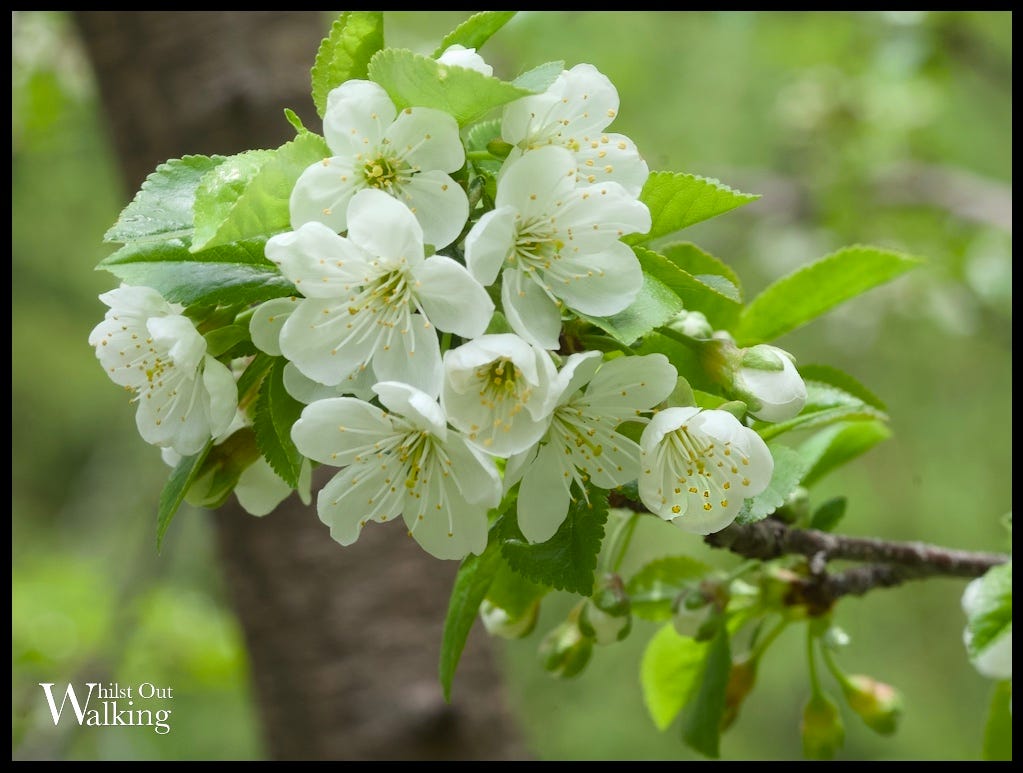
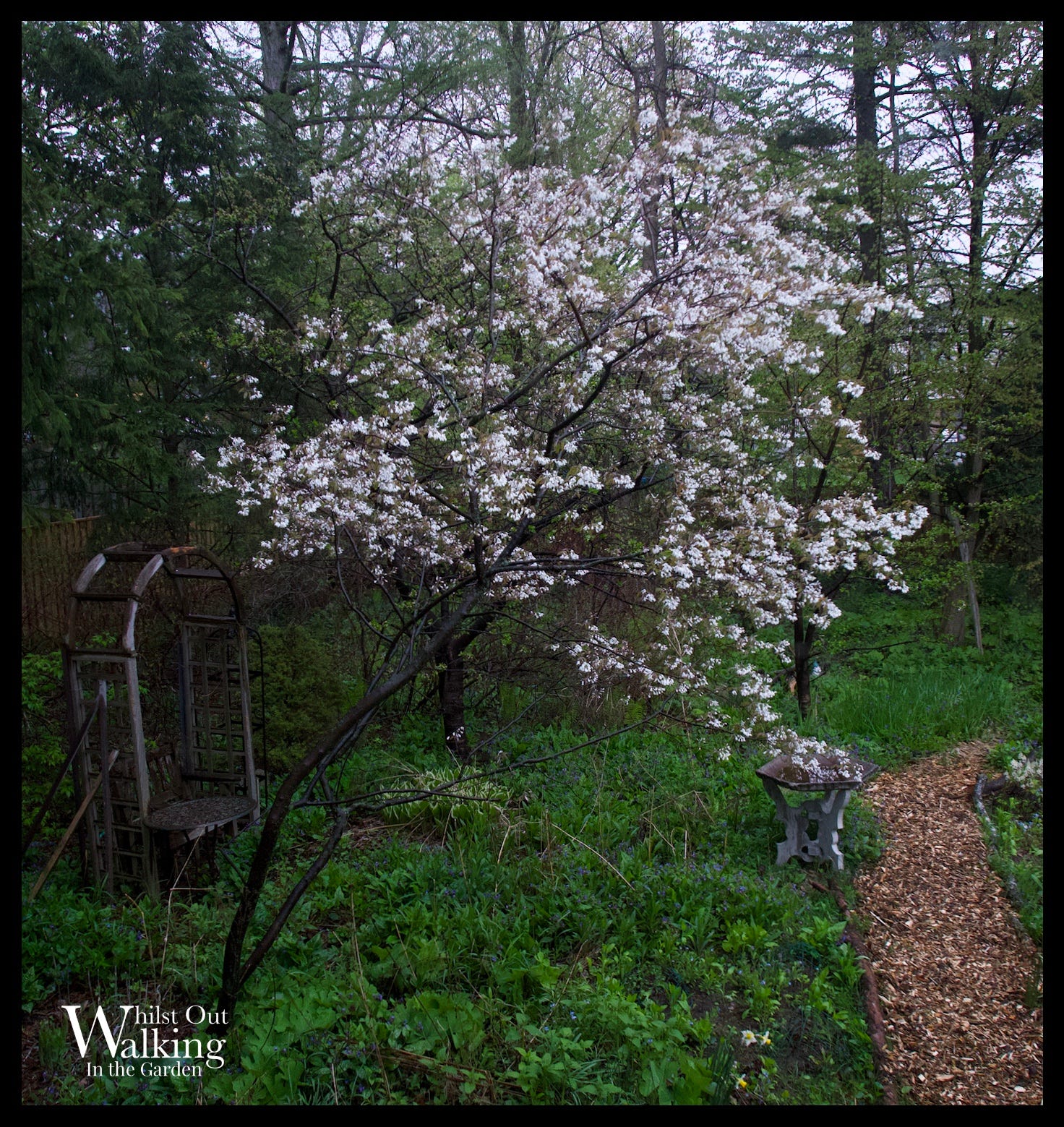
This weekend all of a sudden the days are heating up - apparently by Tuesday we will be at a record 29C. Just the past week and a bit, although nights at least have been chilly, the garden plants have started to spurt and what was at the start of the month pretty bare ground is now looking green and greener by the day. Yesterday the two sour cherry trees opened the first of their blossoms. Peak bird migration is approaching, some examples below, and very soon the tomato seedlings will be ready to put out during the day to harden off for planting out properly as we get closer to June.
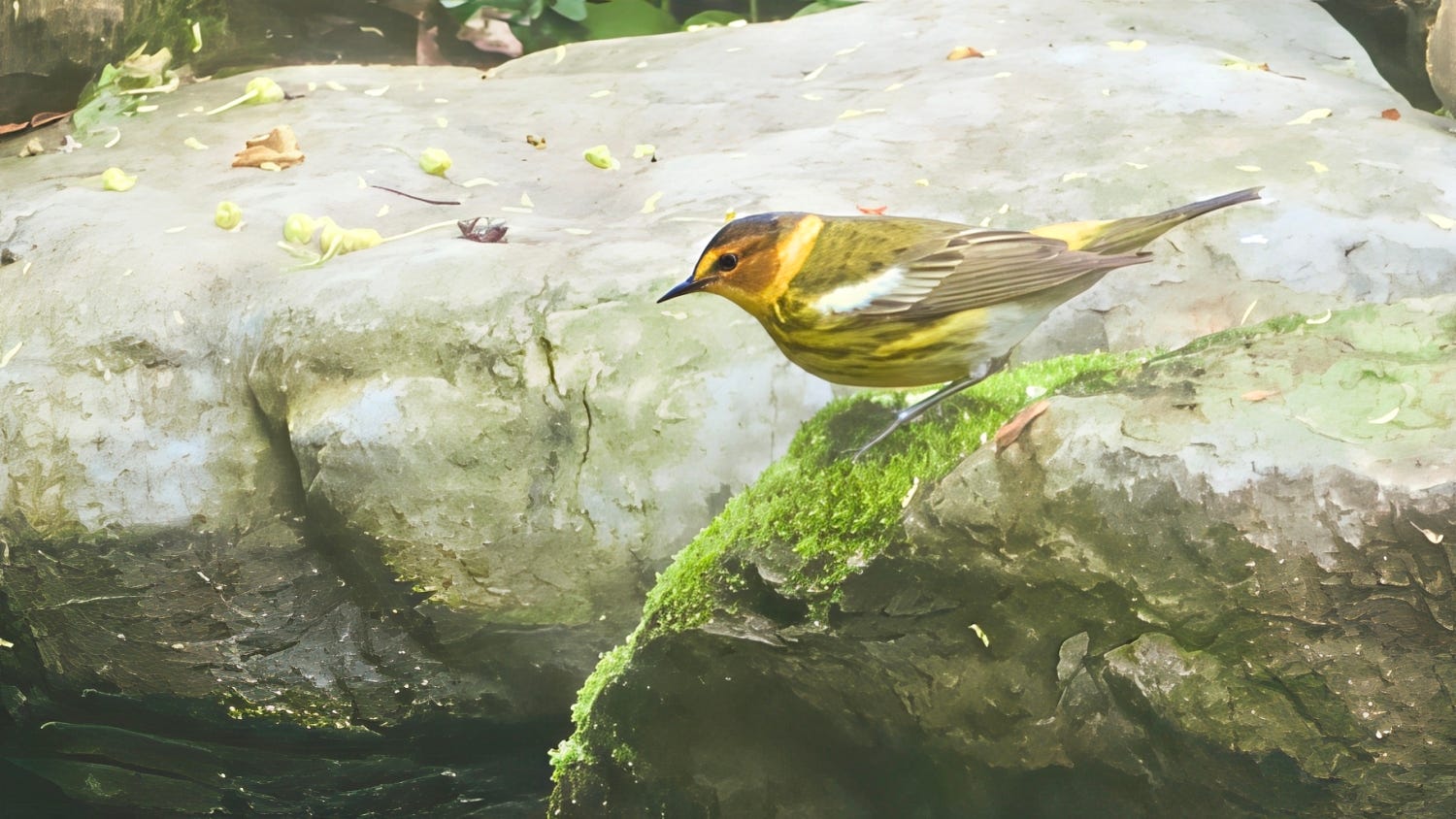
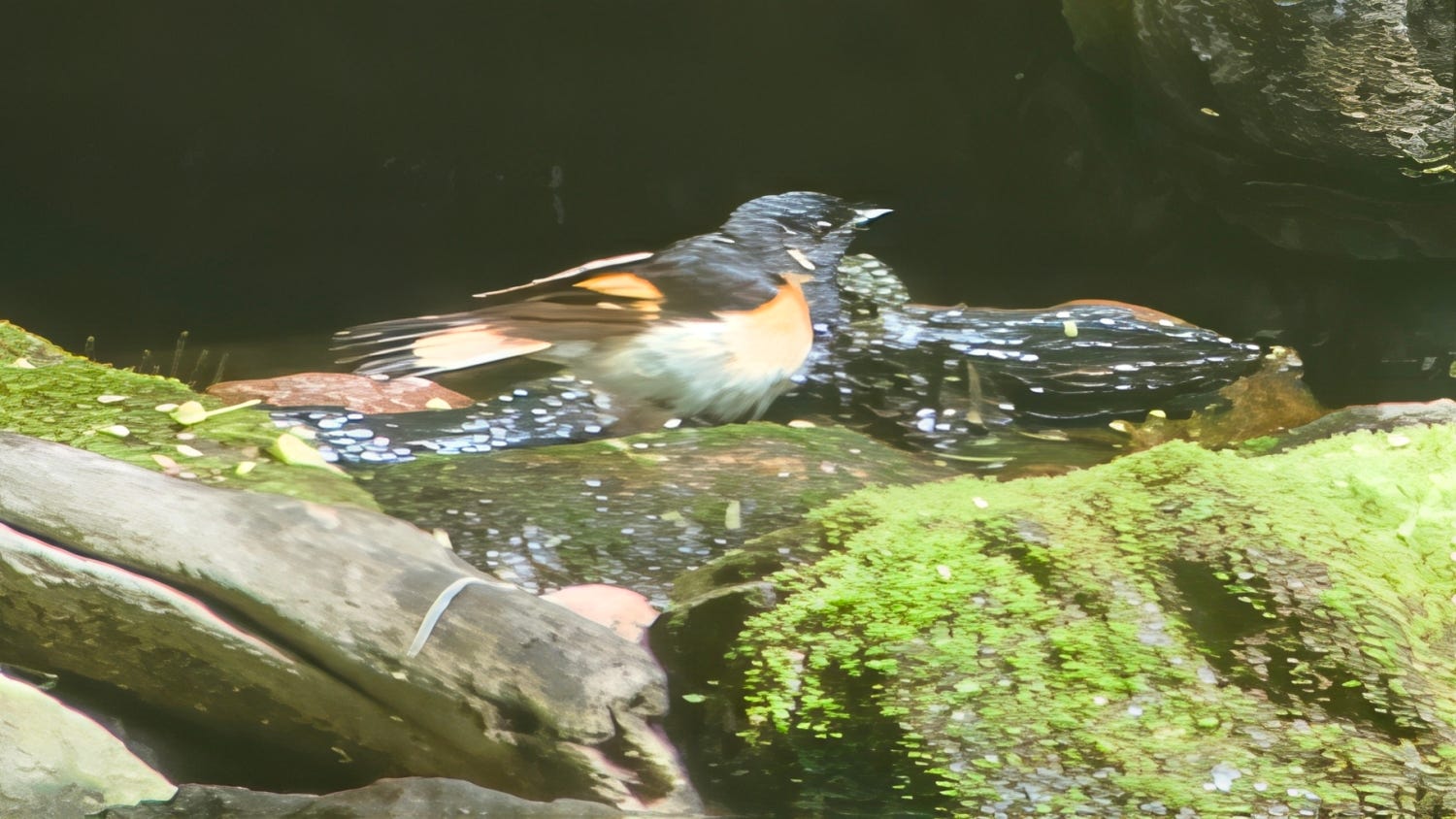
Warblers are still in passage
Violet time again
In the past couple of weeks we finally enjoyed leaves opening on at least some of our trees and most of the plants in our (mostly) native garden are putting up shoots - some even approaching a foot tall by now. The violets have appeared too and they are always a treat. The botanists have been at it again and I read that the basic North American wild violet (Viola sororia) is in the process of being split into at least a half dozen separate species.


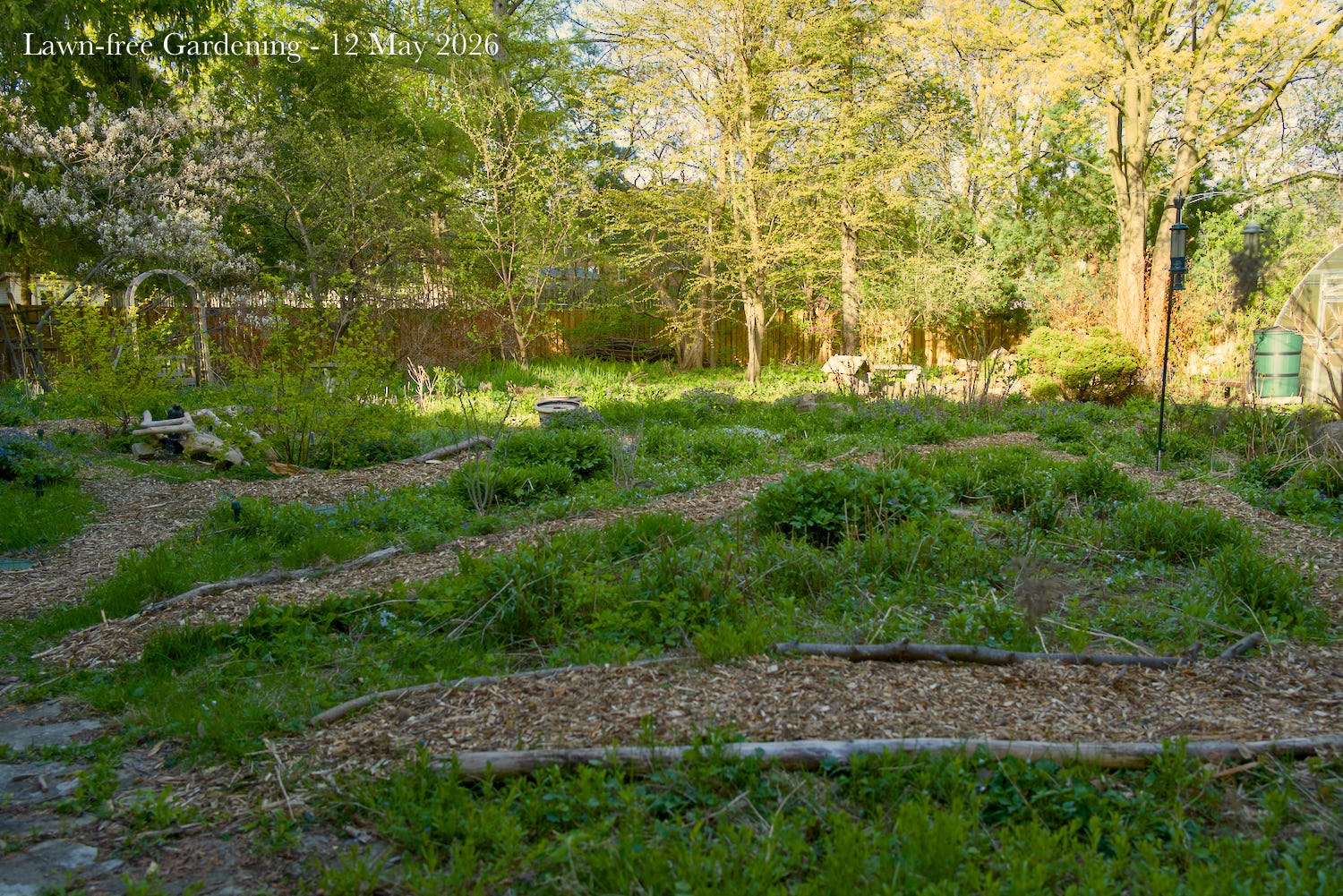
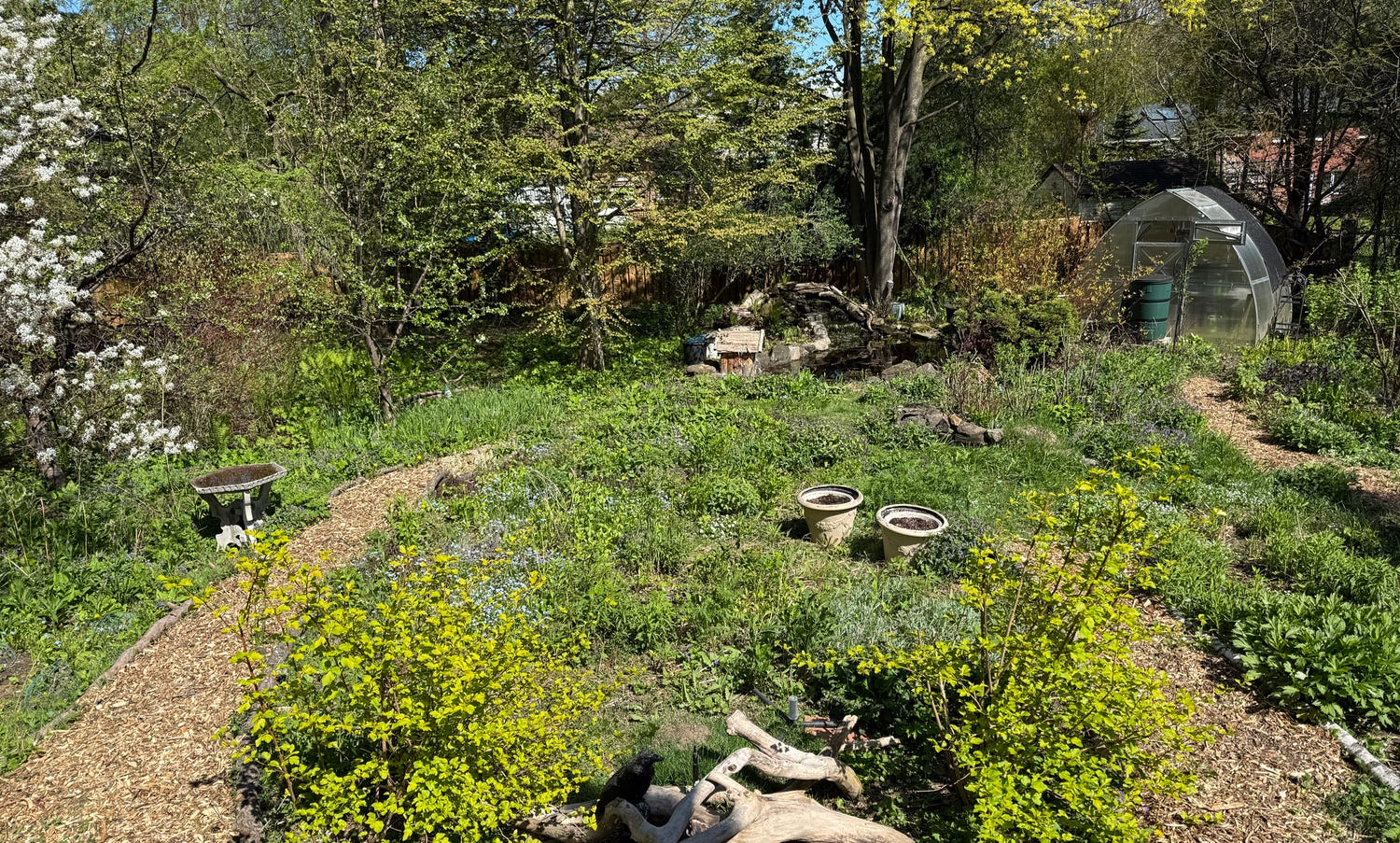
Here’s half of the garden late one afternoon this week - growing rapidly, but much still to come. Plants like some of the Rudbeckia and the golden rod for example will be at least shoulder high in a few weeks. Early days, but there are over 50 different, predominantly native, plant species in those beds. Queen bumble bees are all over the place, especially taking advantage of the Pulmonaria flowers.

Noticing Nature #28: Black-throated Green Warbler
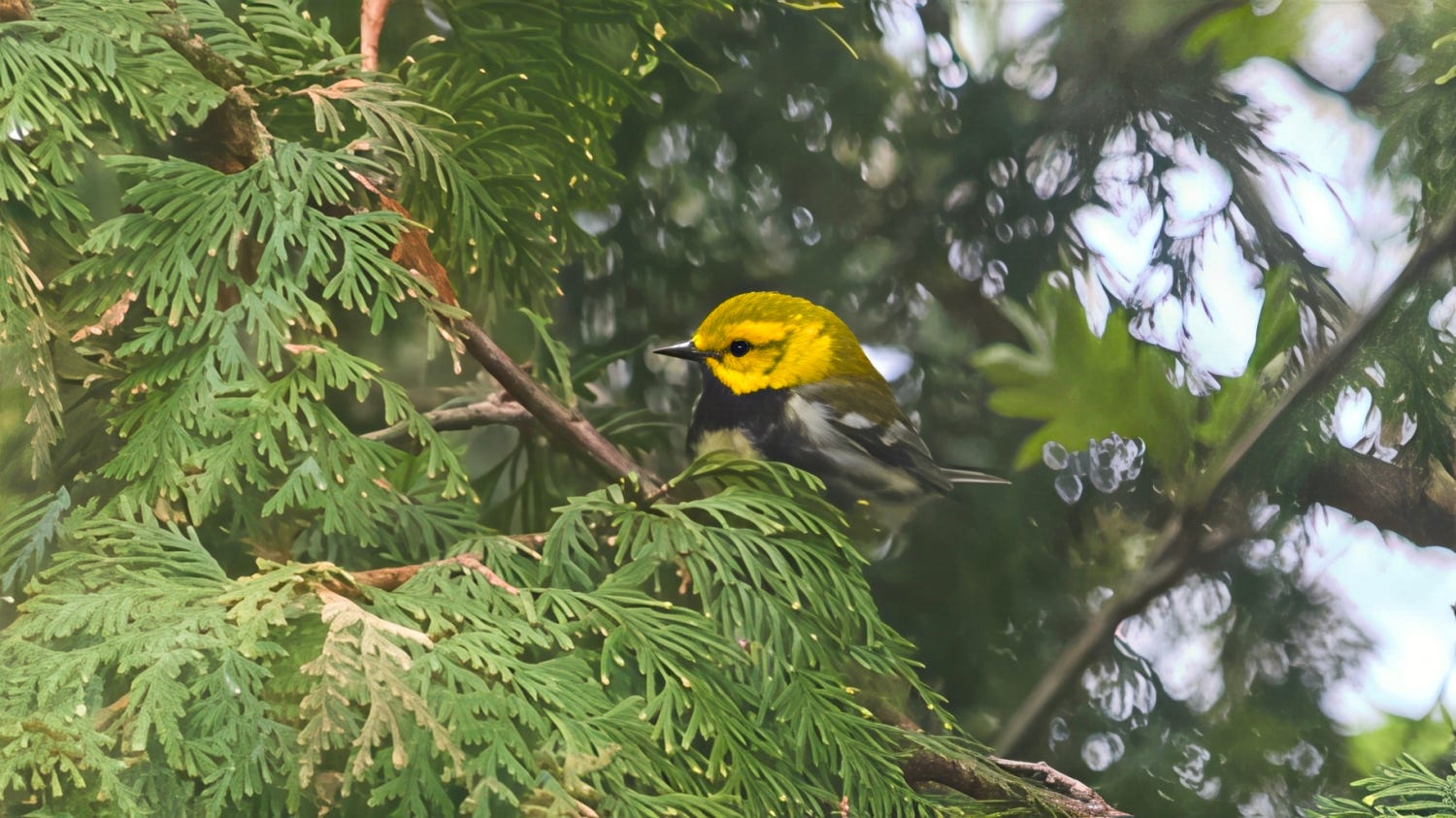
I was sitting in my chair facing the garden when J spotted movement, she has sharper eyes than I do. Two of them rather than my one. I grabbed the camera and tracked up the tree she was indicating just in time catch this delightful fellow. Often around but rarely seen as for the most part they stay well above the ground. And so …
This week’s featured species has to be this splendid small warbler that has made its way back to my part of the world late in the past week. The Black-throated Green Warbler (Setophaga virens) is a canopy-dwelling species notable, amongst other things, for its distinctive, persistent song. One male was recorded singing over 460 different phrases in a single hour! They’re often the most common breeding warbler in our northeastern coniferous forests. Their song is the buzzy zee-zee-zee-zoo-zee that even a partially deaf birder like me, with poor sound memorizing skills, can recognize. So, fairly easy to know these are around by listening but often hard to see because they are so high in the canopy.
They seek closed-canopy woodlands with over 80% cover and with mature trees that are taller than 50 feet with a dense understory. In general they prefer older forest stands (70-100 years, 10-16 inch diameter), though they’ll use intermediate or younger stands when that is all that is available. It is one of the most commonly seen warblers during migration. It is one of a group of four or five sister species – the others being the Golden-cheeked, Hermit, Townsend’s, and possibly Black-throated Gray Warblers – comprising a superspecies that probably resulted from partitioning of ancestral breeding populations by glaciations during the late Pleistocene. Sadly, they are sensitive to habitat fragmentation and “edge effects.” Nest predation and brood parasitism often increase when large forests are broken into smaller patches.
They eat small insects and arachnids while on the breeding grounds, often specializing on hairless caterpillars. During migration they take small berries etc.. They forages primarily amongst the upper surfaces of leaves on small branches high in the forest canopy but will also hover to take insects from the undersides of vegetation. They are active feeders, making short flights more frequently than many other warblers with which they share habitat. Often join mixed-species feeding flocks with other warblers, chickadees, and nuthatches at the end of the breeding season.
Canada’s boreal zone supports about half of the global breeding population. Females arrive several days behind the males, pair bonds are formed, and nest initiation follows. Nests are usually placed in conifers, typically where multiple, small branches meet the trunk. The male’s contribution to feeding the young varies, but at a minimum he gives some food to the female, who transfers it to the young. There is only one brood per season, and the pair bond usually breaks down shortly after fledging, with part of the brood accompanying each parent for up to a month, receiving as much food as possible by begging.

Bird feeding again
Interesting short article here from a nature writer active in the UK press writing about what happened in her garden when she retired her feeders this year. Basically, take away the easy food source and the birds go elsewhere. Provide food by growing plants that feed birds and they come back again. Everyone wins and the health risks to birds are minimised.

She also makes a point of not only growing plants that provide seed - that’s not enough. Quote:
Lots of articles I’ve read on natural bird food have focussed on plants that produce seeds and berries. I’ve seen very little about caterpillar foodplants, so will start here. Caterpillars, which are juicy and full of protein, make up the main food source for chicks in spring. They are chicks’ only source of water – adult birds don’t bring water to their nests – and help them to grow quickly. It’s thought that one baby blue tit eats around 100 caterpillars a day for the first three weeks of its life. We need more caterpillars in our gardens, so we need more caterpillar foodplants.
Caterpillar food plants are largely natives.
Warbler season is here even in the southwest. Not so many colorful species but black-throated gray, Lucy's, northern yellow, olive, townsend's, Grace's, etc. Oh but we do have red-faced and painted redstart to brighten things up.
Good info on food for raising avian families!