Week #45 … still walking
1 November - a Hawk, a Forest, a Heron
I came across an online calculator that determines the numerical designator of any given week in a year … today starts the 45th week of 2026. I am not unimaginative, but sometimes the hardest thing about writing these newsletters is dreaming up an apposite title. This gets me out of that hole and may well become regular.
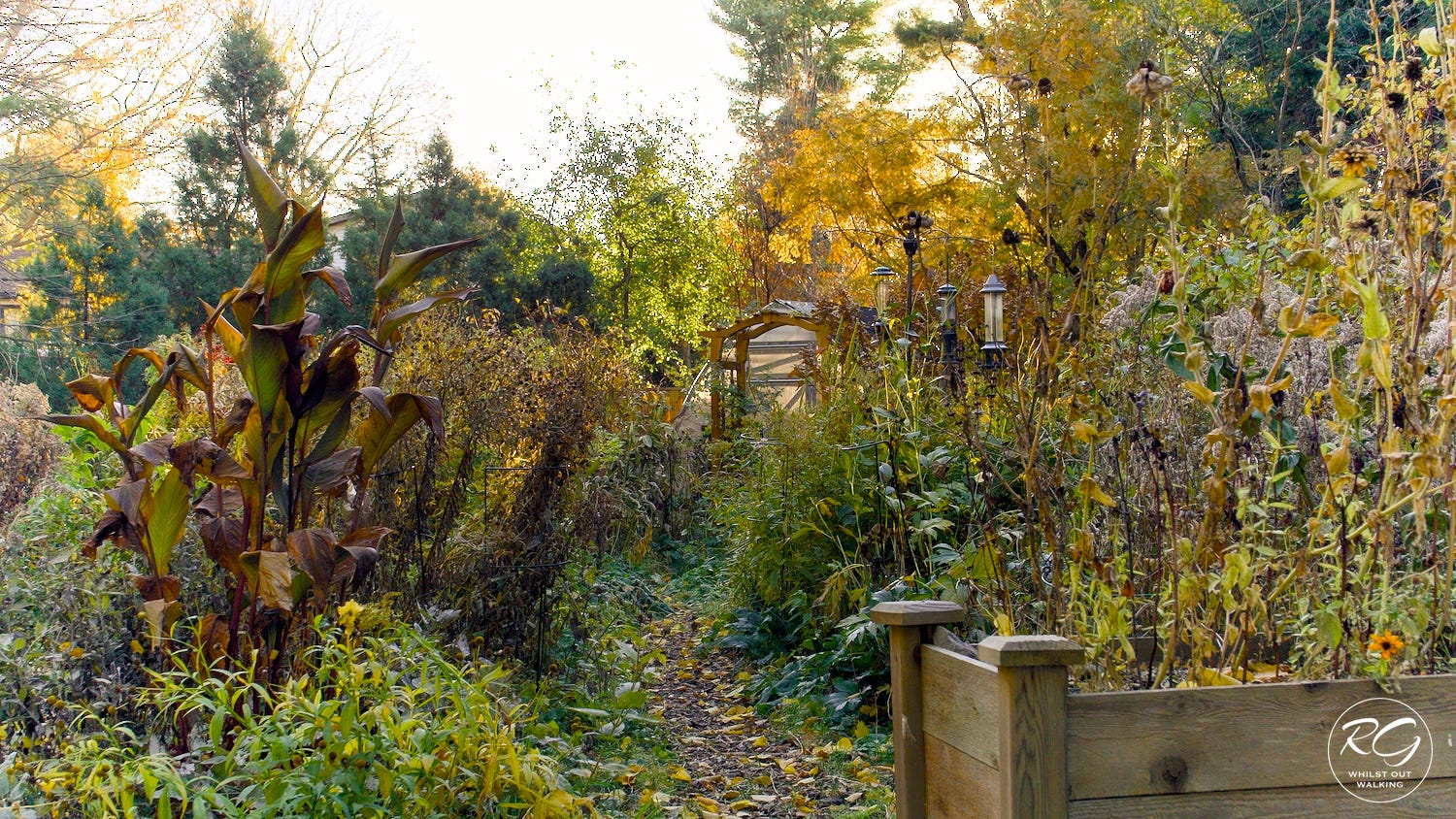
Anyway, starting at dawn in a corner of the garden on Hallowe’en morning. It was almost frosty, the sun low down and just behind the colourful leaves of a redwood trees above the greenhouse. There were no ghosts or squirrel-sculpted pumpkins, giant spiders or wicked witches … just plenty of plants holding up lots of seeds for our hungry birds. The leaves of that Redwood are actually tinged with red but turn yellow when the sun shines through them like this.
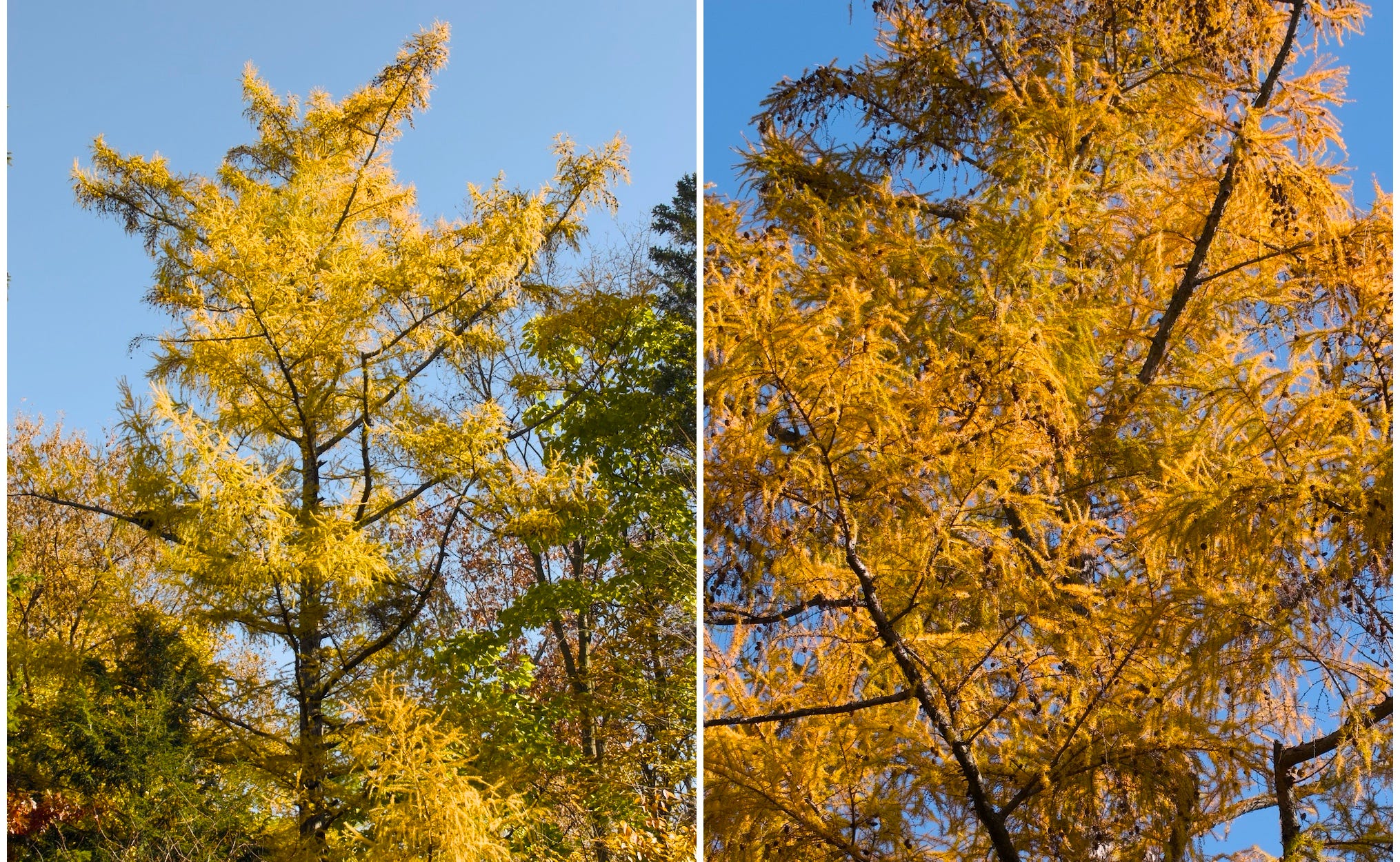
European Larch in a corner of the garden - one of the “yellowest” of trees at this end of the year …
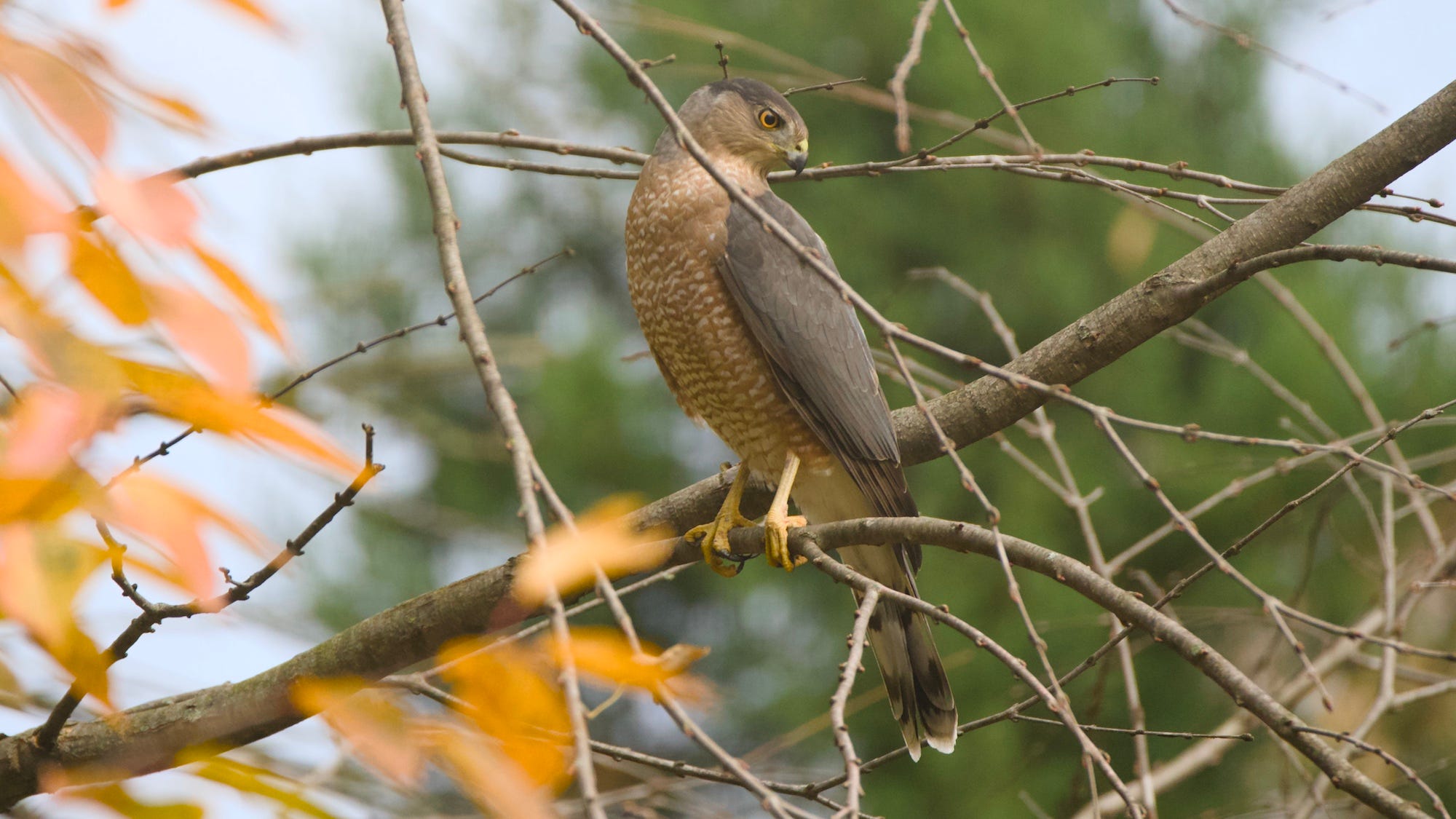
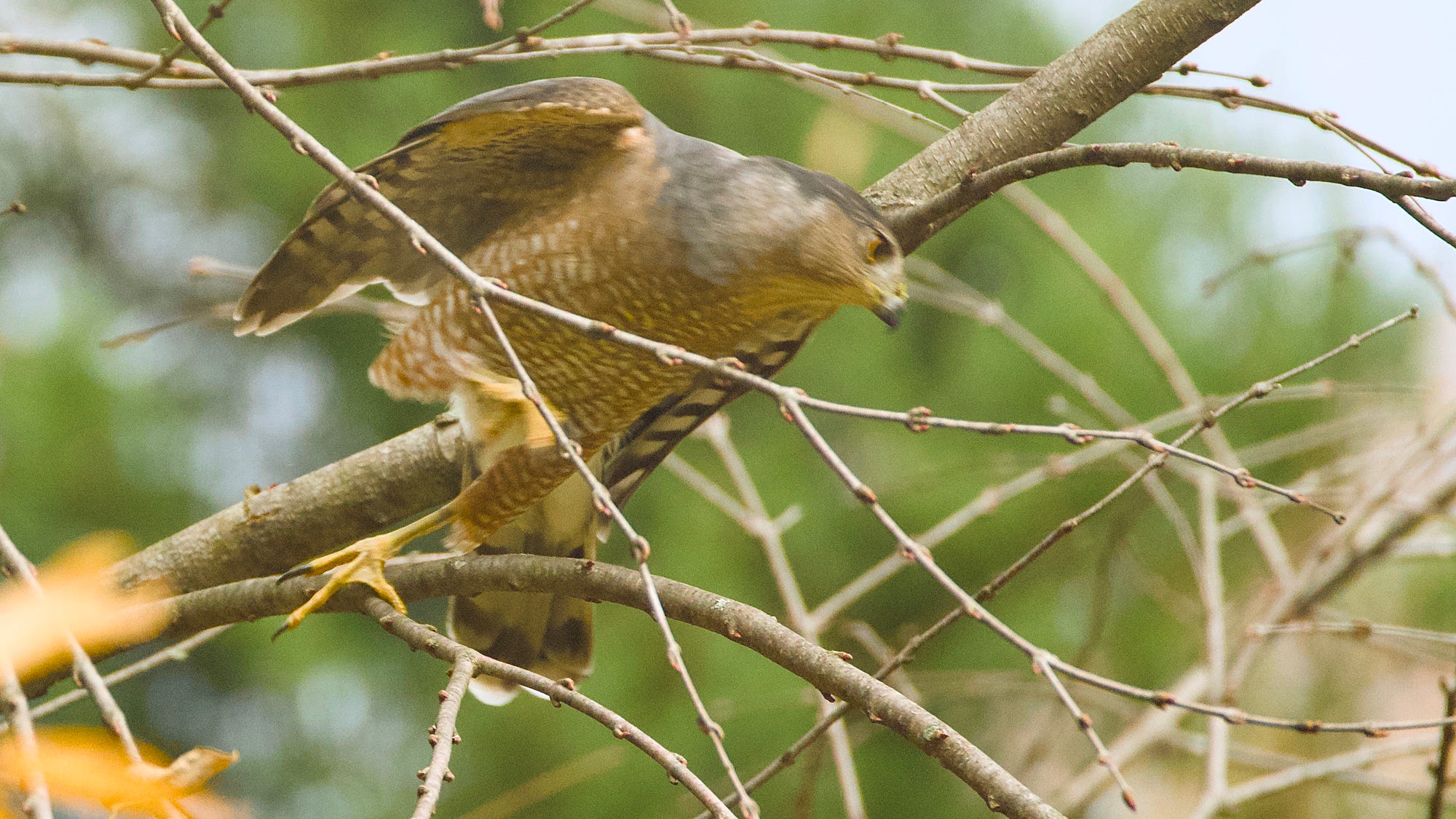
The Hawks Return
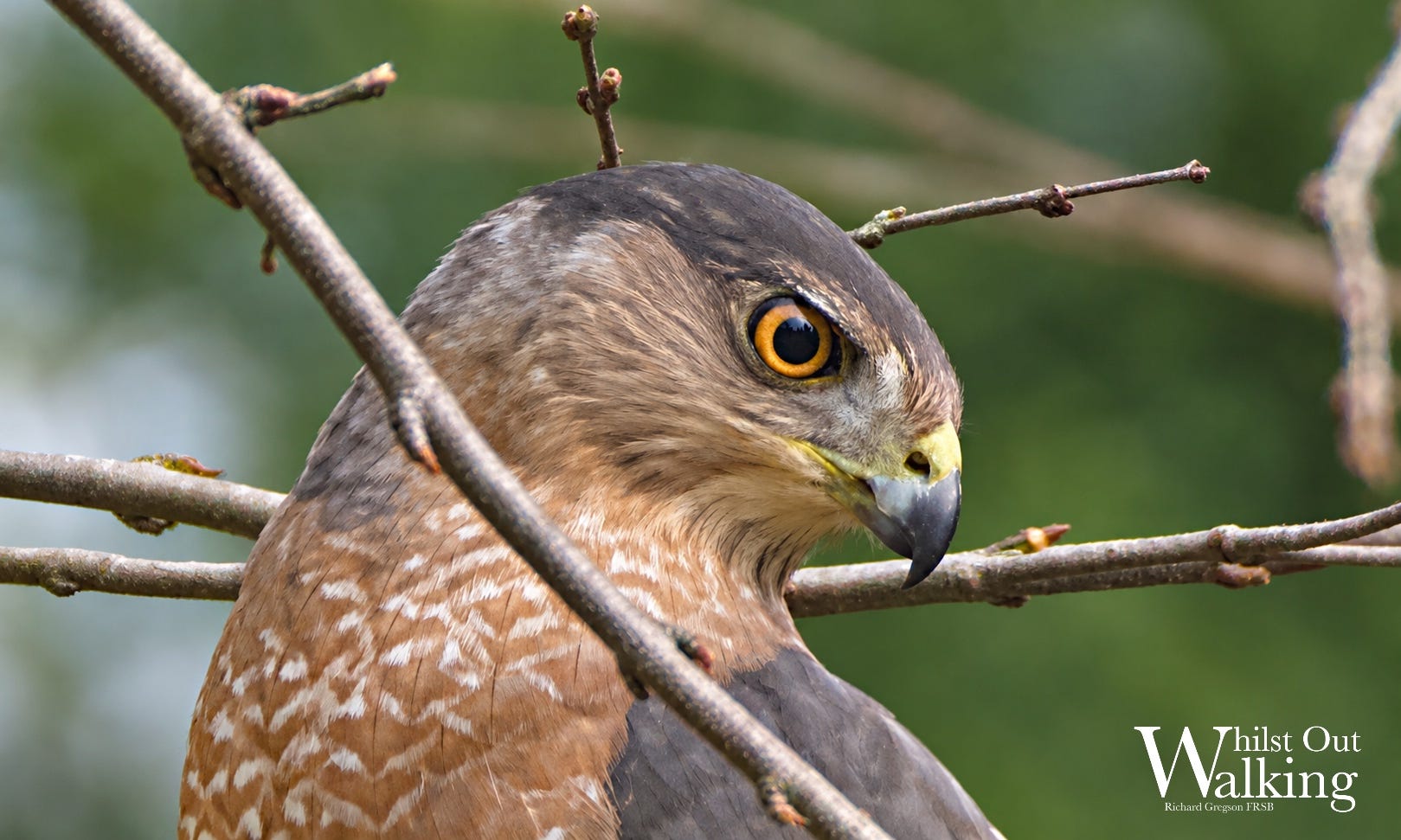
Needless to say, Hawks are with us all year but as the leaves fall from the trees they become more visible as they hunt our gardens seeking small birds as winter approaches. This fine fellow is a Cooper’s Hawk - as you can see, he spotted a potential meal as I was photographing him and took off after it … unsuccessfully this time.
Sunrise
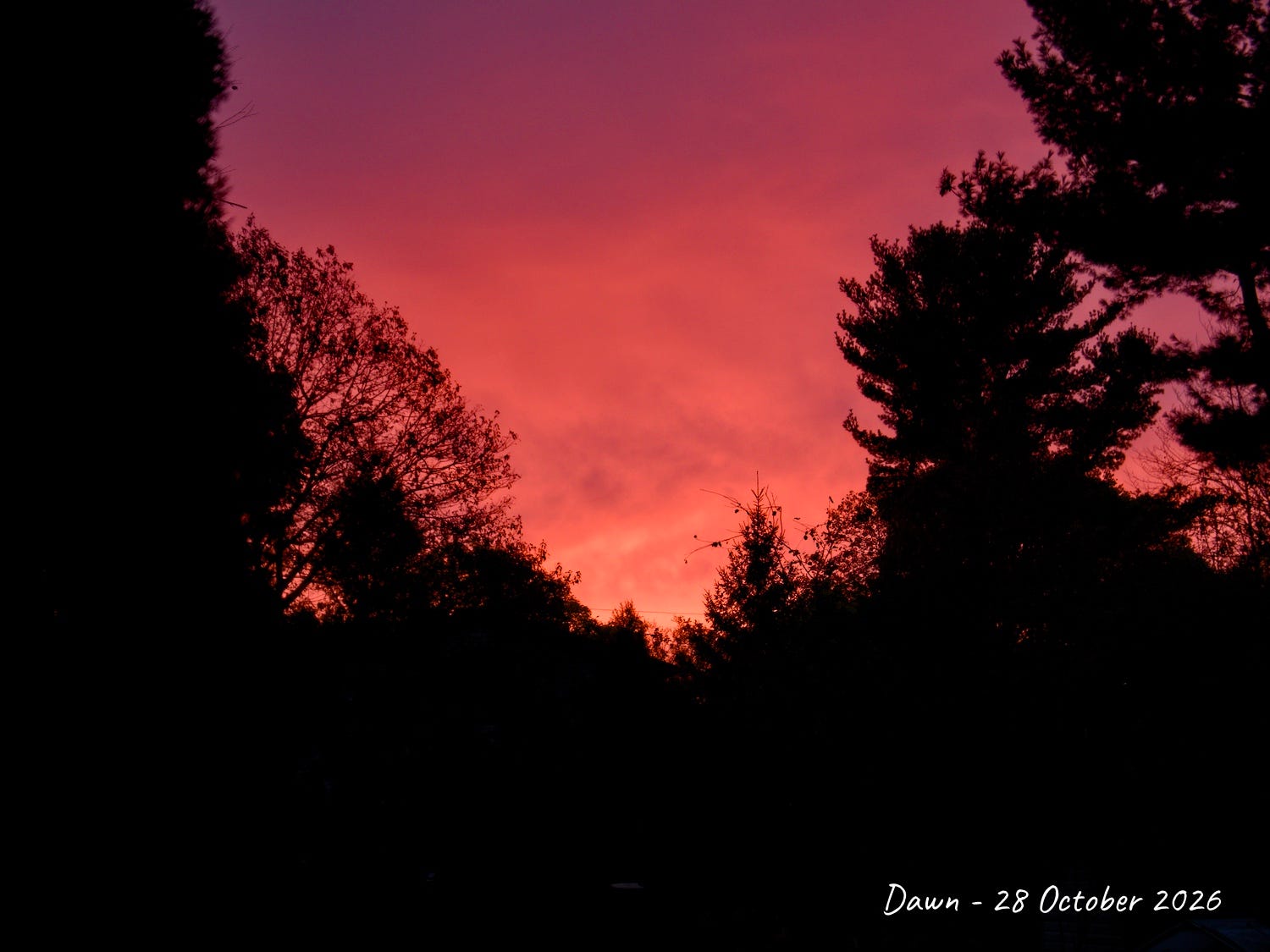
Last week we had a huge old, and declining maple tree felled at the bottom the garden. On Wednesday morning, about 7am, I was putting the kettle on for tea and looked out the window to find this sky right where the tree had stood for maybe 60 years or more, hiding sunrise from us. This is real colour - apart from slight cropping, I made no adjustments to the image file, no increasing of saturation or tweaking of colour temperature. The colour lasted only a couple of minutes and then faded away.
Back in the Forest
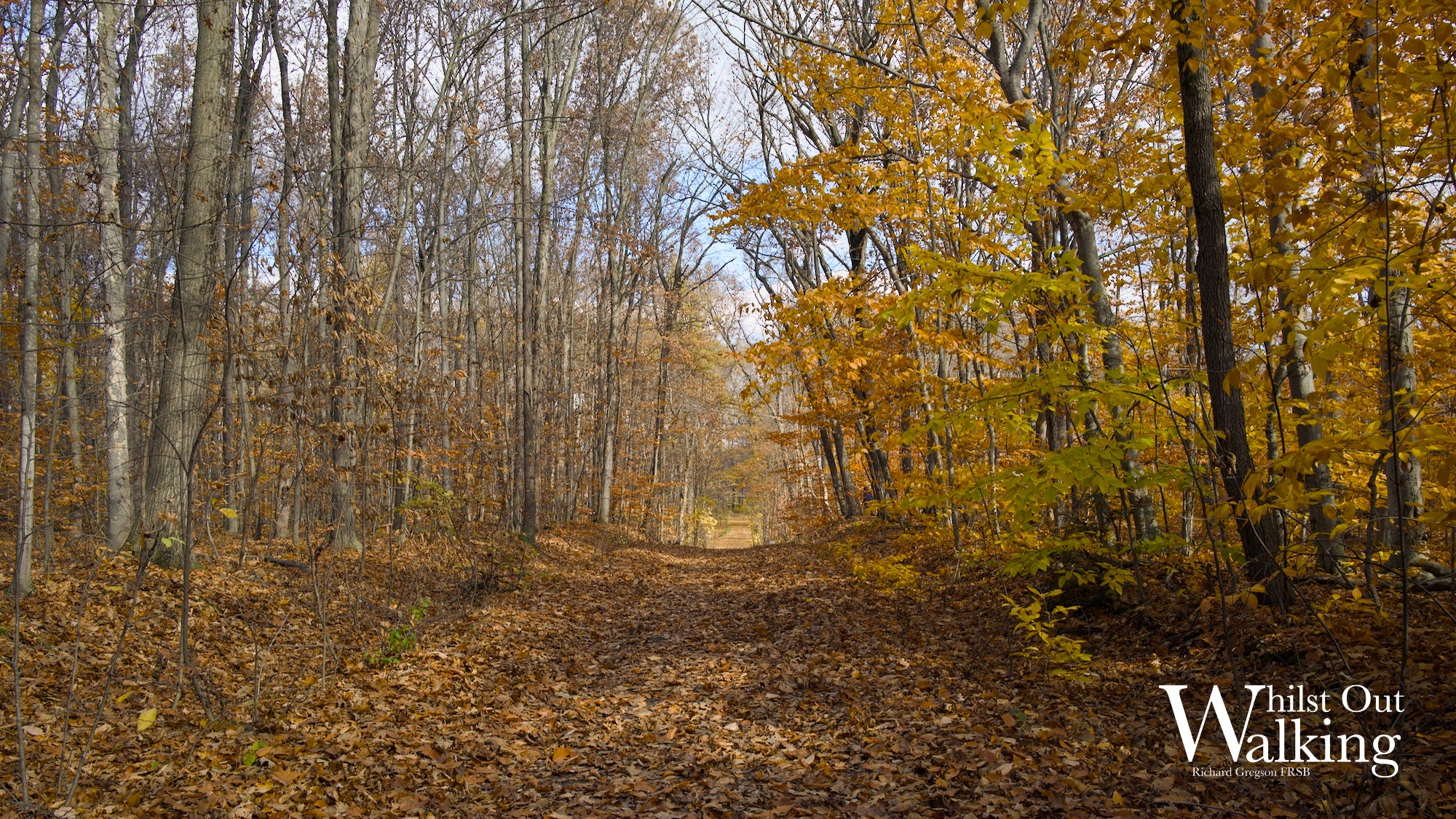
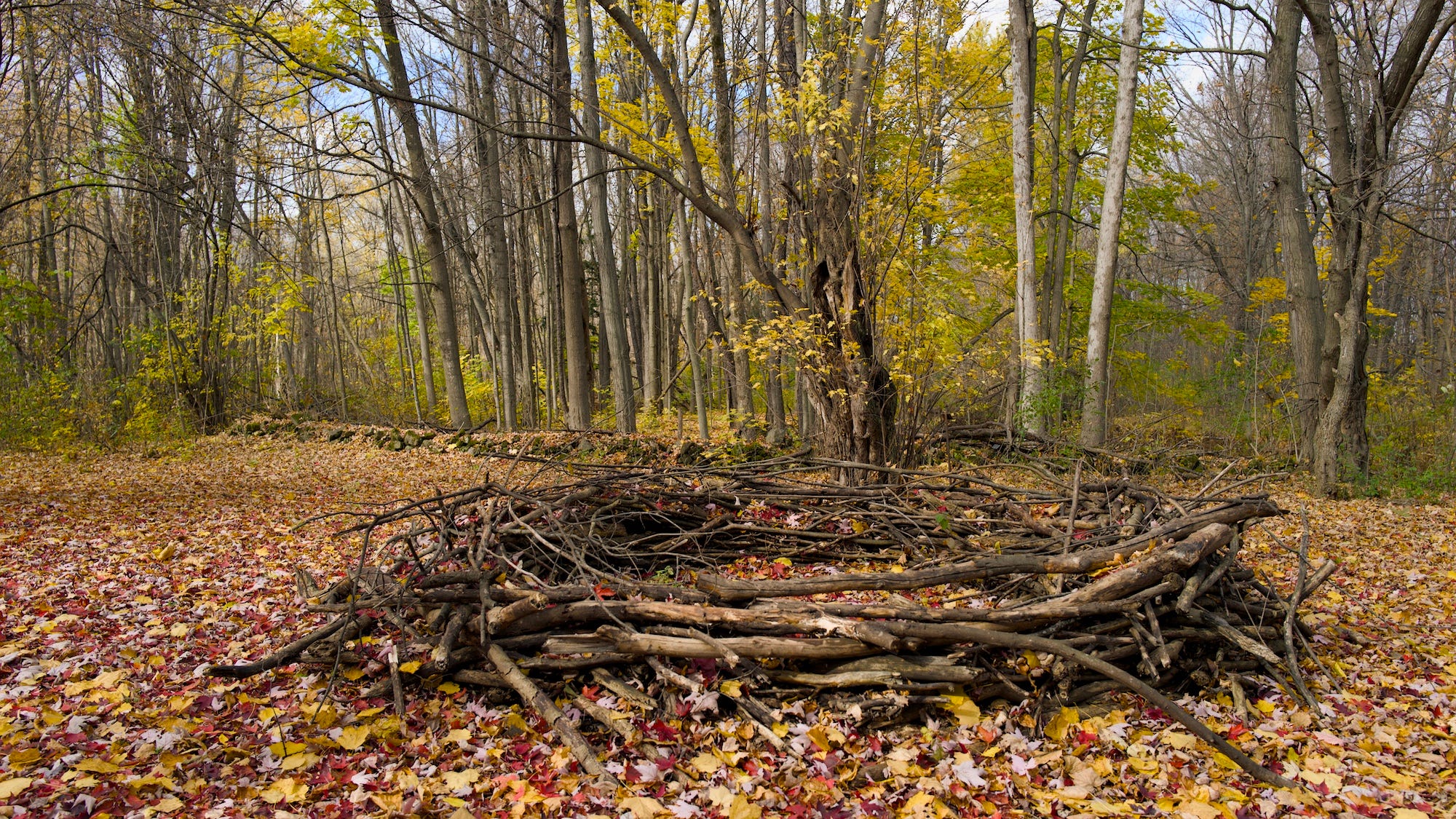
Hard to resist - we went back to the arboretum for some exercise. Most of the leaves are now on the forest floor but Beech trees hold their leaves right through winter and their colour is quite glorious this year. A beautiful Pileated Woodpecker checked us out and we chatted to a lady and her dog who we met on the trail - I mention this because so many arboretum dogs are an unmitigated pain, rushing about and disturbing the forest inhabitants (I know, it’s their nature, quite understand, just don’t like it) while this fellow was quiet and respectful and totally under voice control from her owner. Unusual. All along this trail there were groups of two or three students polishing their field biology skills and wielding quadrats under the trees. We are always encouraged to see another generations of biologists in training.


Feederwatch starts today
As mentioned last weekend - today is the first day of this year’s FeederWatch citizen science season. One of the things that keeps us sane and mentally alert during the months of winter. We have been involved in the past 27 annual FeederWatch seasons, during these we have recorded 51 different bird species visiting our garden and its feeders in the coldest months of the year. Find out more at this link, and maybe you will be tempted to sign up and join in the fun too. We will be doing this every weekend now until the end of April.
https://www.birdscanada.org/programs/project-feederwatch
Species of the week
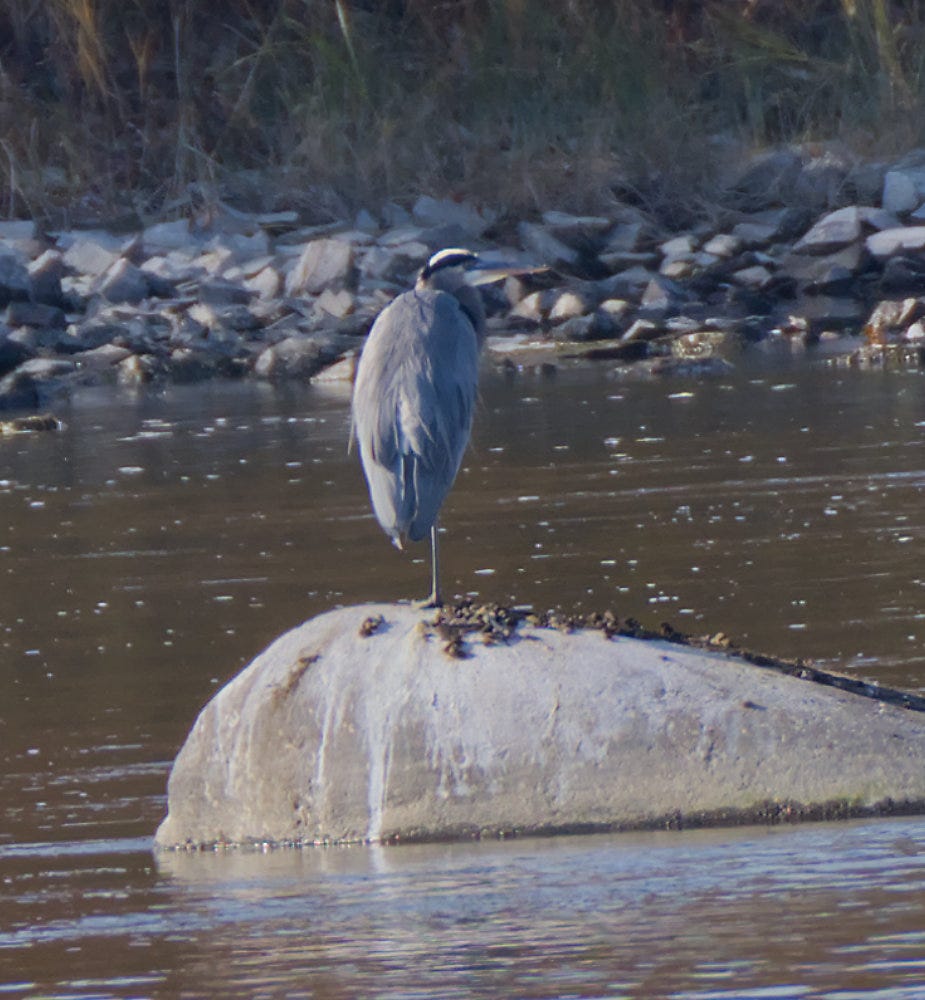
Late in the week a group of Black-bellied Plovers on rocks exposed in the river just west of Ste-Anne-de-Bellevue were reported with some photos by a friend. Naturally, this was just the excuse I needed to take a walk down there the next day ... only to find, entirely as expected, that they had not lingered. There were, however, the usual gang of Gulls, a far distant sighting of this Great Blue Heron and an overflying Northern Harrier cruised past, just as I had zipped the camera back into its bag. Such is birding, but not a wasted morning either.
Remarkably clever birds
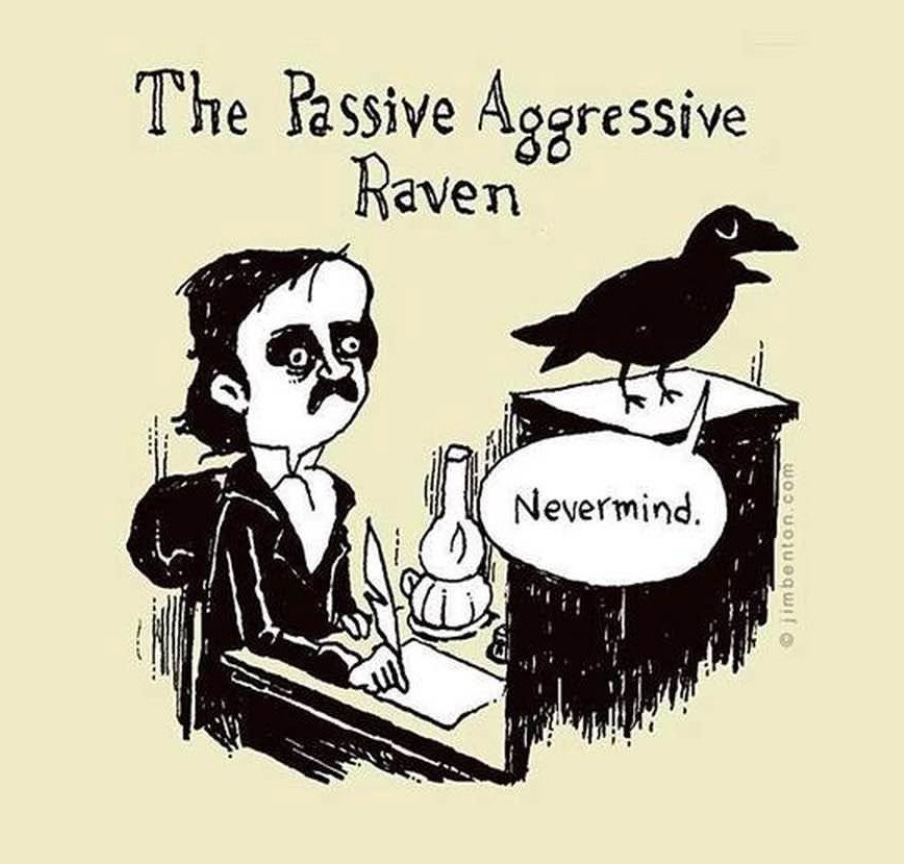
Two male crows have performed better than humans and monkeys in a classic psychology task designed to test how the brain makes decisions based on what it sees. Bird brains rely on circuits that originate from a different part of the layers of (grey and white matter that cover the upper surface of the cerebrum in vertebrates). Their brains are smaller than ours, but so are their neurons, which means less distance for information to travel, and more processing power per square inch. With this independently evolved endbrain design, the corvid brain affords twice as many neurons as a primate brain of equal mass, adding up to enormous processing powers in a small and densely packed ‘birdbrain’.


Oily Knees …
https://www.theguardian.com/environment/2026/nov/01/rare-short-necked-oil-beetle-rediscovered-wales
Hard to resist an article with the following headline:
Rare beetle that oozes substance from its knees when attacked rediscovered in Wales after 60 years
A lovely season fade, thank you. Was wondering about the "Dawn - 7.10.26" text you posted under your Oct 28th red sky. Is it a secret code?
oil beetle