
Weekend Wandering
3 August

Another Sunday, our guests have left and things are back to normal - the lengthier weekend edition of Whilst Out Walking for those who notice the life around them when outside under the sky … I was going to say under the sun, but today seems to be another day with smoke from the western forest fires in the upper atmosphere. Can’t see the sun, but get all the excess heat regardless. At the end of this edition are some links to articles that I found interesting during the week and think you might, too.
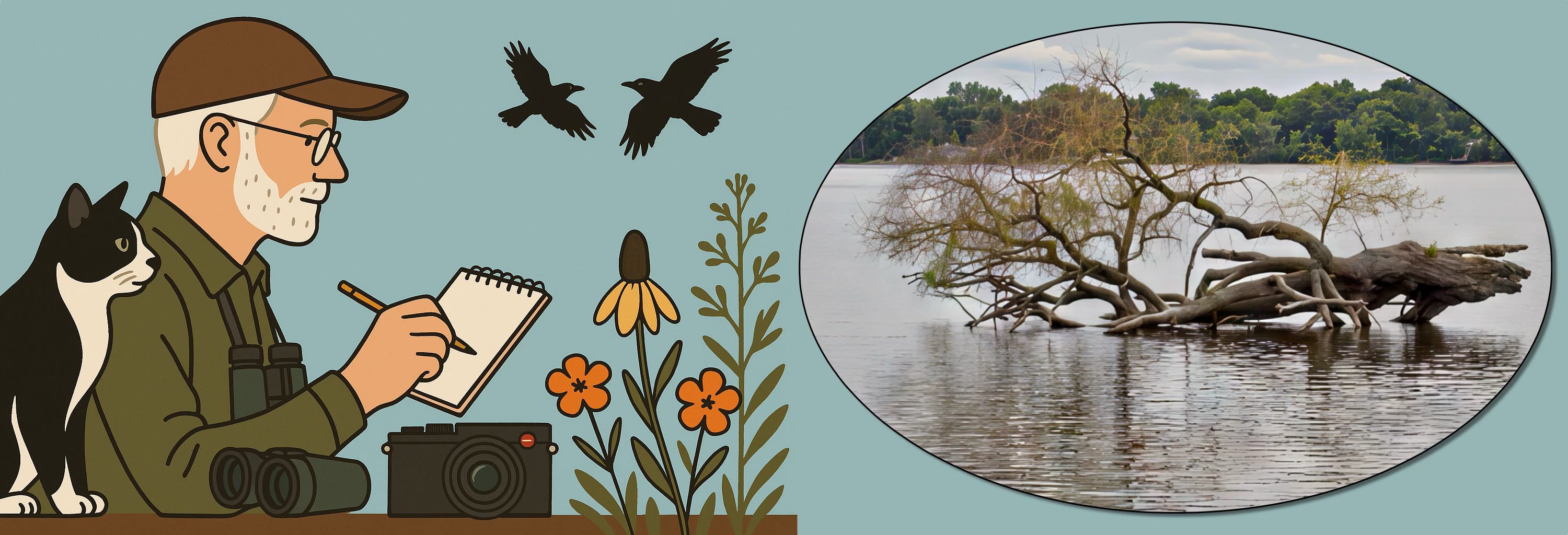
A Place to Walk - just down the road
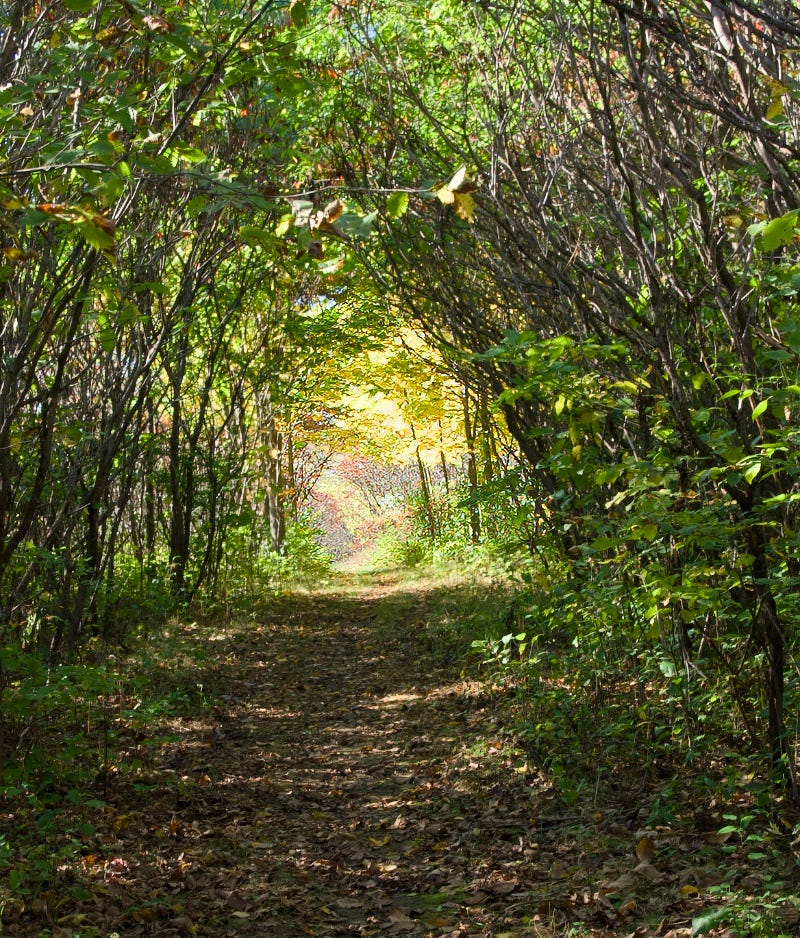
A few days after I arrived in Canada during snow melt in March of 1998, I found my way to the Morgan Arboretum and decided this was a good place to be. A few days after that, being a fast worker, I bought a house about ten minutes away. When J arrived some weeks later she told me I had done a good thing (phew) and we have been walkers and watchers in the forest ever since. Over the years I have enjoyably counted birds and insects and plants but also volunteered on various educational and maintenance projects as well as having been a board member on the Arboretum Charity and the Friends of the Arboretum. In recent years it seems that the sort of volunteers that will do planning and administration tasks have rather fallen by the wayside, in part because many are aging. You can usually get someone to swing a hammer or dig a hole though for a specific project though. McGill U, which owns the land but has other priorities for its money, has pretty much left the place to become self supporting while using it for research and education with minimal staff. This is rather sad … but recently a small group of members and McGill people with the help of committed volunteers have started to look for ways the arboretum experience can be improved again and steps are being taken to revive The Friends. I have to say that I am relieved. By all accounts the arboretum is the largest of its kind in Canada and benefits from not being over-groomed as some such places are. In essence it is a forest on the western and of Montreal island that is home to birds and trees and mammals such as deer, skunks, coyotes, fishers (sometimes) and the like. After all … if we are going “out walking” we need somewhere to walk and this is better than most. It doesn’t have to be a different place that we visit every time, often it is good to go to the same places regularly through the seasons, year after year.
”To do things routinely, to take the same walk time after time, is not to see the same view over and over. It is to notice the incremental rate of natural change and to appreciate that nothing is ever repeated. I am often struck by the way, when one has had some deeply memorable encounter with say, a sighting of a rare bird or butterfly, that the next day you see almost nothing at all. They are never in the same spot. Nature has a way of balancing its books but it also has a way of avoiding duplicates. Every time is unique. There is much to be gained by concentrating our wildlifing activities primarily in the areas where we live.” – Mark Cocker, Claxton (Jonathan Cape, London, 2014)
Some cities have more green space than Montreal, but few have anything so close to the city center as the Morgan Arboretum. It may not be famous, even in Montreal, but it’s extensive enough to lose yourself in for a day without realizing a major city lies nearby. The Arboretum is connected to smaller, privately owned wooded areas to the west, which together form the Federally recognized Senneville Migratory Bird Sanctuary. To the east, diverse undeveloped lands lead to the Anse à l’Orme Nature Park and Cap St-Jacques Nature Park. Over the river there is Ile Bizard and Ile Jésus (Laval), which are connected by green areas to the north, forming a green corridor essential for wildlife movement and survival, of which the Arboretum is the largest single part. There are 25km of diverse trails, some heavily used and others less so. Short and long trails suit all needs. In winter, two trails are groomed for cross-country skiing, and a moderately long snowshoe trail exists. The “main” trail is accessible to walkers year-round. It is an ideal spot for birders, having over 200 recorded bird species, including migrating and resident birds. All within a very short distance of housing, shops and busy highways … which is why I mention it. Nature is right there where we live if we take notice - no need to drive long distances.
The Arbo’ is a good place, should you ever pass this way … albeit this week the mosquitoes have been vicious. On which topic I learned a couple of days ago that there are a small number of people who have asked McGill to “do something about those mosquitoes” … you have to wonder what planet they live on to even think it’s possible!
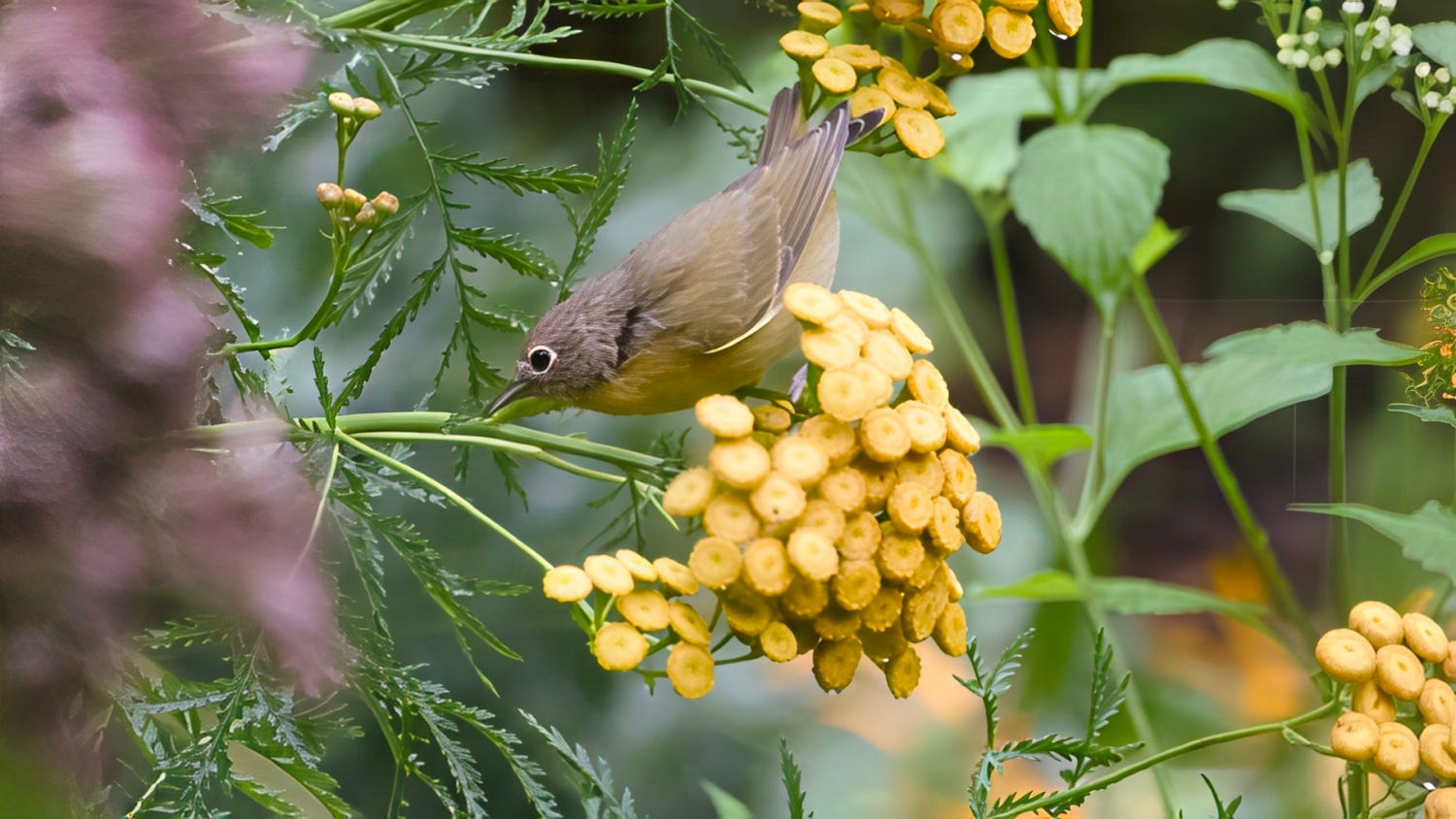
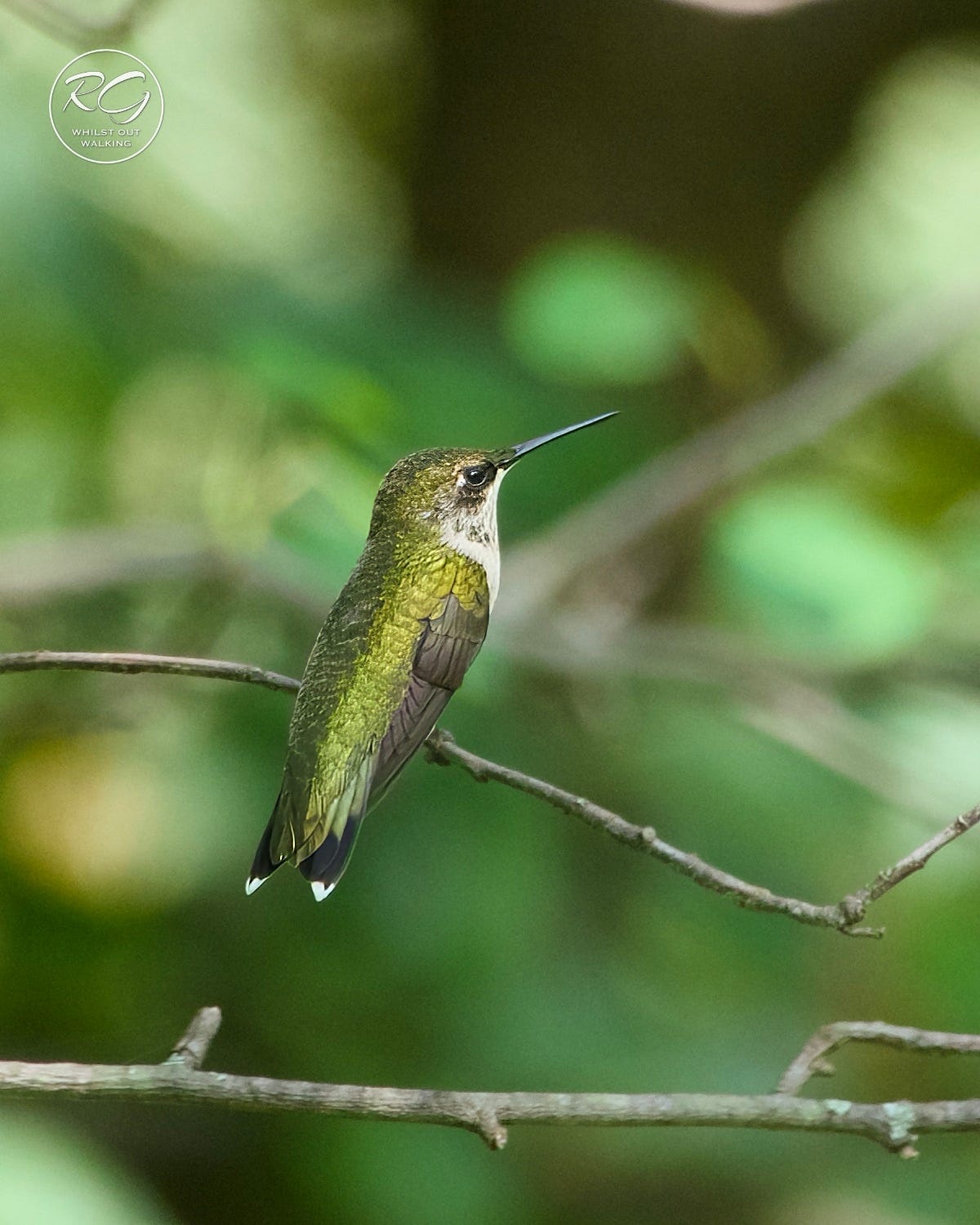
Hummingbirds
A pair of Hummingbirds have been around our garden most of the summer - a couple of days ago, one paused for a rest and to have its portrait taken … a rare thing. Always nice to see these tiny bundles of energy.

Gardening for Moths
Browsing via the Substack app, I enjoyed this post from Vanessa Goold. She is “an ecological gardening coach in Virginia, USA” and writes enjoyably about her subject. This fine piece is about encouraging moths to make a home in, or at least visit, your garden. An excellent read with plenty of good ideas. Pay her substack a visit.

(She writes) … to support moths in your garden is to give them the conditions they need to complete their full life cycle. It is not enough to plant night-blooming flowers and larval host plants if you then trim, rake, and blow away all of the leaves for the winter to “clean up” your garden. In doing so, you will have removed many overwintering moths at various stages of growth. Moths survive the winter as eggs, larvae, pupae, or adults, depending on their species. Some hide behind bark crevices, some cling to branches or twigs, but many of them are on or near the ground, sheltering in the leaves and vegetative matter. Allow as much leaf litter, sticks, twigs, and wild spaces in your garden as you can for shelter and overwintering habitat.
Arctic Terns - 60,000 miles (96,000 km) travel in a year. Year after year.
I don’t want to steal the thunder from the author of the article linked to below, merely to share with you the remarkable travels of these small birds that he discusses.

The biologist quoted in the article was asked how do they do it, and replied that he had no idea … “but isn’t it marvelous?” It is indeed.
These sort of questions, answered or not (yet), are why biology is so endlessly fascinating. I am thankful that the world has engineers with grease on their hands and mathematicians to do the sums, but I could never have pursued those fields of study. Pretty boring to be honest, to say nothing of having to get that grease off at the end of the day. What is exciting is the “homicidally fierce” nature of Arctic Terns on their nesting sites mentioned in the above article. I have experienced it myself and recall being shown a colony when visiting Shetland once (there’s the “Whilst Out Walking” bit that justifies this part of today’s newsletter) and can concur … they are out to kill. I was very impressed to learn that they can draw blood from polar bears.
Anyway - enjoy the article. It’s good to know these birds are still with us. They are not currently endangered and are listed as ‘Least Concern’ by the ICUN Red List - their global population numbers reach two million. However, that’s no reason to relax, they are still vulnerable to the effects of overfishing, oil spills, invasive species, and global warming.
Neurodivergent biologists
An article from a recent Guardian newspaper (link follows) about the high number of keen naturalists and gardeners who are neurodivergent.
There is a book on the subject (I expect to receive a copy any day now) titled “Neurodivergent, By Nature”.
“People like myself, especially those who are undiagnosed, probably found nature was their balm from a mental health perspective,” says Harkness when we meet beneath an awesomely peaceful ancient oak close to his home in rural Norfolk. “The other thing is, we’re different from what we’d define as neurotypical people. Therefore we like more odd things. Special interests. Nature lends itself to people who are different.”
I am looking forward to reading this book … I very much doubt that I am in any way neurodivergent, but I most certainly “like more odd things” and have a greater number of “special interests” compared to many other people I know.
Why Everyone You Know Is Suddenly A Birder
https://thewalrus.ca/birding/?utm_source=substack&utm_medium=email
Lastly - Earth Overshoot Day
We passed it mid-week - probably not a good thing that it exists at all.

It always feels as if you have discovered a hidden treasure when you visit a natural area within a city, doesn't it? Your Arboretum sounds like an absolute delight. I enjoyed reading about it. And thank you for your kind words about my own corner of Substack - welcome one and all!
The Arboretum sounds like a wonderful place to walk! Our closest equivalent would be Edinburgh's Botanic Gardens, but although it is possible to get slightly lost in the maze of paths, it's not really that big. Excellent article about the Arctic tern, a wonderful bird with an amazing journey. And thanks for linking to my article about Earth Overshoot Day.